'%3e%3cpath%20d='M34.1406%205.85938C30.3906%202.10547%2025.3047%200%2020%200C14.6953%200%209.60938%202.10547%205.85938%205.85938C2.10938%209.61328%200%2014.6953%200%2020C0%2025.3047%202.10547%2030.3906%205.85938%2034.1406C9.61328%2037.8906%2014.6953%2040%2020%2040C25.3047%2040%2030.3906%2037.8945%2034.1406%2034.1406C37.8906%2030.3906%2040%2025.3047%2040%2020C40%2014.6953%2037.8945%209.60938%2034.1406%205.85938ZM37.0117%2023.543H31.1602V13.5391H27.6328V19.9414C28.1211%2020.6914%2028.3711%2021.582%2028.3711%2022.5625V22.625C28.3711%2023.668%2028.1172%2024.6055%2027.6328%2025.4297V26.6094H36.082C33.4883%2032.9375%2027.2891%2037.3789%2020.0039%2037.3789C10.3711%2037.3789%202.62109%2029.6289%202.62109%2020C2.62109%2010.3711%2010.3711%202.62109%2020%202.62109C29.6289%202.62109%2037.3789%2010.3711%2037.3789%2020C37.3789%2021.1484%2037.2617%2022.2656%2037.0508%2023.3477C37.0391%2023.4141%2037.0234%2023.4766%2037.0117%2023.543Z'%20fill='white'/%3e%3cpath%20d='M22.3086%2018.5352C20.4336%2018.125%2019.9531%2017.8398%2019.9766%2017.1836V17.1406C19.9766%2016.6992%2020.3477%2016.2148%2021.4023%2016.2148C22.582%2016.2148%2023.8867%2016.6797%2025.0781%2017.4766L26.8516%2015.0195C25.4453%2013.8906%2023.707%2013.3398%2021.5547%2013.3398C18.5195%2013.3398%2016.4375%2015%2016.4063%2017.4766V17.5352C16.3633%2020.2617%2018.5859%2020.9805%2021.293%2021.6016C23.0391%2021.9766%2023.5703%2022.3164%2023.5703%2022.9609L23.5469%2022.9766C23.5469%2023.3906%2023.2578%2023.7031%2022.7852%2023.8359C22.5742%2023.9062%2022.1289%2023.9727%2021.5156%2023.9727C20.7617%2023.9727%2019.7539%2023.8633%2018.6328%2023.4844C18.0898%2023.2891%2017.4727%2023.0039%2016.8047%2022.6133L20.1406%2026.625C20.2813%2026.6602%2021.0977%2026.8516%2021.7734%2026.8516C25.0039%2026.8516%2027.0859%2025.2461%2027.1094%2022.6328V22.5703C27.1602%2020.1133%2025.2148%2019.1719%2022.3086%2018.5352Z'%20fill='white'/%3e%3cpath%20d='M5.24219%2013.5664V26.6133H8.75391V23.7578L10.2969%2021.9531L14.2031%2026.6133H18.3867L12.3555%2019.5195L17.4023%2013.5664H13.4531L8.75391%2019.0586V13.5664H5.24219Z'%20fill='white'/%3e%3c/g%3e%3cdefs%3e%3cclipPath%20id='clip0_97_2430'%3e%3crect%20width='40'%20height='40'%20fill='white'/%3e%3c/clipPath%3e%3c/defs%3e%3c/svg%3e)


- The space shuttle Challenger disaster on Jan. 28, 1986, halted the Teacher in Space Project.
- Families of the crew founded the Challenger Center for Space Science Education, which reaches 7 million students globally.
- The center rolled out seven special STEM lesson plans to commemorate the 40th anniversary of the disaster and continue the crew's legacy.
NEW YORK — NASA's Space Shuttle Challenger lifted off 40 years ago with an unusual crew. In addition to six astronauts, the mission took flight with a teacher on board.
Christa McAuliffe, the first educator selected for a new Teacher in Space Project, said in a news conference before the flight that she believed the mission would "open up the idea that space is for everybody." With the goal of inspiring students to indulge in scientific curiosity, the crew planned to deploy and retrieve an astronomy experiment to study Halley's comet and even teach lessons from orbit during their six-day mission. But it never happened.
The spacecraft exploded 73 seconds after launching on Jan. 28, 1986, claiming the lives of Cmdr. Francis R. "Dick" Scobee, pilot Michael J. Smith, mission specialists Judith A. Resnik, Ellison S. Onizuka and Ronald E. McNair, payload specialists Gregory B. Jarvis and McAuliffe — as teachers and students glued to TVs in classrooms across the U.S. looked on.
Even after the tragedy, family members of the Challenger astronauts wanted to carry on with a piece of their loved ones' mission.
Scobee's widow, Dr. June Scobee Rodgers, recalled having a light bulb moment on how to do that while sitting next to then-first lady Nancy Reagan at an event in memory of the Challenger crew the year of the tragedy.
She told Reagan she knew that NASA would continue to launch space missions but questioned who would continue the work of educating and inspiring children so they may develop an interest in space.
"That's where the idea came from," Scobee Rodgers said in a video shared by the Challenger Center this month to mark the 40th anniversary of the tragedy. "Can we remember our loved ones by continuing their mission and make it an education mission?"
The families of the Challenger crew created the Challenger Center for Space Science Education in April 1986 and opened the first center in Houston in 1988. Today, there are 32 centers across the country designed to provide students with immersive science, technology, engineering and math experiences such as simulated missions to space. The nonprofit organization also provides virtual experiences and free lesson plans for classrooms and estimates that they have reached more than 7 million students globally.
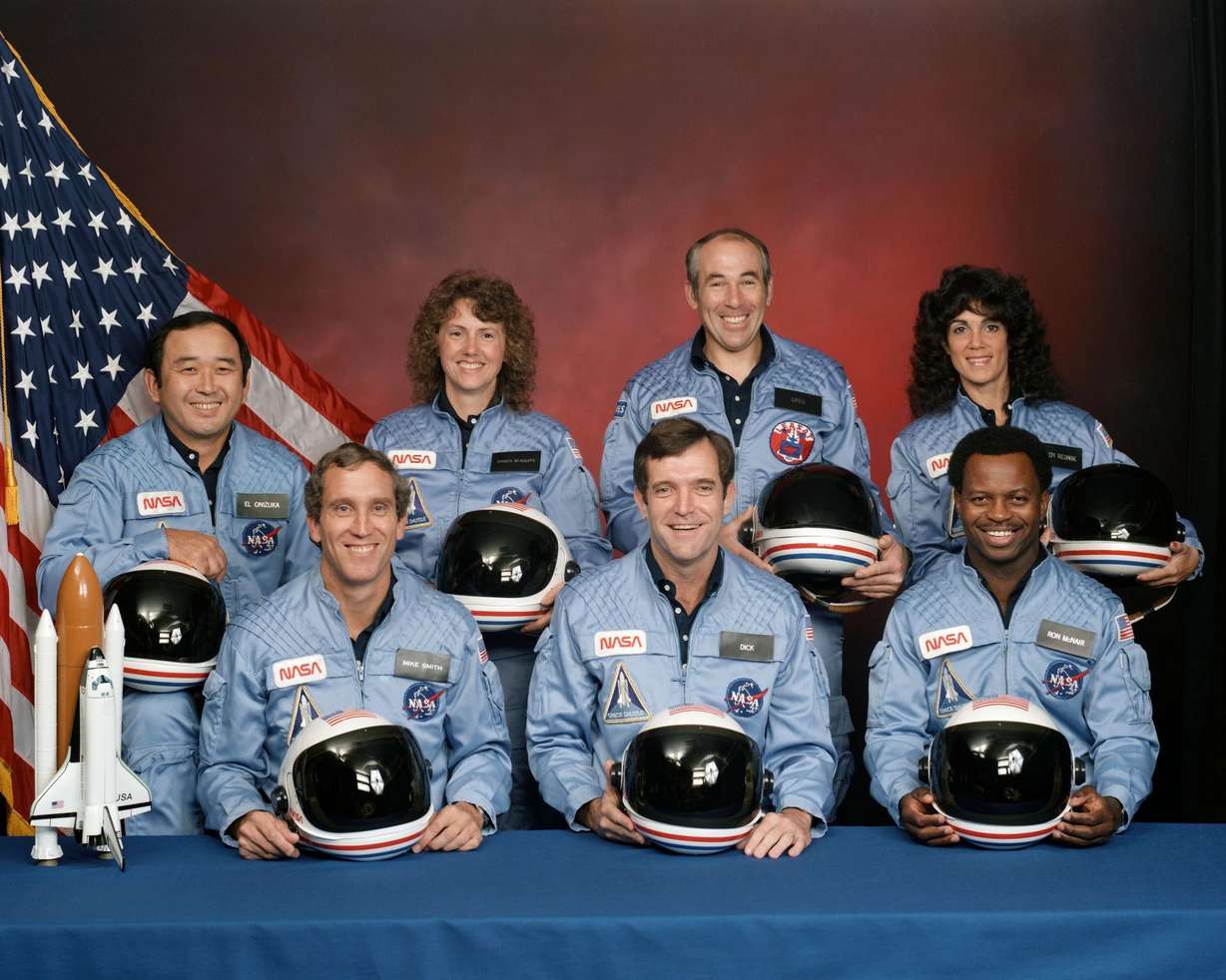
To honor the 40th anniversary of the loss of Challenger, the center has released seven STEM lesson plans inspired by the crew and has several events planned for this spring.
As NASA's Artemis II mission prepares to lift off on a journey around the moon as soon as next month, and commercial companies continue to increase access to space, there are many opportunities to join the "space business," said Mike Kincaid, president and executive director of the Challenger Center. Preparing students, parents and educators for understanding and navigating the variety of STEM career options available is more crucial than ever, he said.
A legacy of educators in space
McAuliffe started out as a student dreaming of the stars.
She said her experience watching the Apollo missions years earlier had inspired her to apply for the Teacher in Space Project in 1984, writing on her application, "I watched the Space Age being born, and I would like to participate."
Though the Challenger disaster brought an end to Teacher in Space, educators in the years since have found other paths to orbit.
Barbara Morgan, an elementary school teacher who had trained as McAuliffe's backup, continued public outreach, STEM education initiatives and curriculum development with NASA for several years after the tragedy. She went on to join the astronaut class in 1998 and flew to space in 2007, assisting with efforts to build the International Space Station.
In 2004, NASA created a new initiative for what it called the Educator Astronaut Project, selecting several teachers to become fully trained as astronauts.
Among those selected was Dottie Metcalf-Lindenburger.
The daughter of two teachers, she pursued geology in college and was hired by the Peace Corps to teach English in Kazakhstan. But right before she set off on her two-year assignment, instability in the region canceled her plans. Metcalf-Lindenburger pivoted to teaching, focusing on Earth science and astronomy, which included a small unit on human spaceflight.
During a lesson, a student asked her how astronauts use the bathroom in space, prompting Metcalf-Lindenburger to seek out the answer. While searching on NASA's website, she saw that the agency was seeking teachers as part of the 2004 astronaut class.
"I had this dream when I was a young kid about becoming an astronaut and a real passion for space, and all of a sudden is this opportunity to fly because I am a science teacher," she said. "I'm really glad that student was curious."
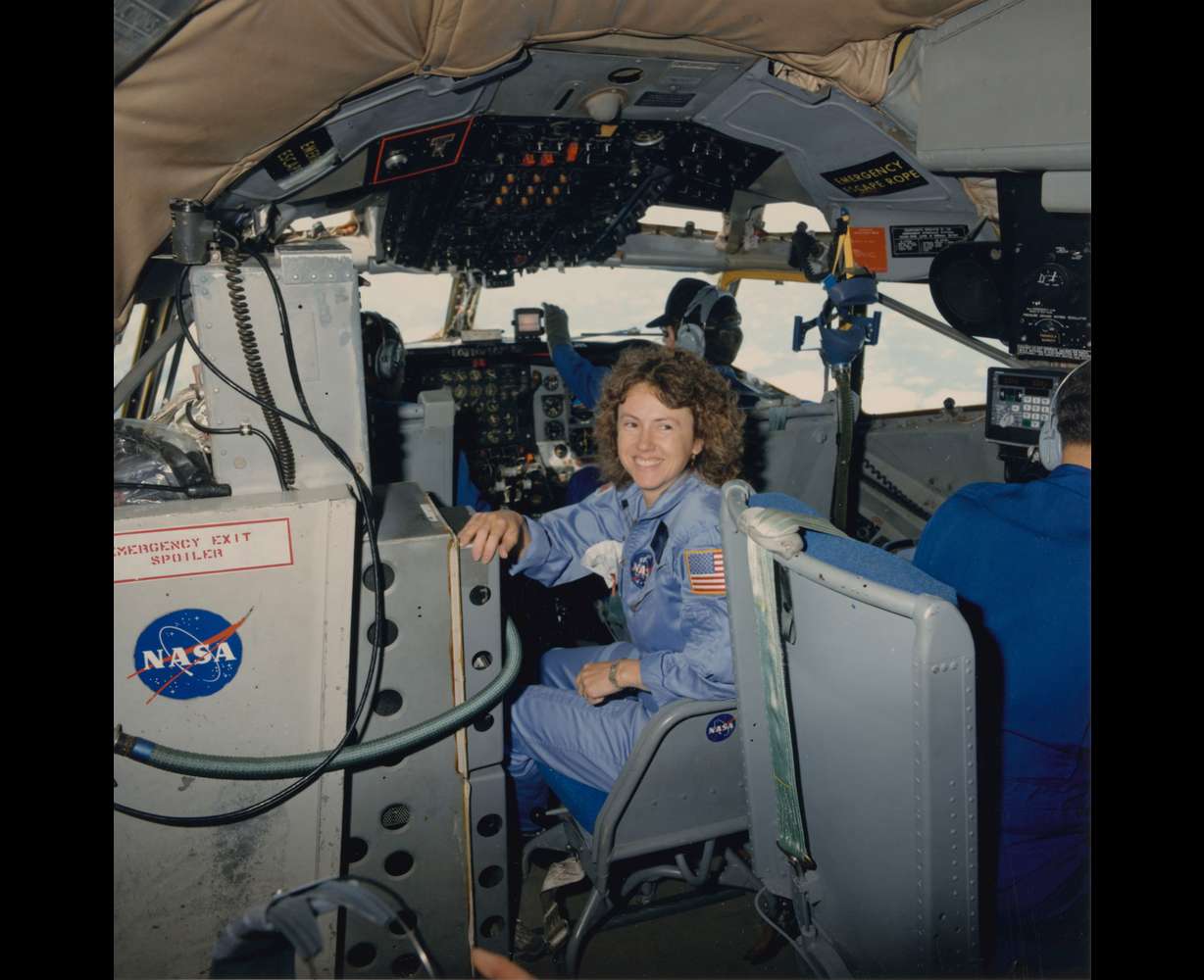
NASA chose Metcalf-Lindenburger, Joseph Acaba and Richard "Ricky" Arnold to be educator-astronauts.
Aboard the International Space Station in 2018, Acaba and Arnold helped bring to life the variety of science lessons that McAuliffe had intended to film from space.
Metcalf-Lindenburger completed her shuttle mission to the ISS in 2010 before commanding the NASA Extreme Environment Mission Operation in the Aquarius Reef Habitat off the Florida coast in 2012. She retired from the astronaut corps in 2014, but she wasn't done with space education yet.
After visiting one of the Challenger Center's locations in Colorado Springs, where she saw dozens of students working together to solve issues and achieve success for a simulated mission, Metcalf-Lindenburger joined the center's board of directors.
The experiments and simulations at Challenger centers, as well as their online resources, are designed to foster confidence in STEM knowledge, boost team collaboration skills and teach kids how to work through unexpected challenges.
"As a teacher, you might have one or two students that just stop caring," Metcalf-Lindenburger said. "They stop doing work, and you're always trying to really cheer them on. There was not one kid that wasn't totally engaged in doing this."
Dreaming of the stars
NASA engineer Kenneth F. Harris II was once one of those kids hooked by the Challenger Center experience.
"Challenger allowed me to see what kind of skills that you really needed to be to be within this space," said Harris, who serves on Challenger Center's board of directors. He called his school field trip to the center a core memory.
Harris' father was an engineer at NASA's Goddard Space Flight Center in Greenbelt, Maryland, and he would often spend time in his dad's office after school.
He recalled passing a photo called the "Pillars of Creation" taken by the Hubble Space Telescope, and it sparked a passion within him for discovering the secrets of the universe.
As a teenager, Harris began interning at NASA. A photo captured when Harris was just 17 shows him wearing his high school class ring while working on a circuit board — one that would eventually fly on the James Webb Space Telescope.
In his 20s, Harris served as the deputy lead integration engineer for Webb Telescope, leading a team to connect the main electronic payload of the observatory. Things came full circle when he was able to show his children the Webb Telescope's new version of the Pillars of Creation.
"I'm hoping that in some way, it sparks a curiosity in them to explore beyond where we are now," Harris said.
There was not one kid that wasn't totally engaged in doing this.
–Dottie Metcalf-Lindenburger
These days, he serves as a senior project engineer for The Aerospace Corporation and still contributes to NASA missions. When he speaks to students, Harris shares his honest experience — how he needed to retake math courses in high school and almost dropped out of his engineering program in college because the concepts were difficult. Working through those challenges and connecting with others along the way helped him reach where he is today, Harris said.
"One thing that I always tell students is that none of us build a satellite or go to space on our own," Harris said. "This journey of discovery is a collaborative experience."
When he reaches out to alumni who have participated in the Challenger Center and went on to work in STEM careers, he encourages them to also give back some of their time to the next generation by sharing their own stories. Through those connections, something born out of a tragic accident has become a celebration of what the Challenger crew stood for, Harris added.
"Challenger should be seen as a tragedy, but it was turned into something that has just made folks' lives better," Harris said. "I'm so appreciative of what Scobee Rodgers and the rest of the families have afforded us."