'%3e%3cpath%20d='M34.1406%205.85938C30.3906%202.10547%2025.3047%200%2020%200C14.6953%200%209.60938%202.10547%205.85938%205.85938C2.10938%209.61328%200%2014.6953%200%2020C0%2025.3047%202.10547%2030.3906%205.85938%2034.1406C9.61328%2037.8906%2014.6953%2040%2020%2040C25.3047%2040%2030.3906%2037.8945%2034.1406%2034.1406C37.8906%2030.3906%2040%2025.3047%2040%2020C40%2014.6953%2037.8945%209.60938%2034.1406%205.85938ZM37.0117%2023.543H31.1602V13.5391H27.6328V19.9414C28.1211%2020.6914%2028.3711%2021.582%2028.3711%2022.5625V22.625C28.3711%2023.668%2028.1172%2024.6055%2027.6328%2025.4297V26.6094H36.082C33.4883%2032.9375%2027.2891%2037.3789%2020.0039%2037.3789C10.3711%2037.3789%202.62109%2029.6289%202.62109%2020C2.62109%2010.3711%2010.3711%202.62109%2020%202.62109C29.6289%202.62109%2037.3789%2010.3711%2037.3789%2020C37.3789%2021.1484%2037.2617%2022.2656%2037.0508%2023.3477C37.0391%2023.4141%2037.0234%2023.4766%2037.0117%2023.543Z'%20fill='white'/%3e%3cpath%20d='M22.3086%2018.5352C20.4336%2018.125%2019.9531%2017.8398%2019.9766%2017.1836V17.1406C19.9766%2016.6992%2020.3477%2016.2148%2021.4023%2016.2148C22.582%2016.2148%2023.8867%2016.6797%2025.0781%2017.4766L26.8516%2015.0195C25.4453%2013.8906%2023.707%2013.3398%2021.5547%2013.3398C18.5195%2013.3398%2016.4375%2015%2016.4063%2017.4766V17.5352C16.3633%2020.2617%2018.5859%2020.9805%2021.293%2021.6016C23.0391%2021.9766%2023.5703%2022.3164%2023.5703%2022.9609L23.5469%2022.9766C23.5469%2023.3906%2023.2578%2023.7031%2022.7852%2023.8359C22.5742%2023.9062%2022.1289%2023.9727%2021.5156%2023.9727C20.7617%2023.9727%2019.7539%2023.8633%2018.6328%2023.4844C18.0898%2023.2891%2017.4727%2023.0039%2016.8047%2022.6133L20.1406%2026.625C20.2813%2026.6602%2021.0977%2026.8516%2021.7734%2026.8516C25.0039%2026.8516%2027.0859%2025.2461%2027.1094%2022.6328V22.5703C27.1602%2020.1133%2025.2148%2019.1719%2022.3086%2018.5352Z'%20fill='white'/%3e%3cpath%20d='M5.24219%2013.5664V26.6133H8.75391V23.7578L10.2969%2021.9531L14.2031%2026.6133H18.3867L12.3555%2019.5195L17.4023%2013.5664H13.4531L8.75391%2019.0586V13.5664H5.24219Z'%20fill='white'/%3e%3c/g%3e%3cdefs%3e%3cclipPath%20id='clip0_97_2430'%3e%3crect%20width='40'%20height='40'%20fill='white'/%3e%3c/clipPath%3e%3c/defs%3e%3c/svg%3e)



- Federal land managers reapproved a controversial highway project in southwest Utah.
- The decision reinstates a 2021 ruling for a 4.5-mile road through a small section of protected land.
- Local leaders celebrated the ruling; conservation groups criticized the plan.
ST. GEORGE — Federal land managers have signed off on a controversial road project in southwest Utah in a move celebrated by local leaders and lambasted by conservation groups that have protested the project.
Bureau of Land Management officials reapproved the Utah Department of Transportation's plan to construct the Northern Corridor highway in Washington County, reversing earlier decisions on the project since the state first applied for a right-of-way in 2018.
It reinstates a 2021 decision and paves the way for a new four-lane, 4.5-mile connection between Washington Parkway and Red Hills Parkway in Washington County through a 153-acre section of the Red Cliffs National Conservation Area.
"We revisited the previous environmental impact statements and encouraged the public to submit further comments for consideration in this environmental assessment," said Gloria Tibbetts, manager of the bureau's Color Country District, in a statement. "We are committed to continually monitor our decisions and balance our responsibilities as public land managers and good neighbors."
Washington County and state leaders praised the ruling, calling it a key transportation piece for the fast-growing region. It will improve traffic and "safeguard popular recreation areas," said Redge Johnson, director of the Public Lands Policy Coordinating Office.
"We are grateful to our many partners who helped make this right. This is a win for the years of dedication and work our community, tribal, state and federal partners have put into achieving balanced policy solutions," added Washington County Commissioner Adam Snow, after the new ruling was handed down.
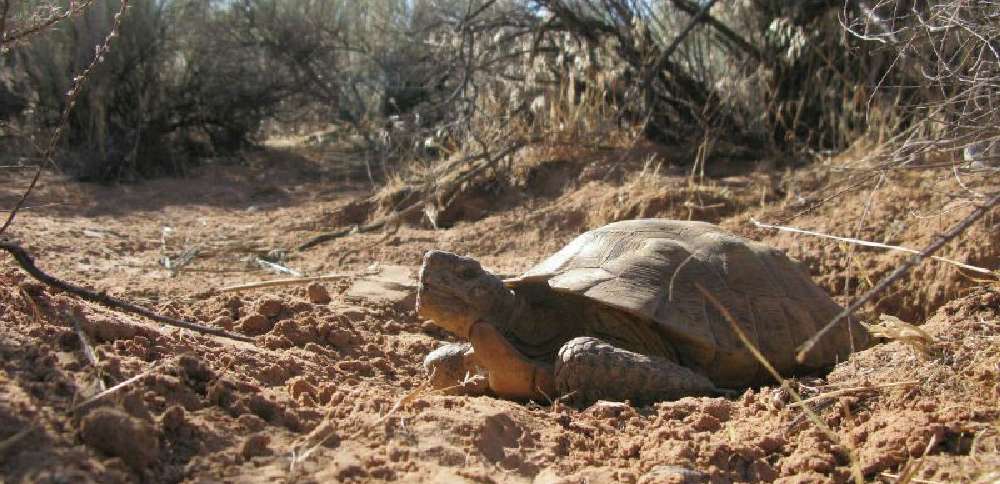
Multiple environmental groups, on the other hand, criticized the ruling, calling it a blow to the threatened Mojave desert tortoises that live within the Red Cliffs National Conservation Area.
State and local officials say approximately 30 to 40 desert tortoises will be relocated because of the project, but they can be moved to over 6,800 acres of land east of Bloomington that are planned to be set aside for new habitat as part of a land swap. But conservation groups argue that more land isn't a substitute for the land that will be lost from the project.
"The Bureau of Land Management's decision to reverse itself is a disastrous mistake," said Lisa Belenky, senior counsel at the Center for Biological Diversity. "Bulldozing a highway through Red Cliffs National Conservation Area would destroy some of the last best habitat for threatened desert tortoises and forever scar this rare natural refuge."
Planning for the route began well before 2018, but the project has been more of a political football in recent years as the White House shifted between Republican and Democratic hands. Bureau of Land Management and U.S. Fish and Wildlife Service officials awarded UDOT a right-of-way permit for the project during the final week of President Donald Trump's first term in office in 2021.
Environmental groups sued the decision months later, and the two federal agencies — this time under President Joe Biden — ultimately reversed their decision in 2024. That decision was celebrated by conservation groups, who called it a better plan for traffic flow while reducing environmental risk, but panned by local leaders who said an alternative that the agencies proposed would be detrimental for the region.
With Trump back in office, the project is back on.
State and local leaders say they believe the plan will balance the needs of transportation and conservation. More than $5 million in county funds are planned to be set aside for tortoise protection, officials noted.
"This is a win-win," said St. George Mayor Jimmie Hughes. "Not only do we preserve ... an exponentially larger amount of open space, which includes the desert tortoise, but we also secure the vital transportation corridor mandated by Congress that will benefit our residents for years to come."