'%3e%3cpath%20d='M34.1406%205.85938C30.3906%202.10547%2025.3047%200%2020%200C14.6953%200%209.60938%202.10547%205.85938%205.85938C2.10938%209.61328%200%2014.6953%200%2020C0%2025.3047%202.10547%2030.3906%205.85938%2034.1406C9.61328%2037.8906%2014.6953%2040%2020%2040C25.3047%2040%2030.3906%2037.8945%2034.1406%2034.1406C37.8906%2030.3906%2040%2025.3047%2040%2020C40%2014.6953%2037.8945%209.60938%2034.1406%205.85938ZM37.0117%2023.543H31.1602V13.5391H27.6328V19.9414C28.1211%2020.6914%2028.3711%2021.582%2028.3711%2022.5625V22.625C28.3711%2023.668%2028.1172%2024.6055%2027.6328%2025.4297V26.6094H36.082C33.4883%2032.9375%2027.2891%2037.3789%2020.0039%2037.3789C10.3711%2037.3789%202.62109%2029.6289%202.62109%2020C2.62109%2010.3711%2010.3711%202.62109%2020%202.62109C29.6289%202.62109%2037.3789%2010.3711%2037.3789%2020C37.3789%2021.1484%2037.2617%2022.2656%2037.0508%2023.3477C37.0391%2023.4141%2037.0234%2023.4766%2037.0117%2023.543Z'%20fill='white'/%3e%3cpath%20d='M22.3086%2018.5352C20.4336%2018.125%2019.9531%2017.8398%2019.9766%2017.1836V17.1406C19.9766%2016.6992%2020.3477%2016.2148%2021.4023%2016.2148C22.582%2016.2148%2023.8867%2016.6797%2025.0781%2017.4766L26.8516%2015.0195C25.4453%2013.8906%2023.707%2013.3398%2021.5547%2013.3398C18.5195%2013.3398%2016.4375%2015%2016.4063%2017.4766V17.5352C16.3633%2020.2617%2018.5859%2020.9805%2021.293%2021.6016C23.0391%2021.9766%2023.5703%2022.3164%2023.5703%2022.9609L23.5469%2022.9766C23.5469%2023.3906%2023.2578%2023.7031%2022.7852%2023.8359C22.5742%2023.9062%2022.1289%2023.9727%2021.5156%2023.9727C20.7617%2023.9727%2019.7539%2023.8633%2018.6328%2023.4844C18.0898%2023.2891%2017.4727%2023.0039%2016.8047%2022.6133L20.1406%2026.625C20.2813%2026.6602%2021.0977%2026.8516%2021.7734%2026.8516C25.0039%2026.8516%2027.0859%2025.2461%2027.1094%2022.6328V22.5703C27.1602%2020.1133%2025.2148%2019.1719%2022.3086%2018.5352Z'%20fill='white'/%3e%3cpath%20d='M5.24219%2013.5664V26.6133H8.75391V23.7578L10.2969%2021.9531L14.2031%2026.6133H18.3867L12.3555%2019.5195L17.4023%2013.5664H13.4531L8.75391%2019.0586V13.5664H5.24219Z'%20fill='white'/%3e%3c/g%3e%3cdefs%3e%3cclipPath%20id='clip0_97_2430'%3e%3crect%20width='40'%20height='40'%20fill='white'/%3e%3c/clipPath%3e%3c/defs%3e%3c/svg%3e)




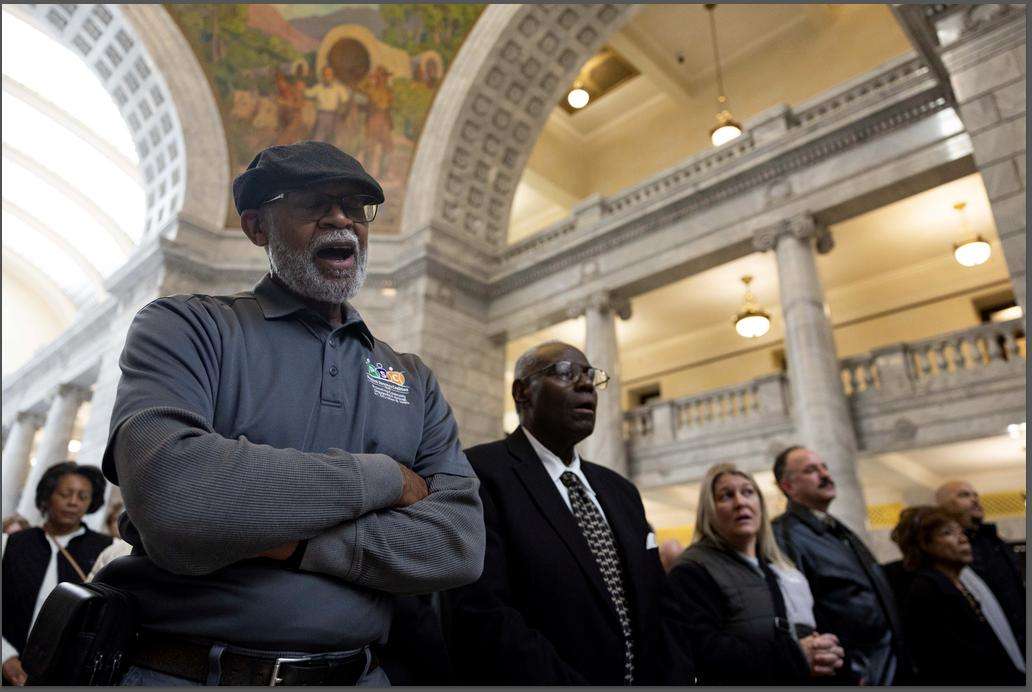
- Speakers at a Martin Luther King Jr. Day event at the Utah Capitol emphasized that the fight for civil rights continues.
- Oscar Moses of Calvary Baptist Church stressed that the civil rights struggle needs to be more all-encompassing.
- Utah Rep. Sandra Hollins said striving for justice and democracy "require our work, our sacrifice and our love."
SALT LAKE CITY — The fight for justice and civil rights is far from over, nearly 48 years after the death of Martin Luther King Jr.
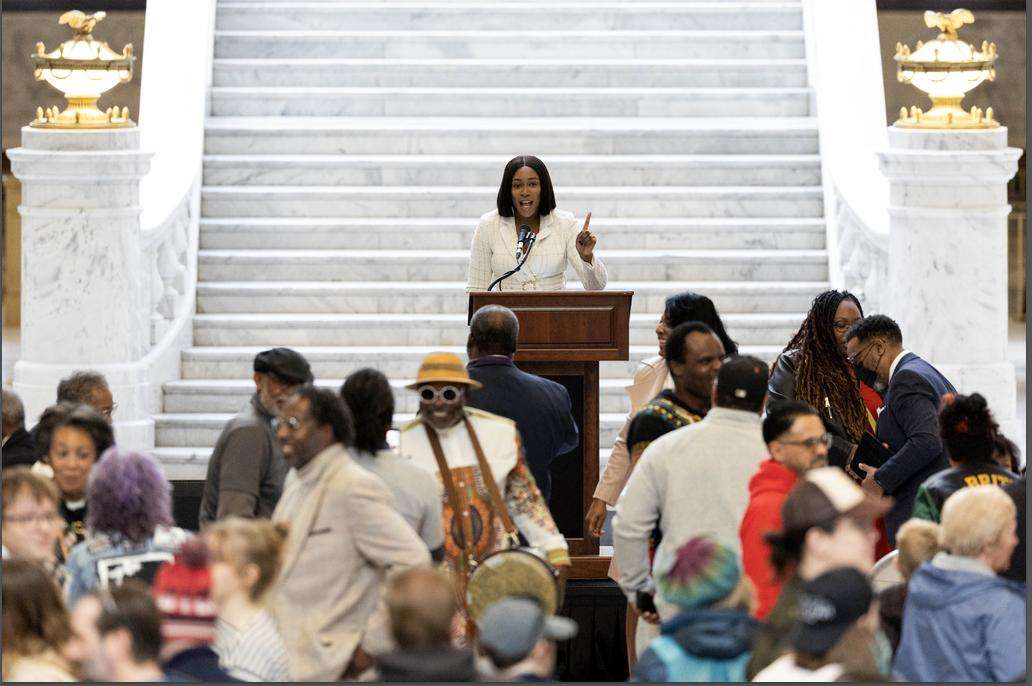
Speakers at an event on Monday at the state Capitol in Salt Lake City to mark the life of the civil rights icon expressed concern at the current state of politics. They also stressed the importance of continued efforts to aid those who they see on the sidelines in the community.
"We cannot continue to place one over another," said Oscar Moses, senior pastor at Calvary Baptist Church in Salt Lake City. "What we see happening now in our nation today is terrifying, and we cannot say, 'Well, it's not me today,' because you don't know who it's going to be ... tomorrow."
While the civil rights movement King led in the 1960s was focused at least initially on the rights of Black people, Moses, one of several speakers, emphasized that today the struggle needs to be more all-encompassing. King was assassinated on April 4, 1968, and Martin Luther King Jr. Day, meant to honor his life, was marked in Utah on Monday and around the country with a range of events.
"The significance of King in this racially charged climate is to ground the spiraling climate of denial of diversity, equity and inclusion, marginalization of certain communities, whether it's voter rights, immigration laws, LGBTQ-plus rights, police brutality, or access to fair housing in Utah," Moses said.
He also called on listeners to remain attentive to civil rights matters, invoking a word some on the conservative end of the political spectrum sometimes use to blast those on the left, "woke."
"Stay woke and with that spirit, stay conscious. I don't care what nobody tells you. Stay woke, because it's possible that we can sleep through a revolution," he said.
Utah Rep. Sandra Hollins, D-Salt Lake City, also addressed the group, saying King's words serve as a reminder "that justice is never automatic and democracy is never guaranteed." She's the first Black woman ever to serve in the Utah Legislature, and Monday's program included a video tribute to her as she won't seek reelection when her House term finishes at the end of the year.
"Both require our work, our sacrifice and our love," she said.
As a lawmaker, she also noted her and her allies' efforts to expand opportunities to marginalized communities.
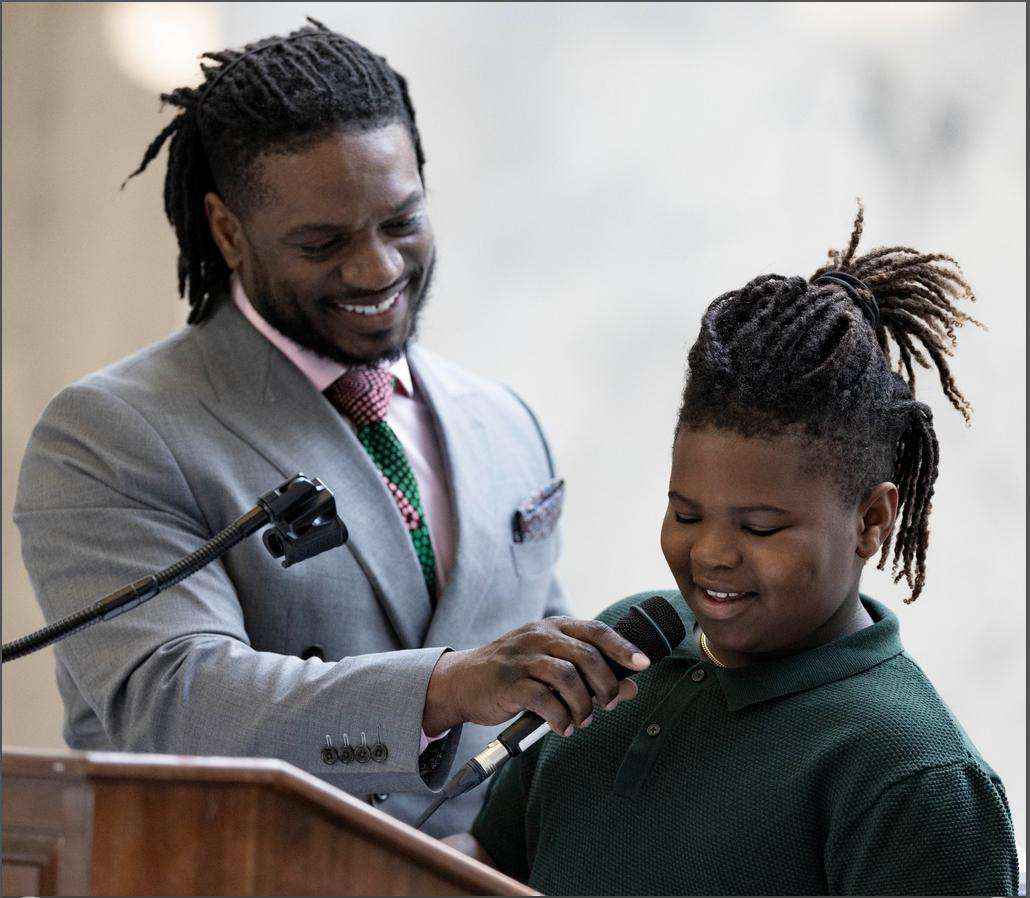
"But we must also be honest about where we fall short. Too many of our neighbors, especially immigrants, still experience fear ... separation, instability and inhumane treatment instead of dignity," Hollins said. "They have contributed to our economy, our culture and our communities and are living in the shadows, uncertain whether justice is going to protect them or punish them. Dr. King reminded us that injustice anywhere is a threat to justice everywhere, and that truth still demands our attention today."
The event at the Capitol was one of several around Utah on Monday.
The Salt Lake City NAACP branch held its annual luncheon to mark the day and to honor several community members. One honoree, Utah Sen. Luz Escamilla, D-Salt Lake City, received the group's Dr. Martin Luther King Jr. Civil Rights Award for her "unwavering commitment to civil rights and community empowerment," according to a statement from the group.
The University of Utah hosted a march and rally on Monday, part of numerous activities that go through the week. Organizers stressed the importance of unity and helping those in need.
"We need community now more than ever," Eddy Thompson Jr., part of the U.'s MLK Planning Committee, said in a statement. "We need to unite now more than ever as we see some of the different challenges in our communities."
The Utah Food Bank organized a day of service on Monday involving more than 100 volunteers, including participants in YouthCity Government, which serves children and teens in the city. The event is in its 24th year, and volunteers sorted donated food goods into care packages for seniors.
The Ogden Branch of the NAACP held a breakfast and march on Monday in Ogden.
'Expanding our right to vote'
Katie Wright, head of the Utah Donor Collaborative, also addressed the event at the Utah Capitol, organized by Beloved Community. The Utah Donor Collaborative aims to make "fairness, justice and opportunity" accessible to all.
Amid what she sees as a jump in political violence and voter intimidation, she stressed "that our political differences must be decided at the ballot box and elections need to be free and fair." However, she also warned that voting rights seem to be withering via changes to the federal Voting Rights Act and, here in Utah, via changes to the state's vote-by-mail laws.
"We must do our part in expanding our right to vote, protecting free and fair elections, protecting an independent judiciary and ensuring equal protection under the law," she said.
Igor Limansky, director of the Utah Division of Multicultural Affairs, referenced the charged political climate, which seems to reward outrage, among other things.
The nonviolence espoused by King "asks something different," he said. "It asks us for patience, moral clarity and the willingness to practice these principles in our schools, in our homes and particularly online."
Read more:

Multicultural Utah
Looking for more news about the different cultures that call Utah home? Visit our Multicultural Utah section for more stories, events and features.