'%3e%3cpath%20d='M34.1406%205.85938C30.3906%202.10547%2025.3047%200%2020%200C14.6953%200%209.60938%202.10547%205.85938%205.85938C2.10938%209.61328%200%2014.6953%200%2020C0%2025.3047%202.10547%2030.3906%205.85938%2034.1406C9.61328%2037.8906%2014.6953%2040%2020%2040C25.3047%2040%2030.3906%2037.8945%2034.1406%2034.1406C37.8906%2030.3906%2040%2025.3047%2040%2020C40%2014.6953%2037.8945%209.60938%2034.1406%205.85938ZM37.0117%2023.543H31.1602V13.5391H27.6328V19.9414C28.1211%2020.6914%2028.3711%2021.582%2028.3711%2022.5625V22.625C28.3711%2023.668%2028.1172%2024.6055%2027.6328%2025.4297V26.6094H36.082C33.4883%2032.9375%2027.2891%2037.3789%2020.0039%2037.3789C10.3711%2037.3789%202.62109%2029.6289%202.62109%2020C2.62109%2010.3711%2010.3711%202.62109%2020%202.62109C29.6289%202.62109%2037.3789%2010.3711%2037.3789%2020C37.3789%2021.1484%2037.2617%2022.2656%2037.0508%2023.3477C37.0391%2023.4141%2037.0234%2023.4766%2037.0117%2023.543Z'%20fill='white'/%3e%3cpath%20d='M22.3086%2018.5352C20.4336%2018.125%2019.9531%2017.8398%2019.9766%2017.1836V17.1406C19.9766%2016.6992%2020.3477%2016.2148%2021.4023%2016.2148C22.582%2016.2148%2023.8867%2016.6797%2025.0781%2017.4766L26.8516%2015.0195C25.4453%2013.8906%2023.707%2013.3398%2021.5547%2013.3398C18.5195%2013.3398%2016.4375%2015%2016.4063%2017.4766V17.5352C16.3633%2020.2617%2018.5859%2020.9805%2021.293%2021.6016C23.0391%2021.9766%2023.5703%2022.3164%2023.5703%2022.9609L23.5469%2022.9766C23.5469%2023.3906%2023.2578%2023.7031%2022.7852%2023.8359C22.5742%2023.9062%2022.1289%2023.9727%2021.5156%2023.9727C20.7617%2023.9727%2019.7539%2023.8633%2018.6328%2023.4844C18.0898%2023.2891%2017.4727%2023.0039%2016.8047%2022.6133L20.1406%2026.625C20.2813%2026.6602%2021.0977%2026.8516%2021.7734%2026.8516C25.0039%2026.8516%2027.0859%2025.2461%2027.1094%2022.6328V22.5703C27.1602%2020.1133%2025.2148%2019.1719%2022.3086%2018.5352Z'%20fill='white'/%3e%3cpath%20d='M5.24219%2013.5664V26.6133H8.75391V23.7578L10.2969%2021.9531L14.2031%2026.6133H18.3867L12.3555%2019.5195L17.4023%2013.5664H13.4531L8.75391%2019.0586V13.5664H5.24219Z'%20fill='white'/%3e%3c/g%3e%3cdefs%3e%3cclipPath%20id='clip0_97_2430'%3e%3crect%20width='40'%20height='40'%20fill='white'/%3e%3c/clipPath%3e%3c/defs%3e%3c/svg%3e)



Estimated read time: 4-5 minutes
- Utah lawmakers plan a permanent ban on youth transgender treatments by 2026.
- Speaker Mike Schultz criticizes a state report supporting gender-affirming treatments.
- The University of Utah defends the treatments amid national and international debate.
SALT LAKE CITY — Utah lawmakers plan to replace a moratorium on gender transition treatments for minors with a permanent ban during the 2026 legislative session, according to state House Speaker Mike Schultz.
Hormonal transgender treatments for children, defined as any medical action taken to facilitate an "attempted sex change," are already illegal in Utah. But Schultz said his Republican majority aims to solidify the state's stance on the issue.
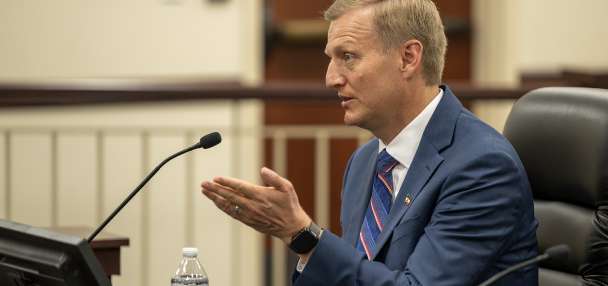
"Kids should not be transitioning. Period. End of story. Minors should not be transitioning. Period. End of story," Schultz, R-Hooper, told the Deseret News.
In 2023, the Legislature passed SB16, which prohibited sex reassignment surgeries for minors, put an indefinite pause on puberty blockers and cross-sex hormones for new child patients, and ordered a review of medical evidence to inform future policies.
The review, conducted by the University of Utah's Drug Regimen Center for the Utah Department of Health and Human Services, was presented to the Legislature in May. It purported to find positive health outcomes for "gender affirming treatments."
A report published in December by Do No Harm — a group of doctors who say they are focused on "keeping identity politics out" of medical research — identified significant flaws with Utah's review, including a failure to scrutinize low-quality data and "life-altering adverse effects."
Schultz, as well as the sponsors of SB16, now-U.S. Rep. Mike Kennedy and state Rep. Katy Hall, told the Deseret News they agree with Do No Harm's evaluation that the Utah Department of Health and Human Services review was biased and that its recommendations should not be used to inform lawmakers.
"Common sense is common sense," Schultz said. "I don't need a report, one way or the other, to tell me that. I just firmly believe that minors should not be transitioning."
In a statement to the Deseret News, a spokesperson for University of Utah Health continued to defend hormonal transgender treatments for minors, shining a light on the ongoing debate in the U.S. over evidence surrounding child transgender treatments, even as a host of other countries move to restrict their application.
What did Utah's DHHS review say?
Between April 2023 and August 2024, Utah's Department of Health and Human Services contracted with the University of Utah's Drug Regimen Review Center to conduct what it called "likely the most comprehensive" systematic review of studies related to transgender medical treatments to date.
The 1,000-page review compiled 134 English-language clinical studies, representing more than 28,000 transgender minors. Based on the evidence, Drug Regimen Review Center Director Joanne LaFleur said there is no justification for restricting hormonal transgender treatments for children.
"It is our expert opinion that policies to prevent access to and use of (gender-affirming hormone therapy) for treatment of (gender dysphoria) in pediatric patients cannot be justified based on the quantity or quality of medical science findings or concerns about potential regret in the future," the review stated.
Hormonal transgender treatments pose a negligible risk to long-term health, the Utah DHHS review said. This runs counter to reviews by England's National Health Service and the U.S. Department of Health and Human Services, which identified heightened risks of decreased bone density and stunted brain development.
The Utah Department of Health and Human Services review, which refers to hormonal transgender treatments as "gender-affirming care," claims there is "virtually no regret associated with receiving the treatments." Infertility was "not an outcome of focus" in the Utah review, despite the direct impact of hormonal transgender treatments on sexual function.
Upon receiving an initial presentation, the legislative task force overseeing the review noted that nearly all of the studies only reported short-term findings, tracking patients for just 1-2 years. The review's authors then worked to include additional information from studies that measured outcomes for at least five years.
The final version of the review, presented in May 2025, acknowledged that hormonal transgender treatments "may lead to irreversible physical changes," and are accompanied by an increase in mortality risks driven by suicide, non-natural causes and HIV/AIDS.
However, the review still concluded that, "Overall, there were positive mental health and psychosocial functioning outcomes."
Recommendations provided by the Utah Department of Health and Human Services included: creating a hormonal transgender treatment board managed by DHHS, limiting the providers who can deliver care and instituting an enhanced informed consent and assent process for minors.