'%3e%3cpath%20d='M34.1406%205.85938C30.3906%202.10547%2025.3047%200%2020%200C14.6953%200%209.60938%202.10547%205.85938%205.85938C2.10938%209.61328%200%2014.6953%200%2020C0%2025.3047%202.10547%2030.3906%205.85938%2034.1406C9.61328%2037.8906%2014.6953%2040%2020%2040C25.3047%2040%2030.3906%2037.8945%2034.1406%2034.1406C37.8906%2030.3906%2040%2025.3047%2040%2020C40%2014.6953%2037.8945%209.60938%2034.1406%205.85938ZM37.0117%2023.543H31.1602V13.5391H27.6328V19.9414C28.1211%2020.6914%2028.3711%2021.582%2028.3711%2022.5625V22.625C28.3711%2023.668%2028.1172%2024.6055%2027.6328%2025.4297V26.6094H36.082C33.4883%2032.9375%2027.2891%2037.3789%2020.0039%2037.3789C10.3711%2037.3789%202.62109%2029.6289%202.62109%2020C2.62109%2010.3711%2010.3711%202.62109%2020%202.62109C29.6289%202.62109%2037.3789%2010.3711%2037.3789%2020C37.3789%2021.1484%2037.2617%2022.2656%2037.0508%2023.3477C37.0391%2023.4141%2037.0234%2023.4766%2037.0117%2023.543Z'%20fill='white'/%3e%3cpath%20d='M22.3086%2018.5352C20.4336%2018.125%2019.9531%2017.8398%2019.9766%2017.1836V17.1406C19.9766%2016.6992%2020.3477%2016.2148%2021.4023%2016.2148C22.582%2016.2148%2023.8867%2016.6797%2025.0781%2017.4766L26.8516%2015.0195C25.4453%2013.8906%2023.707%2013.3398%2021.5547%2013.3398C18.5195%2013.3398%2016.4375%2015%2016.4063%2017.4766V17.5352C16.3633%2020.2617%2018.5859%2020.9805%2021.293%2021.6016C23.0391%2021.9766%2023.5703%2022.3164%2023.5703%2022.9609L23.5469%2022.9766C23.5469%2023.3906%2023.2578%2023.7031%2022.7852%2023.8359C22.5742%2023.9062%2022.1289%2023.9727%2021.5156%2023.9727C20.7617%2023.9727%2019.7539%2023.8633%2018.6328%2023.4844C18.0898%2023.2891%2017.4727%2023.0039%2016.8047%2022.6133L20.1406%2026.625C20.2813%2026.6602%2021.0977%2026.8516%2021.7734%2026.8516C25.0039%2026.8516%2027.0859%2025.2461%2027.1094%2022.6328V22.5703C27.1602%2020.1133%2025.2148%2019.1719%2022.3086%2018.5352Z'%20fill='white'/%3e%3cpath%20d='M5.24219%2013.5664V26.6133H8.75391V23.7578L10.2969%2021.9531L14.2031%2026.6133H18.3867L12.3555%2019.5195L17.4023%2013.5664H13.4531L8.75391%2019.0586V13.5664H5.24219Z'%20fill='white'/%3e%3c/g%3e%3cdefs%3e%3cclipPath%20id='clip0_97_2430'%3e%3crect%20width='40'%20height='40'%20fill='white'/%3e%3c/clipPath%3e%3c/defs%3e%3c/svg%3e)


Estimated read time: 8-9 minutes
- Utah will receive $195 million from the Rural Health Transformation Program to improve rural health care.
- The program aims to improve healthcare access, quality and outcomes in rural areas.
- Utah's initiatives include telehealth expansion, recruitment of health professionals and infrastructure development.
SALT LAKE CITY — Utah will get $195 million as its first-year grant from the federal Rural Health Transformation Program, which is slated to run five years with a total budget of $50 billion.
The program originated in the Working Families Tax Cuts legislation and was created to help modernize health care delivery and access in rural communities nationwide.
The goal of the program is to "strengthen rural communities across America by improving health care access, quality and outcomes by transforming the health care delivery ecosystem," according to the official Centers for Medicaid Services and Medicare website touting it. "Strategic goals" include improving health for rural residents, bolstering access to care, developing a skilled workforce to work in rural communities, as well as innovation in care and in use of technology.
The fund is designed to expand the availability of primary care, maternal and mental health services. Rural facilities will be able to use the money to modernize their technology and strengthen telehealth. They can improve recruitment and retention of care providers in rural communities. And perhaps most importantly, they are being asked to innovate care by creating community-focused models, with a goal to prevent chronic disease and boost rural health.
There are 10 approved uses for the funds, and states must spend the money on at least three of them. Those include such things as promoting evidence-based, measurable treatment to prevent and manage chronic disease, using technology "to improve efficiency, enhance cybersecurity capability development and improve patient health outcomes" and providing treatment for mental health, opioid use disorder and other substance use disorders, among others.
"Half of the $50 billion was divided evenly among states, giving each state $100 million a year. They competed for the other half based on their application, and the allocation decision also included land area and the size of the rural population and also how states were addressing a set of policy issues," Katherine Hempstead, senior policy officer at the Robert Wood Johnson Foundation, told Deseret News.
The fund is solely for the 50 states — Washington, D.C., and the U.S. territories were specifically excluded.
New Jersey got the smallest grant: the $100 million and an additional $47 million from the other half of the fund. "Texas got something like $281 million based on larger land area, larger rural population, and maybe a more favorable application and position on policies," she said.
Fund nuts and bolts
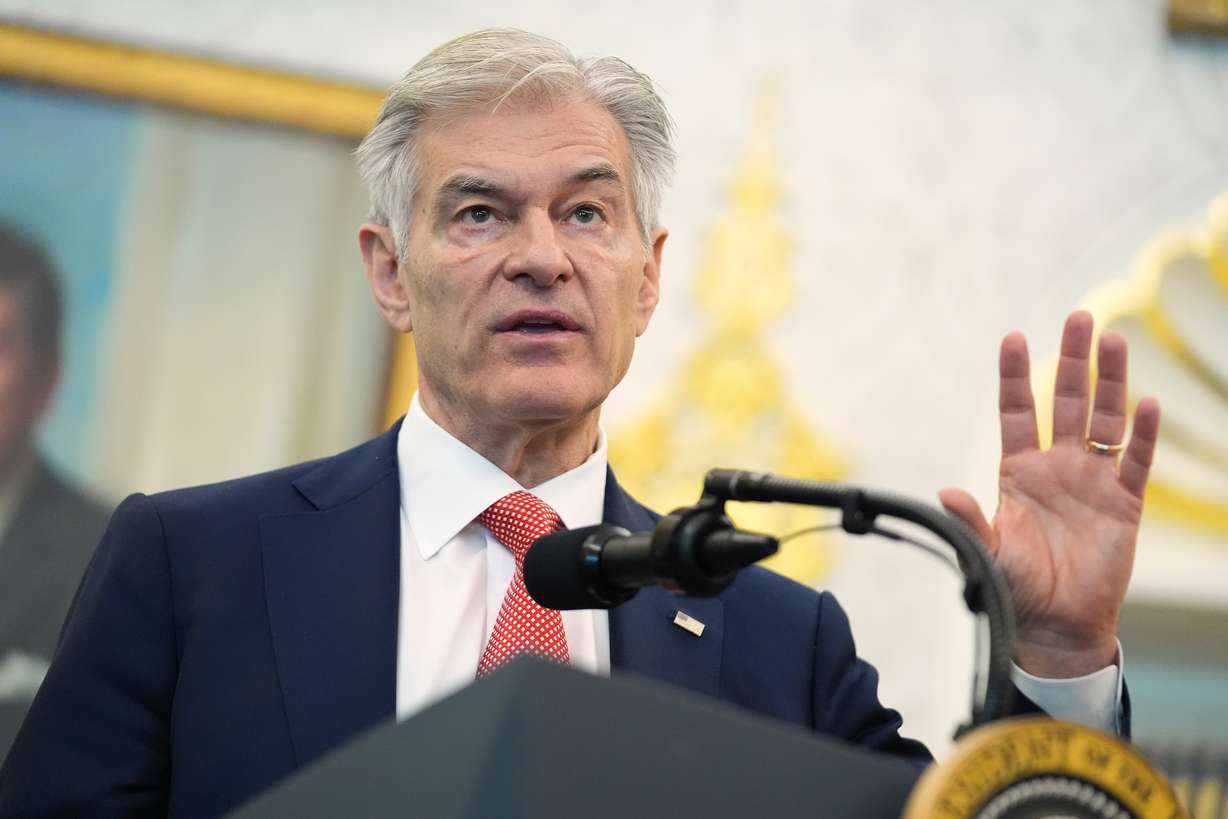
States cannot appeal to the administration for more money or sue if they don't like the amount they're awarded, the law that created the program states. It also gives the Centers for Medicare and Medicaid Services, which oversees the program, the right to cut future funding if states veer from favored policies. Dr. Mehmet Oz, center director, has told reporters that's not to punish states but is a bargaining chip governors can use when they're in disagreements with their legislatures. They can point out that failure to support certain programs or aspects of the program could cost the state dearly.
Politico reported that some critics were upset because large states and tiny states were treated the same, so states like California and Texas got less per capita than Rhode Island or Wyoming, for example, in the first half of the funding, divided evenly. Smaller states have said the equitable treatment helps them keep their hospitals and clinics open, since government programs may pay according to patient or services volume.
To receive the funds, states had to apply and explain how they planned to use the money. Hempstead said every state applied and was guaranteed at least the $100 million.
All of them must spend it and show quantifiable results within the grant period. Both quarterly and an annual report on use of the grant and its impact is required.
"Quickly" has been central to the process. There was one application period, which closed in November with no do-overs or extensions. And states can't change their mind about their goals. They have to live within the confines of the applications they submitted.
Hempstead said the fund was created in response to concerns about adverse effects of the so-called "One Big Beautiful Bill" and its hefty Medicaid cuts, which the Trump administration said would address waste, fraud and abuse in the Medicaid rolls. Others have disputed the characterization that the program is rife with problems.
The size of the Medicaid cuts has been substantial.
Related:

Utah doctor speaks out against potential Medicaid cuts in 'Big Beautiful Bill'
Dr. Addison Alley, an OB-GYN in Utah, is among 4,000 doctors who signed a letter to Congress warning that potential cuts to Medicaid could harm millions, including veterans.According to the Robert Wood Johnson Foundation, Medicaid spending in rural areas of the country has been cut about $137 billion over the next decade. Overall federal cuts to health care spending will reduce Medicaid funding by more than $900 billion.
"The (rural health transformation) fund is not exactly a consolation prize," Hempstead said, "but an attempt to offset some of that."
She said that Utah hospitals "lost tons of money," and some rural hospitals may not survive due to those cuts. This fund focuses on how rural care can be provided better.
At the Western Governors Association meeting in Arizona in November, Utah Gov. Spencer Cox said that "in our state there will for sure be some Medicaid cuts. We think we can absorb those cuts and offer robust services."
Hempstead noted that all the states' applications seemed pretty similar in terms of issues, such as the rural health care labor force, how to provide more services, the need to overcome transportation issues and better access to and use of digital health applications such as remote care, remote monitoring and mobile health options.
Utah's rural health vision
At the governors' meeting, Cox told the Deseret News that the rural health program will provide "some opportunities within those for innovation that, again, we haven't seen funded at the federal level before, and that's different. We keep funding the same thing and just getting more of it, which is bloat and wasted spending. And so making these competitive grants and giving us an opportunity to see how new technologies are going to be used... could really change things in health care for the first time in a long time."
Cox added that governors tend to think they're very smart: "I think I have a lot of answers." But not for health care, he said, calling it a "sticky wicket."
Cox said that although Utah brought "the best experts in the world together for the One Utah Collaborative, we still haven't brought down the costs in Utah. I'm willing to try just about anything to make a difference there. Access is important."
Brittney Okada, director of Utah's Rural Health Transformation Program, said that while the $100 million a year is set, the other half of the fund could be divided differently in the coming four years, so Utah might have more or less as a consequence. The decisions will be based in part on results of initiatives. She added that CMS will be heavily involved, providing support, and Utah already has an assigned program officer.
Per Okada, Utah hopes to modernize health care delivery in its rural communities, as well as expand access to local care for primary, maternal and behavioral health. She said some people travel an hour to receive certain kinds of care, and rural Utah has many people with chronic health conditions like high blood pressure and diabetes.
The state's application also looked at recruitment and retention of health professionals and innovation, among other goals.
In its snapshot of rural Utah, the application said that rural residents often work in agriculture, forestry, fishing and hunting, mining, construction, public administration, transportation and warehousing and utilities. Urban workers in Utah earn roughly 33% more than rural workers ($72,332 vs. $54,006) and unemployment is "significantly higher and more volatile in rural counties."
Utah proposed seven initiatives the award will fund that include focusing on health and prevention efforts, connecting services, telehealth, infrastructure and bolstering and keeping an engaged health care workforce, among others. Those are umbrellas for items including strengthening rural area food infrastructure, making sure students get physical activity and nutrition at school, strengthening emergency medical services in rural parts of the state, preventing cyberattacks and much more. The application is 75 pages long.
"As a department, we are committed to ensuring the funding is managed responsibly and in a manner that prevents waste, fraud and abuse," Okada said.
Applications typically came from each state's governor's office. Gov. Spencer Cox assigned the Utah Department of Health and Human Services to take the lead, and the state's director over the program, Brittney Okada, said that legislators and multiple stakeholders stepped up to lend their expertise.
During the application process, states were told to use a hypothetical $200 million a year grant as they put together proposed budgets. Should they receive larger or smaller awards, they would be able adjust the budget amounts as desired within the confines of the proposal. They were told not to entirely eliminate initiatives that are in the proposal or add new ones not in the application.
Administrative costs are capped at 10% of the grant amount. And direct payments to rural hospitals and clinics cannot exceed 15% of the award.
Oz recently said the money's not there to pay the bills, but rather to change the way health care in rural America is envisioned. States are being asked to "brainstorm better solutions."
Contributing: Brigham Tomco

Most recent Health stories
Related topics
 Lois M. Collins