Estimated read time: 5-6 minutes
How Annette Jarvis found joy — and healing — in the Utah Symphony Chorus
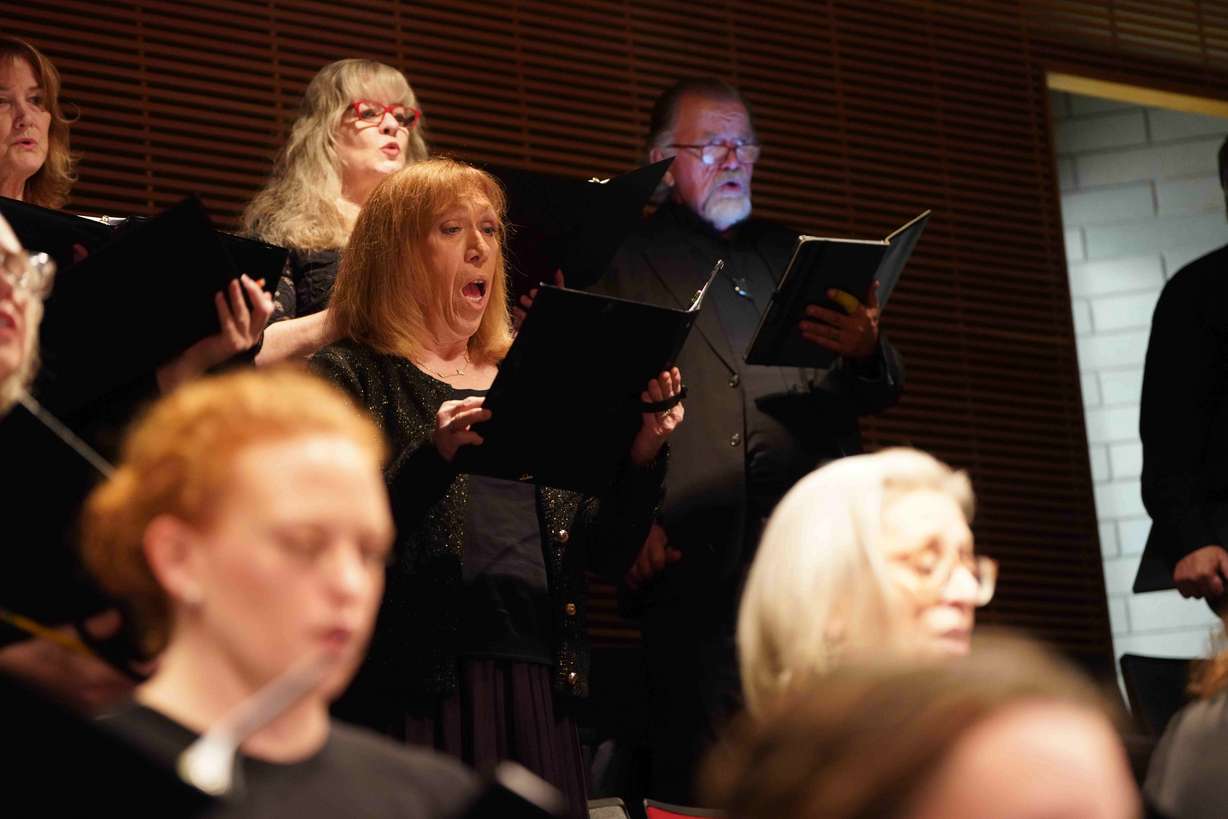
Five years ago, Annette Jarvis — a member of the Utah Symphony Chorus and current Board Chair of Utah Symphony | Utah Opera — thought she'd never sing again. Thyroid cancer surgery had damaged nerves in her throat, stealing her voice.
At first, she could only whisper.
After months of working with speech pathologists, Jarvis could speak. But her voice, much lower in pitch than it used to be, wobbled uncontrollably when she tried to sing. Doctors said it was unlikely to improve.
Jarvis, a successful bankruptcy attorney by profession, couldn't remember a time when she didn't sing. Her mother taught her first. She started singing in choirs when she was 9 years old.
"My youngest daughter would say, 'People think of you as a serious lawyer, because they haven't heard you singing in the car.'"
As co-managing shareholder of the Salt Lake City office of Greenberg Traurig, Jarvis is no stranger to grit. She had to find a way to sing again. So she called the McBeths.
An unexpected Christmas gift
Christopher and Julie McBeth are at the heart of Utah's classical music world. Christopher has been Utah Opera's artistic director for more than 20 years. Julie, executive assistant to the Utah Symphony | Utah Opera CEO, sings in the Utah Opera Chorus and organizes the Utah district round of the Metropolitan Opera Laffont Competition.
Julie contacted Lynn Maxfield, a choir colleague and singing voice rehabilitation specialist at the University of Utah, for a recommendation. He offered to work with Jarvis himself, though he knew that an injury like hers to the superior laryngeal nerve was particularly challenging.
Because it was the early months of the Covid shutdown, Jarvis introduced herself over email. Her words about her family stood out to him.
"I realize I can never sing in public again or even in church or community choirs," Jarvis wrote. "But I would like not to be embarrassed singing with my family, including with my grandchildren, who miss me not singing with them."
"You don't realize how much your voice is part of your identity," Jarvis said.
As they met virtually, Maxfield made her feel safe. He built on the progress Jarvis had made with her voice therapist, working with her on what's called resonant voice therapy. Because of the nerve damage, she needed to retrain other muscles to help control her pitch, especially for high notes.
In essence, she had to retrain her brain by focusing on physical sensations such as vibrations in the front of her mouth and lips, working toward more stability in her voice.
"Some days I'd give up in frustration," Jarvis recalled.
After nine months, she could sing her first song: "Homeward Bound," by Marta Keen. But no one else had heard her — yet. It was right around Christmas when she sang "In the Bleak Midwinter" in front of her family.
The moment felt like a miracle.
Jarvis was determined to keep going.
A joyful chorus
Over two years, she worked with Maxfield weekly until one night, while cooking dinner, she started singing along to a recording of Handel's "Messiah," which she'd memorized in college.
Suddenly, Jarvis realized: "I can do this again."
Maxfield agreed.
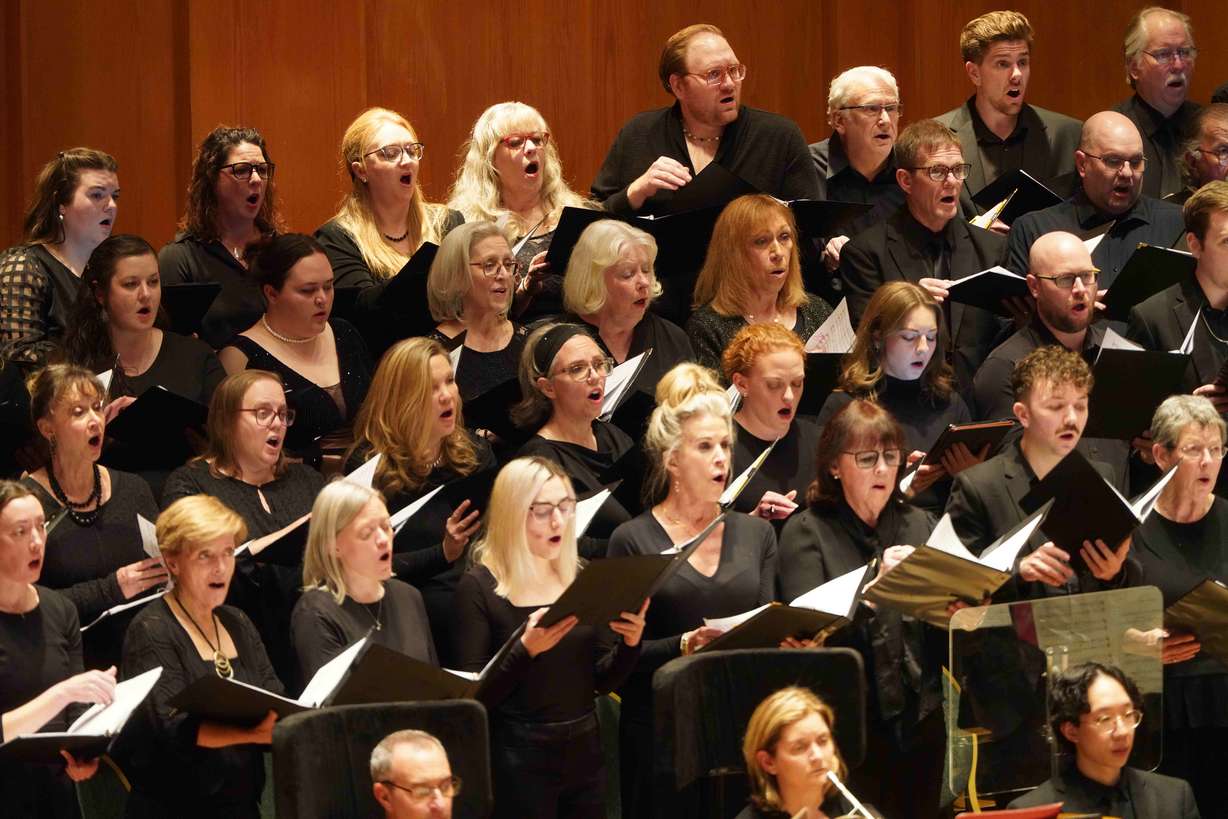
Jarvis asked Christopher McBeth if she could sing with the Utah Symphony Chorus at the annual Messiah Sing-In, a longtime Utah Symphony | Utah Opera tradition. When former chorus director Sharon Lavery heard Jarvis sing, she said, "You have a beautiful voice... you should come sing everything with us."
And now Jarvis does.
Healthy voices
Vocal injury has been stigmatized, Maxfield explained. Singers often don't want to admit they have problems, because they worry about how that might affect their prospects. Some teachers don't want singers to disclose their injuries, mistakenly thinking that it reflects poorly on their teaching. But the culture seems to be shifting.
"Some high-profile singers are being vocal about their own injuries and demystifying and destigmatizing it," said Maxfield, who directs the Utah Center for Vocology at the University of Utah, where he teaches and leads research on voice and the intersection of music and wellbeing.
He tells his students that if they have a sudden change in their voice that doesn't resolve in a week or so and isn't explained by something like a cold, they should get evaluated by a specialist. Ideally, that would include a visit to a laryngologist — an ENT who has specialty training in voice and upper airway disorders.
Every other musician gets to put their instrument away after rehearsal "in a nice, satin-lined box," Maxfield observed. Singers don't get to put away their voice, ever.
"It's totally normal. It's going to get beat up every now and again," he said.
Now Jarvis tells her story to everyone.
"It encourages people to be self-disclosing," she noted. "As I talk to other singers they say, 'Maybe I should get some help, too.'"
Triumph with Mozart
After the final performance of Mozart's "Requiem" with the Utah Symphony Chorus last spring, Jarvis felt elated.
"To be able to make such beautiful music collectively with so many talented musicians after years of work to recover my voice was just an indescribable feeling of triumph," she recalled. "I'm sure my friends in the audience, including Lynn Maxfield and Christopher and Julie McBeth, could see that emotion on my face."
Chair of the USUO Board of Trustees since September 2025, Jarvis believes strongly in the connection between music and wellness, which USUO pursues through programs in partnership with schools, hospitals, medical professionals, and healthcare organizations. Jarvis is living proof of how closely music and mental health are intertwined.
"For me, it is a sense of indescribable joy to sing again," she said.
You can hear Annette Jarvis sing with the Utah Symphony Chorus in Handel's "Messiah," Nov. 29-30 at 7:30 p.m. at Abravanel Hall.
The Utah Symphony Chorus will hold auditions for "Carmina Burana" Jan. 10, 2026. For more information, click here.