Estimated read time: 3-4 minutes
- The United Nations approved a resolution urging countries to uphold the Olympic Truce on Thursday.
- IOC President Kirsty Coventry emphasized separating sports from politics at the U.N.
- It comes as Indonesia's 2036 Summer Olympics bid was recently halted over denying visas to Israeli athletes.
NEW YORK — A resolution urging countries to uphold the Olympic Truce has once again been approved by the United Nations.
The call for Games-time peace known as "ekecheiria" dates back to Ancient Greece, when a treaty pledging safe passage for athletes and spectators to participate in the original Olympics was signed by the leaders of warring city-states.
Since being revived by the International Olympic Committee in the 1990s, the U.N. General Assembly has adopted a resolution entitled, "Building a peaceful and better world through sport and the Olympic ideal," every two years, ahead of an upcoming Games.
In 2001, the Olympic Truce resolution for the 2002 Winter Games in Utah did not call for a cessation of hostilities around the world due to the U.S. military efforts following the Sept. 11, 2001, terrorist attacks against the United States.
This year's resolution was introduced Wednesday by Giovanni Malagò, president of the organizing committee for next February's 2026 Winter Games in Milan-Cortina, Italy. He told the U.N. delegates the Olympics "show the world that there is an alternative to conflict."
The resolution recognizes the "core concept of ekecheiria, historically, has been the cessation of hostilities from seven days before until seven days after the Olympic Games," which would be Jan. 30 through March 22 next year, following the Paralympics for athletes with disabilities.
IOC President Kirsty Coventry also addressed the General Assembly in New York City, describing the spirit of the Olympic Truce as "a call to set aside what divides us — and rather to focus on what unites us."
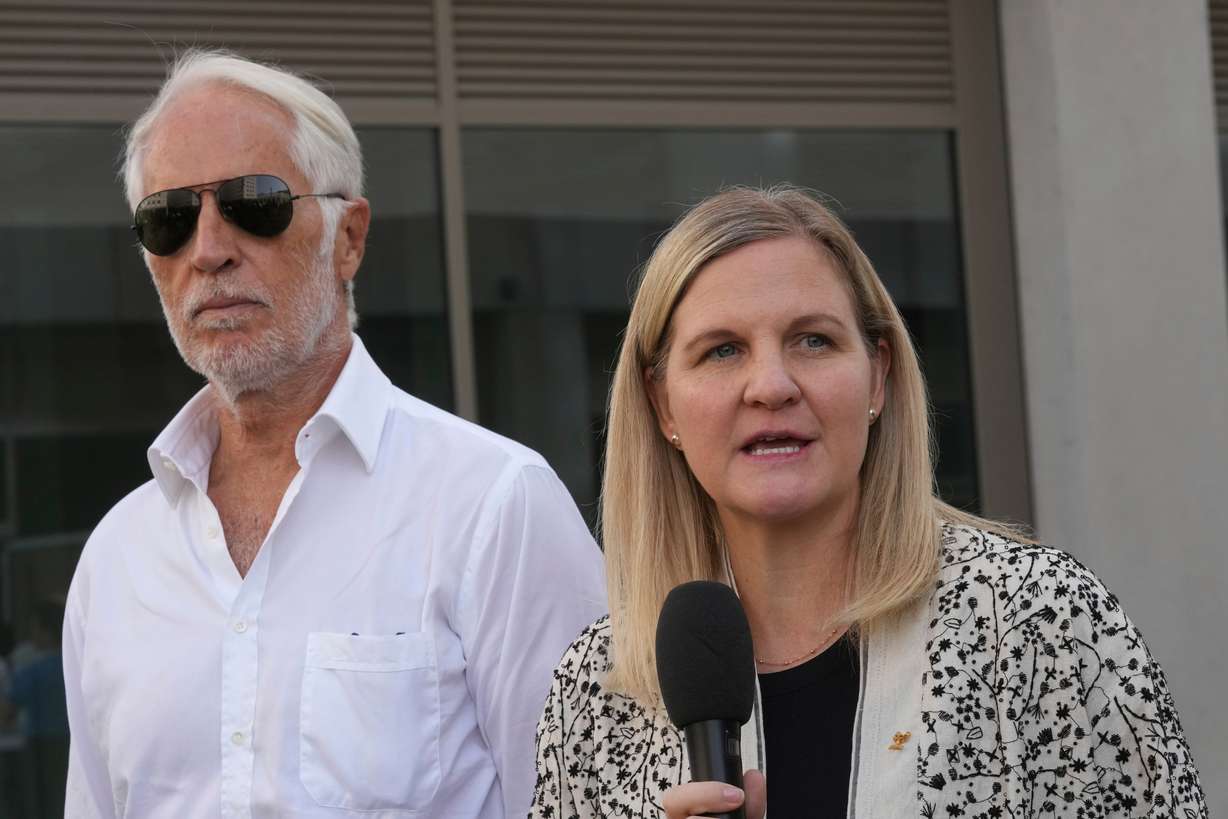
Athletes can offer the world a look at "what humanity can be at its very best," but not without help, the new president said, urging the delegates to work with the IOC to make sure sport and politics stay separate.
"This means athletes must be able to enter host countries and take part in competitions — not face the threat of being left back at home because they are denied a visa for politically motivated reasons," Coventry said.
International sports federations, not governments, must decide the final list of competitors, she said, adding that "athletes must not be judged on where they come from but rather on their sporting merits."
Coventry, an Olympic champion swimmer from Zimbabwe who is the first woman and first African to lead the IOC, delivered a similar message Monday in Brussels, to the European Olympic Committee's seventh "European Evening of Sport," using her own experience as an example.
"If you had decided to sanction me when my country was going through turmoil, I would not have made it to the Olympic Games. I would not have won my Olympic medals. My path would have been completely different than it is today," she said. "Sport changed my life."
Last month, IOC leaders took swift action against Indonesia, after Israeli athletes were denied visas to an international gymnastics competition in Jakarta. Indonesian officials said the decision was "in line with Indonesia's commitment to support Palestinian independence."
But the IOC executive board led by Coventry halted Indonesia's bid for the 2036 Summer Games and the likelihood that the Muslim-majority country will host any major sporting events until there are "adequate guarantees" that all participants can attend, regardless of nationality.