- The IOC is reviewing sponsorships and potential permanent Olympic hosts, impacting Utah's 2034 Games.
- Fraser Bullock and Gene Sykes anticipate significant recommendations affecting Olympic organizing committees.
- Utah's organizers plan to secure $231 million from IOC sponsorships for the 2034 Games.
SALT LAKE CITY — Could a new look at the International Olympic Committee's sponsorship program mean more money for Utah's 2034 Winter Games? And could a decision on a system rotating future Olympics among several permanent hosts be coming sooner rather than later?
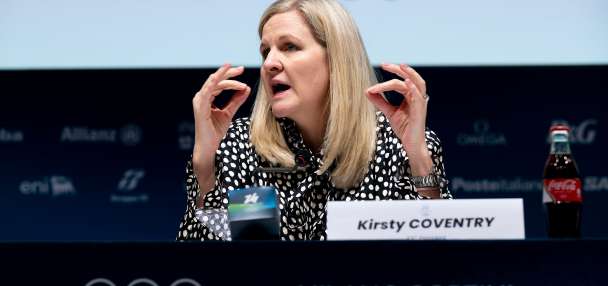
The IOC's new president, Kirsty Coventry of Zimbabwe, recently named members of the Switzerland-based organization to working groups charged with reviewing key elements of the Olympics, including sponsorships and a possible Games rotation.
Another working group, focused on "protecting the female category," is getting a lot of attention despite being so secretive that the membership on the group dealing with transgender athlete participation has not been made public "to protect the integrity of the group and their work."
But it's the issues surrounding sponsorships, a key source of revenue for Olympic organizers, and the possibility of becoming a permanent Winter Games site that could have significant impacts on Utah.
Fraser Bullock, president and executive chairman of the organizing committee for the 2034 Olympic and Paralympic Winter Games, expects to see "very significant recommendations that will be helpful to the movement, including to OCOGs," Olympic organizing committees like Utah's.
Gene Sykes, one of four IOC members from the United States, is serving on the "Commercial Partnerships and Marketing" working group that's examining the IOC's sponsorship program, known as The Olympic Program or TOP, that helps fund Summer and Winter Games.
Sykes is also the chairman of the U.S. Olympic and Paralympic Committee and sits on the powerful executive committee of Utah's organizing committee for the 2034 Winter Games.
He told the Deseret News that the focus of the working group isn't on the revenues shared with Games organizers but what the international sponsorship program for the Olympics looks like going forward.
"Utah gets a share of the TOP sponsorship, but it's really, how do we deal with TOP sponsorships? What should be the strategy for engaging them, how do you help them activate, for keeping and getting new ones," Sykes said.
"A lot of things have evolved since they started the program. The program was a pioneer when they started it," he said. "Now, everything has changed, so you have to update it and make sure it is as fresh as possible."
How Olympic sponsorships may be changing
The IOC saw three of its 15 TOP sponsors leave the decades-old program last year, Toyota, Panasonic and Bridgestone. All were based in Japan, where the 2020 Summer Games in Tokyo were delayed a year and even then were off-limits to spectators due to the COVID-19 pandemic.
Sponsorships are a major source of revenue for the IOC, adding up to more than $2 billion in the last four-year Olympic cycle, according to The Associated Press. And Utah's Olympic organizers are counting on significant sponsor dollars, too.
To cover the $4 billion price tag for the 2034 Games without using state or local tax dollars, organizers say it'll take $231 million from the IOC's international sponsorship revenues plus another $1.8 billion from the sale of domestic sponsorships in partnership with the USOPC.
Just what product or service categories are available for sponsorships is on the table.
"Sometimes the categories were set up on the definitions that were in place 30 years ago," Sykes said. "We didn't have mobile phones 30 years ago, so they've had to create categories for things that were narrowly defined when everything is dynamic."
Now, mobile phones have many functions, as "watches and cameras and recording devices and platforms for AI analysis. Who could have imagined all this," he said, adding, "you want to have your mind open as much as possible."
A shuffle could open up new sponsor categories to be sold as domestic sponsorships by organizing committees, although it's too soon to say what that might mean for Utah's next Olympics.
The IOC did allow the 2028 Summer Games in Los Angeles to fill the auto category previously held by Toyota. In June, Honda became a "Founding Partner and the Official Automotive Partner" of Team USA and the LA Games in a deal believed to be worth at least $200 million.
New sponsor opportunities could go beyond what's left once the international-level categories are reset, Sykes said, to "how much flexibility do you give a domestic program to define things that might be companions to the TOP program."
More revenue for Utah's Games as a result of the working group's recommendations is "certainly a possibility," Bullock said, adding, "we always want to do better than we thought in every category. But I'm wide open to innovation, creativity, having the best minds get together."
He called the effort "very healthy for the movement because the world is evolving so quickly, in the world of sport, in the areas of technology, in the areas of revenue and sponsorship, to just keep up, let alone get ahead of things, it takes a very deep and dynamic look."
Because there's another Olympics currently in the U.S. market, the 2028 Summer Games in Los Angeles, Utah's Winter Games organizers have to wait until 2029 to start selling domestic sponsorships.
By then, Bullock said, any changes made as a result of the working group should be in place. And he said the existing international sponsorship slots, largely filled beyond the LA Games, are "wide open" for 2034.
Last year, the IOC's marketing director, Anne-Sophie Voumard, described TOP as "very, very dynamic" and made it clear that Olympic sponsors are being sought in new markets, such as India.
Many TOP sponsors are American companies, including Coca-Cola, Airbnb and VISA, although China's Alibaba, a technology company that specializes in e-commerce, was signed by the IOC in 2017.