'%3e%3cpath%20d='M34.1406%205.85938C30.3906%202.10547%2025.3047%200%2020%200C14.6953%200%209.60938%202.10547%205.85938%205.85938C2.10938%209.61328%200%2014.6953%200%2020C0%2025.3047%202.10547%2030.3906%205.85938%2034.1406C9.61328%2037.8906%2014.6953%2040%2020%2040C25.3047%2040%2030.3906%2037.8945%2034.1406%2034.1406C37.8906%2030.3906%2040%2025.3047%2040%2020C40%2014.6953%2037.8945%209.60938%2034.1406%205.85938ZM37.0117%2023.543H31.1602V13.5391H27.6328V19.9414C28.1211%2020.6914%2028.3711%2021.582%2028.3711%2022.5625V22.625C28.3711%2023.668%2028.1172%2024.6055%2027.6328%2025.4297V26.6094H36.082C33.4883%2032.9375%2027.2891%2037.3789%2020.0039%2037.3789C10.3711%2037.3789%202.62109%2029.6289%202.62109%2020C2.62109%2010.3711%2010.3711%202.62109%2020%202.62109C29.6289%202.62109%2037.3789%2010.3711%2037.3789%2020C37.3789%2021.1484%2037.2617%2022.2656%2037.0508%2023.3477C37.0391%2023.4141%2037.0234%2023.4766%2037.0117%2023.543Z'%20fill='white'/%3e%3cpath%20d='M22.3086%2018.5352C20.4336%2018.125%2019.9531%2017.8398%2019.9766%2017.1836V17.1406C19.9766%2016.6992%2020.3477%2016.2148%2021.4023%2016.2148C22.582%2016.2148%2023.8867%2016.6797%2025.0781%2017.4766L26.8516%2015.0195C25.4453%2013.8906%2023.707%2013.3398%2021.5547%2013.3398C18.5195%2013.3398%2016.4375%2015%2016.4063%2017.4766V17.5352C16.3633%2020.2617%2018.5859%2020.9805%2021.293%2021.6016C23.0391%2021.9766%2023.5703%2022.3164%2023.5703%2022.9609L23.5469%2022.9766C23.5469%2023.3906%2023.2578%2023.7031%2022.7852%2023.8359C22.5742%2023.9062%2022.1289%2023.9727%2021.5156%2023.9727C20.7617%2023.9727%2019.7539%2023.8633%2018.6328%2023.4844C18.0898%2023.2891%2017.4727%2023.0039%2016.8047%2022.6133L20.1406%2026.625C20.2813%2026.6602%2021.0977%2026.8516%2021.7734%2026.8516C25.0039%2026.8516%2027.0859%2025.2461%2027.1094%2022.6328V22.5703C27.1602%2020.1133%2025.2148%2019.1719%2022.3086%2018.5352Z'%20fill='white'/%3e%3cpath%20d='M5.24219%2013.5664V26.6133H8.75391V23.7578L10.2969%2021.9531L14.2031%2026.6133H18.3867L12.3555%2019.5195L17.4023%2013.5664H13.4531L8.75391%2019.0586V13.5664H5.24219Z'%20fill='white'/%3e%3c/g%3e%3cdefs%3e%3cclipPath%20id='clip0_97_2430'%3e%3crect%20width='40'%20height='40'%20fill='white'/%3e%3c/clipPath%3e%3c/defs%3e%3c/svg%3e)




This archived news story is available only for your personal, non-commercial use. Information in the story may be outdated or superseded by additional information. Reading or replaying the story in its archived form does not constitute a republication of the story.
- Thousands at Utah Valley University witnessed Charlie Kirk's murder, causing potential long-term trauma.
- Experts emphasize the importance of acknowledging trauma and seeking support for emotional healing.
- Support should be ongoing as trauma effects can manifest months or years after the event.
SALT LAKE CITY — Thousands of people — many of them young adults — who had gathered at Utah Valley University in Orem on Wednesday to hear Charlie Kirk talk about politics, ideas and America's future instead witnessed what turned out to be his murder. Trauma experts say they may carry that burden for a very long time.
"There's no simple, magical formula for making people OK after a terrifying, traumatizing event," said Joel A. Dvoskin, a clinical psychologist at University of Arizona School of Medicine.
That's certainly been true for Cindy Maudsley, who was 15 in 1999 when two teens rampaged through Columbine High School in Lakewood, Colorado, killing 13 students and wounding 21 more. Twenty-six years later, the Bountiful wife and mom was out jogging when she learned from a friend that Kirk had been shot and she said it hit her really hard. She felt like she couldn't breathe and realized she was tearing up.
She wants the witnesses in Orem to be prepared, because "you never know what will trigger an emotion" or how long-tail the reaction to the trauma will be, she said. Everyone reacts differently — and each individual also reacts differently at different times, she added.
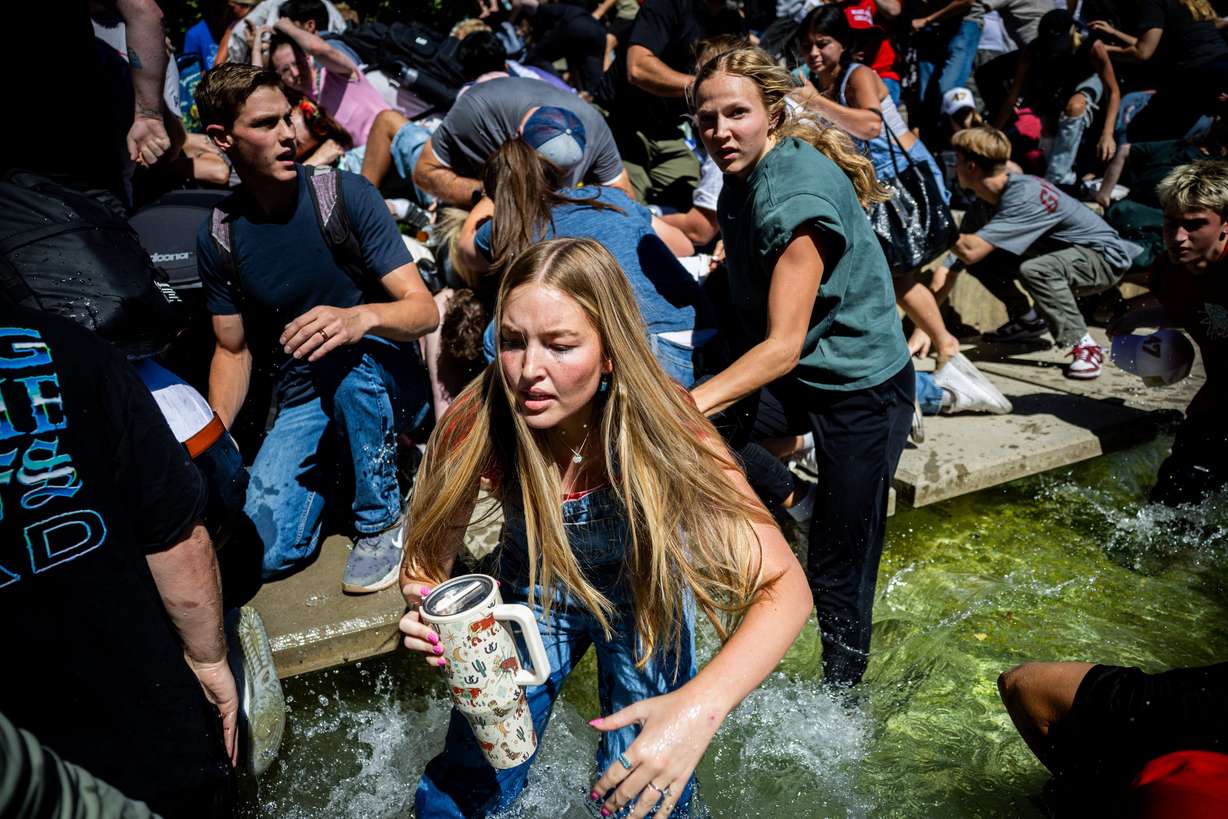
"It took me a while to process everything," she said of Columbine. "I would say it's important to acknowledge what you saw and that it was traumatic and not to downplay it."
The do's and don'ts of helping people heal
There's a ripple effect after a traumatic experience. Not only those who were there, but also their loved ones, those who watch the videos, even across the entire nation can feel a lot of emotions, according to Amanda McNab, a licensed clinical social worker who holds a doctorate and works at Huntsman Mental Health Institute.
So it's important to know that there are resources to help, from supportive people in one's life to professional counselors who know how to help one process trauma.
Most people, in fact, will experience trauma at some point and "it will hit people differently because of their past and what's going on for them in that moment," McNab said.
Those who want to help someone traumatized by this or other terrible events should provide them with the opportunity to talk things out, express their emotions and feel safe in doing so, she said. You don't have to agree with their opinions to be supportive and validate the experience and how they feel. What's important is being a safe place and listening so they can process out loud.
"So listen. We can't fix it. We can't go back and change what happened. We can't really say it's going to be OK," said McNab. "Being able to be present and help them be present, not getting caught up in past situations that might be triggered or stuck in some of the negative thoughts that can develop" after an event is also helpful.
But she also warns that listening can be triggering to the person hearing what someone experienced or saw, so the supportive person also needs to know their own boundaries.
Time and trauma are linked, but not necessarily matched, Dvoskin said. It's common in the immediate aftermath to bring in counselors and others so those who were traumatized can talk about what they saw or felt or experienced.
But he noted that not everyone is ready to talk about it. Not everyone needs that. And not everyone is finished processing when days or weeks or even months pass and the counselors and others brought in to help pack up and leave.

"A few months isn't long enough to know who's going to have symptoms of the sequelae of serious trauma," Dvoskin told Deseret News. So the support should endure to meet the need.
Dvoskin was on the team that went to Columbine to provide comfort and support after the shootings there. He returned two years later to conduct a study, interviewing 60 witnesses and survivors.
"What I learned is that they were in just as much pain and trouble in many cases two years later as they were in those few months after the shootings," he said. "Trauma for some people is an acute issue and it goes away after a little bit of time. For some — for many — it doesn't. If you're going to offer resources, in my opinion it should not be offered for a short period of time."
Don Grant, a Los Angeles-area psychologist, author and researcher who specializes in technology's impact on mental health, agrees. "Everybody gathers around right when it happens, but we need to realize that it could be six months later, they're still maybe carrying it, and everyone else has moved on."
He stressed the role of parents and friends in providing gentle support and monitoring mental health, even months later.
"I would hope that parents and friends — especially parents — know their child, know their threshold, their maturity and what they can handle. But I think it's just being there, gently supporting them, making sure that they check in on them, seeing if it's something that they want to talk about."
Dvoskin said people may think they're just fine and find themselves instead weeping unexpectedly months later "for no apparent immediate reason, because it's hit them later. And many people won't have any issues at all. It'll be a sad event and they're sorry they were there."
Read the full story at Deseret News.