'%3e%3cpath%20d='M34.1406%205.85938C30.3906%202.10547%2025.3047%200%2020%200C14.6953%200%209.60938%202.10547%205.85938%205.85938C2.10938%209.61328%200%2014.6953%200%2020C0%2025.3047%202.10547%2030.3906%205.85938%2034.1406C9.61328%2037.8906%2014.6953%2040%2020%2040C25.3047%2040%2030.3906%2037.8945%2034.1406%2034.1406C37.8906%2030.3906%2040%2025.3047%2040%2020C40%2014.6953%2037.8945%209.60938%2034.1406%205.85938ZM37.0117%2023.543H31.1602V13.5391H27.6328V19.9414C28.1211%2020.6914%2028.3711%2021.582%2028.3711%2022.5625V22.625C28.3711%2023.668%2028.1172%2024.6055%2027.6328%2025.4297V26.6094H36.082C33.4883%2032.9375%2027.2891%2037.3789%2020.0039%2037.3789C10.3711%2037.3789%202.62109%2029.6289%202.62109%2020C2.62109%2010.3711%2010.3711%202.62109%2020%202.62109C29.6289%202.62109%2037.3789%2010.3711%2037.3789%2020C37.3789%2021.1484%2037.2617%2022.2656%2037.0508%2023.3477C37.0391%2023.4141%2037.0234%2023.4766%2037.0117%2023.543Z'%20fill='white'/%3e%3cpath%20d='M22.3086%2018.5352C20.4336%2018.125%2019.9531%2017.8398%2019.9766%2017.1836V17.1406C19.9766%2016.6992%2020.3477%2016.2148%2021.4023%2016.2148C22.582%2016.2148%2023.8867%2016.6797%2025.0781%2017.4766L26.8516%2015.0195C25.4453%2013.8906%2023.707%2013.3398%2021.5547%2013.3398C18.5195%2013.3398%2016.4375%2015%2016.4063%2017.4766V17.5352C16.3633%2020.2617%2018.5859%2020.9805%2021.293%2021.6016C23.0391%2021.9766%2023.5703%2022.3164%2023.5703%2022.9609L23.5469%2022.9766C23.5469%2023.3906%2023.2578%2023.7031%2022.7852%2023.8359C22.5742%2023.9062%2022.1289%2023.9727%2021.5156%2023.9727C20.7617%2023.9727%2019.7539%2023.8633%2018.6328%2023.4844C18.0898%2023.2891%2017.4727%2023.0039%2016.8047%2022.6133L20.1406%2026.625C20.2813%2026.6602%2021.0977%2026.8516%2021.7734%2026.8516C25.0039%2026.8516%2027.0859%2025.2461%2027.1094%2022.6328V22.5703C27.1602%2020.1133%2025.2148%2019.1719%2022.3086%2018.5352Z'%20fill='white'/%3e%3cpath%20d='M5.24219%2013.5664V26.6133H8.75391V23.7578L10.2969%2021.9531L14.2031%2026.6133H18.3867L12.3555%2019.5195L17.4023%2013.5664H13.4531L8.75391%2019.0586V13.5664H5.24219Z'%20fill='white'/%3e%3c/g%3e%3cdefs%3e%3cclipPath%20id='clip0_97_2430'%3e%3crect%20width='40'%20height='40'%20fill='white'/%3e%3c/clipPath%3e%3c/defs%3e%3c/svg%3e)




Estimated read time: 4-5 minutes
This archived news story is available only for your personal, non-commercial use. Information in the story may be outdated or superseded by additional information. Reading or replaying the story in its archived form does not constitute a republication of the story.
- The Utah Supreme Court halted Ralph Menzies' execution, ordering a new competency hearing.
- Menzies' vascular dementia raises questions about his competency for execution, the court ruled.
- Menzies was convicted of kidnapping and murdering Maurine Hunsaker in 1986.
SALT LAKE CITY — Next week's firing squad execution of death row inmate Ralph Leroy Menzies will not happen because of a Utah Supreme Court ruling handed down Friday afternoon.
In a 5-0 vote, the state's high court announced that 3rd District Judge Matthew Bates erred by not allowing Menzies a new competency hearing.
"Menzies' vascular dementia and its progressive effects call into question whether he remains competent to be executed. We acknowledge that this uncertainty has caused the family of Maurine Hunsaker immense suffering, and it is not our desire to prolong that suffering. But we are bound by the rule of law, and the law dictates that if Menzies makes a prima facie showing a substantial change of circumstances that raises a significant question about his competency to be executed, a district court must reevaluate his competency, even though it may cause additional delay," the high court wrote in its decision.
"We hold that Menzies' petition for reevaluation made a prima facie showing that requires the district court to reevaluate his competency. We reverse the district court's order denying Menzies' petition for reevaluation, vacate the warrant of execution and remand to the district court for further proceedings."
The decision comes more than a week after attorneys for both sides presented their arguments in person to the judges.
"We are pleased that the Supreme Court has ensured Mr. Menzies will not be executed without the benefit of an updated, independent competency evaluation," Lindsey Layer, one of Menzies' attorneys, said in a statement on Friday.
"It has been more than a year since his last evaluation, during which time his dementia has significantly worsened. He's tethered to an oxygen tank, uses a wheelchair, is confused and disoriented, and no longer understands why the state of Utah is trying to kill him. We look forward to presenting our case in the trial court," Layer said.
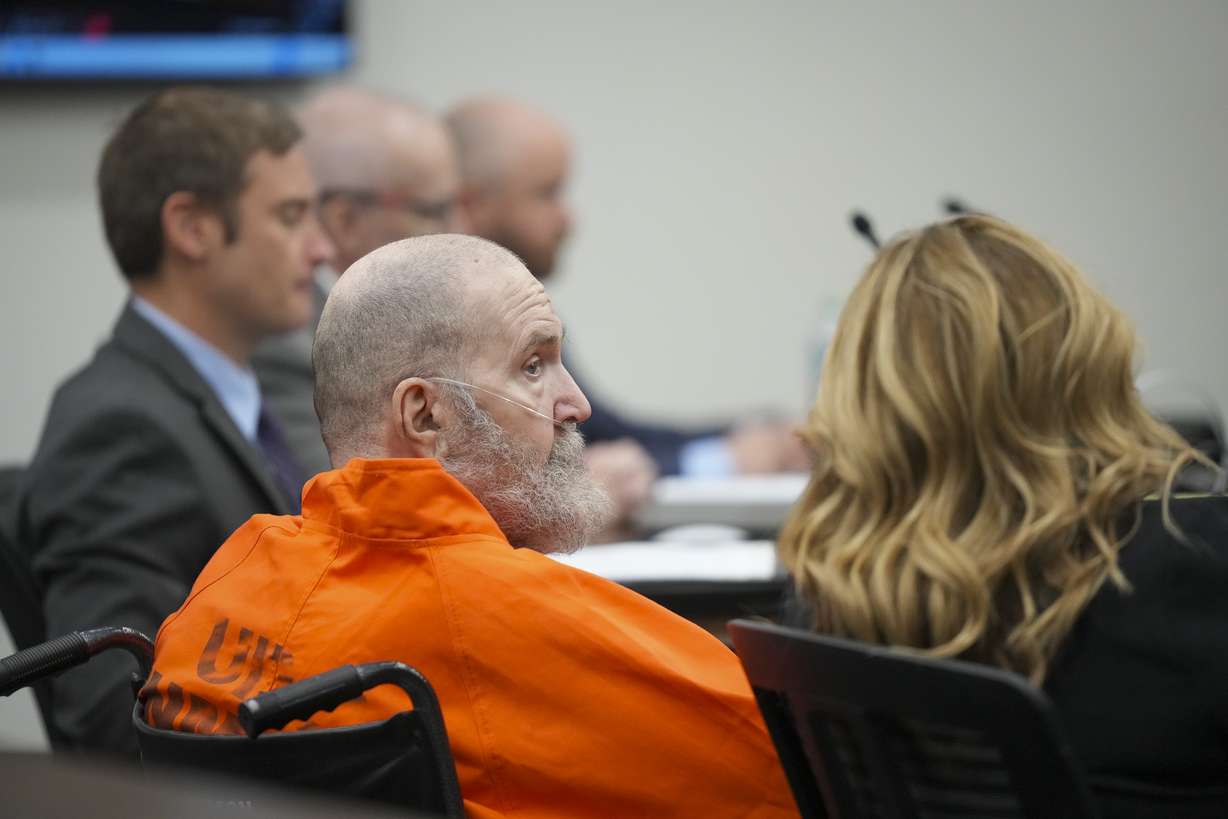
Menzies' attorneys argued to the court that their client has "advanced vascular disease resulting in dementia, with severe brain atrophy," and his condition has declined so much since the June 6 ruling of competency that it raises a "substantial" question of his current state. Furthermore, the attorneys argued that Bates should not have signed Menzies' death warrant while knowing an appeal was in the works.
On Friday, the state's high court agreed. In its 23-page decision, the justices concluded that Menzies' petition for a new competency hearing included "specific allegations" to show a "substantial" change in Menzies' condition, and because of that, the district court judge needed to grant a new hearing.
"Here, rather than look to the petition alone, the court reevaluated competency by weighing the allegations and supporting materials against a number of recorded phone calls submitted by the state. To do so at this prima facie stage was error," the high court's decision states. Prima facie is a legal term referring to having enough evidence to support a claim.
The state argued that phone calls made from prison by Menzies to family members after he was determined to be competent for execution and after his death warrant was signed, show that he was aware of what is happening. Menzies' defense countered that evaluations since June 6 show Menzies no longer has an understanding of why he is scheduled to be executed.
"Reviewing the district court's order denying reevaluation under this framework, we hold that the court erred in concluding that Menzies failed to meet his burden to reopen competency proceedings," Friday's ruling states. "The statements by (the two doctors who evaluated Menzies) taken as true, suggest that Menzies can no longer understand that causal connection (between his crime and his punishment). For the district court to weigh the evidence and conclude otherwise at this stage was error.
"Menzies's petition adequately alleged a substantial change of circumstances and raised a significant question as to his competency to be executed. We conclude that legal reasons did exist on that date that should have stopped the court from issuing a warrant of execution," the court continued. "While Menzies had pending proceedings that affected his substantial rights, it was legal error for the district court to issue the warrant of execution."
Menzies, 67, was convicted of kidnapping and brutally murdering Hunsaker, 26, in 1986.
Her son, Matthew Hunsaker, said after the Aug. 21 hearing before the Utah Supreme Court that its decision would be the "last big hurdle" to determine whether Menzies' firing squad execution proceeded as scheduled.
"If we don't execute Menzies on (Sept. 5), I don't think they're going to execute him," he said.
Following Friday's Supreme Court decision, a statement was issued on behalf of the Hunsaker family:
"Maureen Hunsaker's family members are obviously very distraught and disappointed at the Supreme Court's decision. They would ask for privacy and time for the family to process and meet with their representatives about next steps."
Dates for another competency hearing had not been scheduled as of Friday afternoon.