'%3e%3cpath%20d='M34.1406%205.85938C30.3906%202.10547%2025.3047%200%2020%200C14.6953%200%209.60938%202.10547%205.85938%205.85938C2.10938%209.61328%200%2014.6953%200%2020C0%2025.3047%202.10547%2030.3906%205.85938%2034.1406C9.61328%2037.8906%2014.6953%2040%2020%2040C25.3047%2040%2030.3906%2037.8945%2034.1406%2034.1406C37.8906%2030.3906%2040%2025.3047%2040%2020C40%2014.6953%2037.8945%209.60938%2034.1406%205.85938ZM37.0117%2023.543H31.1602V13.5391H27.6328V19.9414C28.1211%2020.6914%2028.3711%2021.582%2028.3711%2022.5625V22.625C28.3711%2023.668%2028.1172%2024.6055%2027.6328%2025.4297V26.6094H36.082C33.4883%2032.9375%2027.2891%2037.3789%2020.0039%2037.3789C10.3711%2037.3789%202.62109%2029.6289%202.62109%2020C2.62109%2010.3711%2010.3711%202.62109%2020%202.62109C29.6289%202.62109%2037.3789%2010.3711%2037.3789%2020C37.3789%2021.1484%2037.2617%2022.2656%2037.0508%2023.3477C37.0391%2023.4141%2037.0234%2023.4766%2037.0117%2023.543Z'%20fill='white'/%3e%3cpath%20d='M22.3086%2018.5352C20.4336%2018.125%2019.9531%2017.8398%2019.9766%2017.1836V17.1406C19.9766%2016.6992%2020.3477%2016.2148%2021.4023%2016.2148C22.582%2016.2148%2023.8867%2016.6797%2025.0781%2017.4766L26.8516%2015.0195C25.4453%2013.8906%2023.707%2013.3398%2021.5547%2013.3398C18.5195%2013.3398%2016.4375%2015%2016.4063%2017.4766V17.5352C16.3633%2020.2617%2018.5859%2020.9805%2021.293%2021.6016C23.0391%2021.9766%2023.5703%2022.3164%2023.5703%2022.9609L23.5469%2022.9766C23.5469%2023.3906%2023.2578%2023.7031%2022.7852%2023.8359C22.5742%2023.9062%2022.1289%2023.9727%2021.5156%2023.9727C20.7617%2023.9727%2019.7539%2023.8633%2018.6328%2023.4844C18.0898%2023.2891%2017.4727%2023.0039%2016.8047%2022.6133L20.1406%2026.625C20.2813%2026.6602%2021.0977%2026.8516%2021.7734%2026.8516C25.0039%2026.8516%2027.0859%2025.2461%2027.1094%2022.6328V22.5703C27.1602%2020.1133%2025.2148%2019.1719%2022.3086%2018.5352Z'%20fill='white'/%3e%3cpath%20d='M5.24219%2013.5664V26.6133H8.75391V23.7578L10.2969%2021.9531L14.2031%2026.6133H18.3867L12.3555%2019.5195L17.4023%2013.5664H13.4531L8.75391%2019.0586V13.5664H5.24219Z'%20fill='white'/%3e%3c/g%3e%3cdefs%3e%3cclipPath%20id='clip0_97_2430'%3e%3crect%20width='40'%20height='40'%20fill='white'/%3e%3c/clipPath%3e%3c/defs%3e%3c/svg%3e)


- Pocatello/Chubbuck School District 25 implemented a new cellphone policy after a successful pilot program.
- The district adopted its revised policy on June 17 after four months of development.
- Parents largely support the policy, despite overarching concerns about emergency communication.
POCATELLO — A local school district will implement its ban on classroom cellphone usage for the first time this year, but for many students, it won't be the first time they've had to follow a similar set of rules.
The board of trustees of Pocatello/Chubbuck School District 25 revised its existing cellphone policy to now require all students to have their devices turned off, and either stored away or off their persons during classes. This will be the first year of this policy being in effect for the entire district, but it will be familiar to many high school students.
Highland High School began its pilot program midway through the 2023-24 school year.
Principal Brad Wallace said the school distributed baskets to serve as "cellphone caddies" to the teachers, where students would place their powered-down cellphones at the start of class.
"So the phone was off their person during class, and we saw a huge increase in engagement in the class, noticeably," Wallace said.
Janelle Romriell, a parent who has one child attending the school and two more who have graduated, suggested taking action on cellphone-caused distractions in a parent meeting. She told EastIdahoNews.com that the district's new policy would pay off in the long run.
"It does take a little bit of time at the beginning to shift that culture and to reclaim the student's attention, but just like anything that's worth doing, it's a little bit hard at the beginning, sometimes really hard at the beginning, but the dividends pay off," Romriell said.
The district adopted revisions to its official policy on student usage of "personal electronic communication devices" on June 17 after a little over four months of development, including committee meetings, gathering feedback from the public and revising proposal drafts. The policy now prohibits student use of personal devices during classroom instruction, except in cases of administrator approval or by the teacher's direction.
These devices include cellphones, earbuds, smartwatches, tablets, laptops and "similar devices."
"During the school day, the use of personal electronic communication devices is strictly prohibited in all district schools. Students must keep their personal electronic communication devices turned off, and out of sight, and not on their person while on school campuses or at school activities for the duration of the school day. Personal electronic communication devices may be stored in a locker, backpack, bag, or vehicle," the policy states.
High school students are permitted to use their devices during lunch periods, but not during passing time between classes. Both elementary and high school students are allowed to wear smartwatches if they're either powered down or in "school mode."
If a student is in violation of the policy, school staff can take the device away and turn it over to the office. The student can get the device back at the end of the day only after a conference is held with the student's parent or guardian.
People who want to read the district's policy can find it on the district's website, as well as answers to commonly asked questions on its information page about the policy.
What about Utah?

Utah bill barring cellphone use in schools unanimously passes Senate committee
A Utah Senate committee voted to advance a bill that would prohibit students from using cellphones or smart watches in the classroom.Romriell went into the parent meeting expecting to hear pushback.
"I was armed with every piece of information I could find. … I was expecting total resistance, and I got the exact opposite," Romriell said. Rather than pushback, she remembers parents asking questions like, "How do we do this?" and "How do we do this now?"
Highland implemented the policy during the second trimester, and Wallace said it saw an immediate improvement in the students.
According to data provided by the school counselor, there were 360 failed classes in the first trimester. That number went down to 238 in the second trimester when the program was implemented, and it dropped again in the third trimester down to 214.
For Romriell, this decrease in failed classes only confirmed what she believed would happen.
"This is really all about taking education back and helping these kids focus," Romriell said. "When they are in an environment where they're not being constantly disrupted, the rate of retention increases dramatically."
The district looked at every school when crafting the policy, said Courtney Fisher, spokeswoman for the district.
"The committee really started with looking at what every school was doing … and then looking at what other schools in our area we're doing. … Those policies (were all) part of that process, looking at those and then making a recommendation to the board," said Fisher.
Feedback from parents showed that the majority were in support of the policy, with 60% of respondents expressing support, 17% agreeing but wanting more exceptions added and 23% opposing the policy. One common criticism of the policy that parents wrote was it would make it harder for students to reach family in case of an emergency.
"Students need easy access to cellphones for emergencies. Taking cellphones away can make students feel isolated without their support systems. The policy will undermine parent communication," wrote one respondent.
Fisher expressed that it was important to the district that parents know that their children would still be able to reach them in cases of emergency.
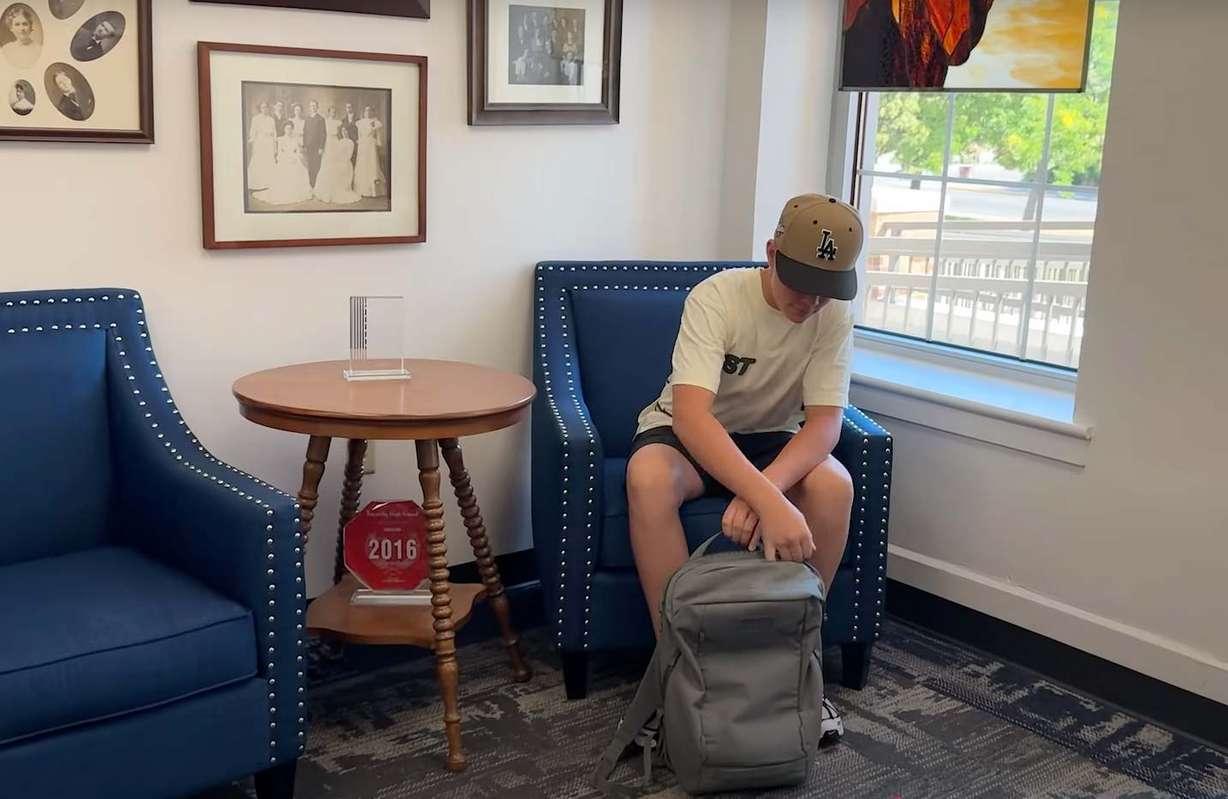
"They can store their device in their backpack so that it's accessible. They just have to be turned off, out of sight and not on their person during the school day," Fisher said.
Wallace added that parents can always contact their children by reaching out to the school's front office.
"If a parent had to reach their kid … they call us, and we immediately contact the students," Wallace said.
Romriell said having to contact the school's front office might also help parents consider whether reaching out to their children during school is completely necessary.
"It's a good reminder for these parents to think, 'Do I really need to disrupt my child's learning to tell them about taking the dog out when they get home, or can it wait?' … As parents, we have to re-examine our habits, and we will need to be more intentional about how and when we choose to disturb our kids," Romriell said.