- Rep. Celeste Maloy prioritizes removing federal barriers to energy infrastructure and mining.
- Delays in permitting raise costs and hinder U.S. competitiveness and innovation.
- Maloy's FREE Act aims to expedite federal approvals with clear criteria and deadlines.
SALT LAKE CITY — Utah Rep. Celeste Maloy said Friday "the most important" issue facing Congress is removing federal barriers to building energy, infrastructure and mines.
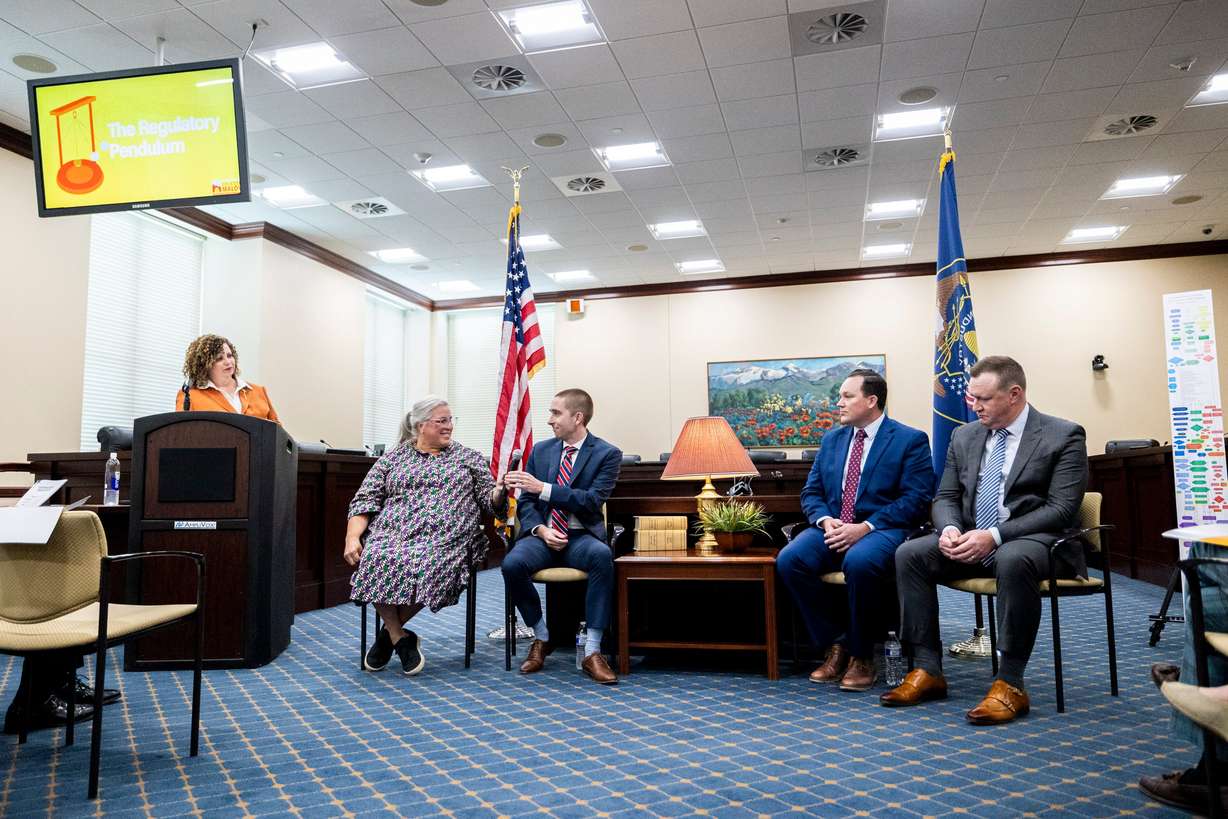
Maloy convened a panel of state and national policy experts at the Utah Capitol Building to help state lawmakers and lobbyists understand the costs of federal permitting delays.
Current permitting regulations go far beyond protecting the environment, the panelists said, and instead weaken American competitiveness, threaten national security, discourage innovation and cost taxpayers.
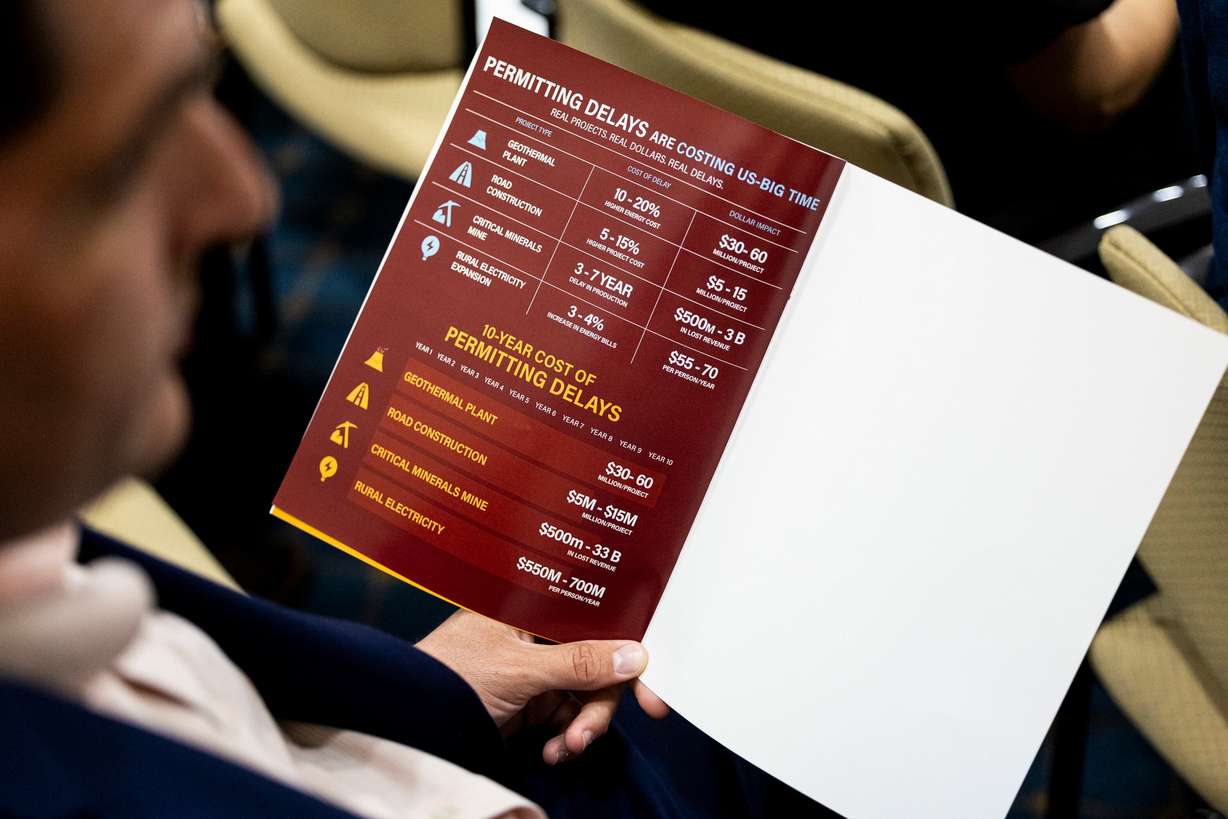
According to the 2nd District congresswoman's office, a 10-year delay results in 3%-4% higher energy bills for rural electricity, 5%-15% higher costs for road construction and tens of millions in lost revenue for critical mineral extraction and sustainable energy production.
"I know it's not the sexiest topic that we deal with in Congress, but I think it's probably the most important," Maloy said. "And I think we're actually going to deal with it."
'An absolute project killer'
In a conversation moderated by the 2nd District congresswoman, top voices from Utah's energy and mining industries said redundant regulations sap economic development and leave the U.S. unprepared to navigate artificial intelligence and possible military conflicts.
Places like Utah, where companies are working on first-of-their-kind technologies in geothermal energy, are hit especially hard by the pendulum swing in agency rules between presidential administrations, said Jack Conness, the senior regulatory and policy associate at Fervo Energy.
Fervo's geothermal project in Beaver County is slated to provide 100 megawatts to Utah's power grid in 2026, and 500 megawatts in 2028. But Conness said uncertainty from regulatory bodies scares away investors while doing little to protect the environment.
"Permitting delay is an absolute project killer," Conness said.
Congress must make the federal approval process quicker and more consistent, but it must also reform the legal system so that approved projects aren't then held up indefinitely by advocacy groups, said Brian Somers, the president of the Utah Mining Association.
Too many lawsuits?
Despite ranking as the most attractive location for mining investment in the world — with 40 out of the 50 critical minerals underground — Utah loses opportunities to Canada and Australia because they have "a more rational litigation environment" than the U.S., Somers said.
"We've gone overboard," Somers said. "A lot of this has been weaponized by people that just don't want to see this development happening."
Maloy joined the panelists in criticizing environmental groups that are able to fundraise off of lawsuits they launch and then recover their attorneys' fees if they prevail against the federal government, costing taxpayers millions every year.
Nonprofit law firms focused on environmentalism should not get reimbursed at a higher rate under the Equal Access to Justice Act, Maloy said, because it has subsidized giant NGOs that work against the public interest.
"We do want the little guy to be able to stand up to the government," Maloy said. "We just have to stop funding the big guys gumming up the government."
Getting government to go faster
Maloy said she is more hopeful now that Congress will address permitting reform than ever before. Jeffrey Rosen, a senior fellow at the American Enterprise Institute, pointed out that the "Big Beautiful Bill" provided a pathway to cut the National Environmental Policy Act review process down to one year.
For the first time in recent memory, permitting reform is being prioritized by Congress, panelists said. That's because the problem has gotten so bad that lawmakers across the country, according to Maloy, have realized that slower is often worse, not better for the environment.
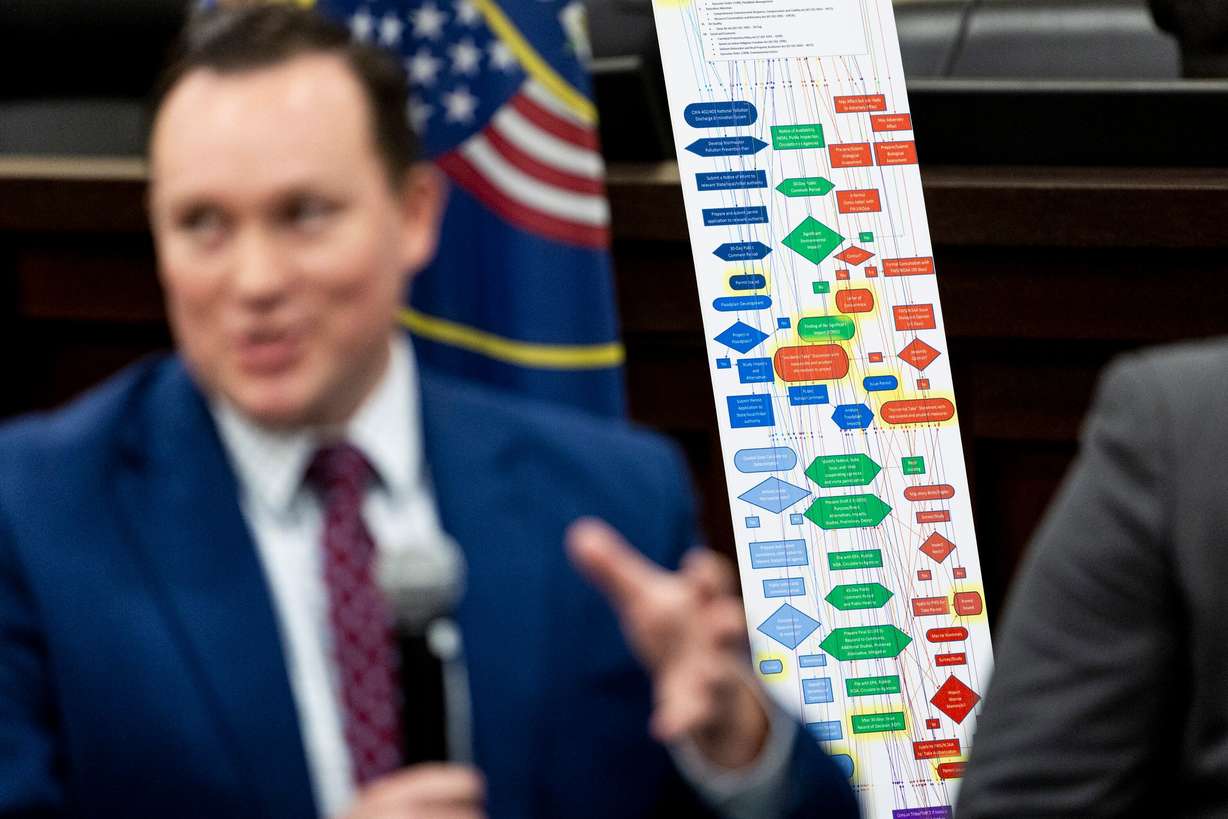
"We can do clean energy projects, do good mining projects, without all the red tape," Maloy said.
In May, Maloy was recruited to become one of the first 30 members of the Build America Caucus, a bipartisan group focused on transforming the "Abundance Agenda" into legislative action.
As part of this initiative, Maloy has introduced the Full Responsibility and Expedited Enforcement (FREE) Act, which she considers the "most ambitious bill" she has attempted to push through the House.
The bill would require federal agencies to implement "permits by rule," which allow applicants to receive approval by complying with a clear list of pre-established criteria, and to rule on applications within 180 days.