'%3e%3cpath%20d='M34.1406%205.85938C30.3906%202.10547%2025.3047%200%2020%200C14.6953%200%209.60938%202.10547%205.85938%205.85938C2.10938%209.61328%200%2014.6953%200%2020C0%2025.3047%202.10547%2030.3906%205.85938%2034.1406C9.61328%2037.8906%2014.6953%2040%2020%2040C25.3047%2040%2030.3906%2037.8945%2034.1406%2034.1406C37.8906%2030.3906%2040%2025.3047%2040%2020C40%2014.6953%2037.8945%209.60938%2034.1406%205.85938ZM37.0117%2023.543H31.1602V13.5391H27.6328V19.9414C28.1211%2020.6914%2028.3711%2021.582%2028.3711%2022.5625V22.625C28.3711%2023.668%2028.1172%2024.6055%2027.6328%2025.4297V26.6094H36.082C33.4883%2032.9375%2027.2891%2037.3789%2020.0039%2037.3789C10.3711%2037.3789%202.62109%2029.6289%202.62109%2020C2.62109%2010.3711%2010.3711%202.62109%2020%202.62109C29.6289%202.62109%2037.3789%2010.3711%2037.3789%2020C37.3789%2021.1484%2037.2617%2022.2656%2037.0508%2023.3477C37.0391%2023.4141%2037.0234%2023.4766%2037.0117%2023.543Z'%20fill='white'/%3e%3cpath%20d='M22.3086%2018.5352C20.4336%2018.125%2019.9531%2017.8398%2019.9766%2017.1836V17.1406C19.9766%2016.6992%2020.3477%2016.2148%2021.4023%2016.2148C22.582%2016.2148%2023.8867%2016.6797%2025.0781%2017.4766L26.8516%2015.0195C25.4453%2013.8906%2023.707%2013.3398%2021.5547%2013.3398C18.5195%2013.3398%2016.4375%2015%2016.4063%2017.4766V17.5352C16.3633%2020.2617%2018.5859%2020.9805%2021.293%2021.6016C23.0391%2021.9766%2023.5703%2022.3164%2023.5703%2022.9609L23.5469%2022.9766C23.5469%2023.3906%2023.2578%2023.7031%2022.7852%2023.8359C22.5742%2023.9062%2022.1289%2023.9727%2021.5156%2023.9727C20.7617%2023.9727%2019.7539%2023.8633%2018.6328%2023.4844C18.0898%2023.2891%2017.4727%2023.0039%2016.8047%2022.6133L20.1406%2026.625C20.2813%2026.6602%2021.0977%2026.8516%2021.7734%2026.8516C25.0039%2026.8516%2027.0859%2025.2461%2027.1094%2022.6328V22.5703C27.1602%2020.1133%2025.2148%2019.1719%2022.3086%2018.5352Z'%20fill='white'/%3e%3cpath%20d='M5.24219%2013.5664V26.6133H8.75391V23.7578L10.2969%2021.9531L14.2031%2026.6133H18.3867L12.3555%2019.5195L17.4023%2013.5664H13.4531L8.75391%2019.0586V13.5664H5.24219Z'%20fill='white'/%3e%3c/g%3e%3cdefs%3e%3cclipPath%20id='clip0_97_2430'%3e%3crect%20width='40'%20height='40'%20fill='white'/%3e%3c/clipPath%3e%3c/defs%3e%3c/svg%3e)



This archived news story is available only for your personal, non-commercial use. Information in the story may be outdated or superseded by additional information. Reading or replaying the story in its archived form does not constitute a republication of the story.
- A West Jordan house fire, deemed a murder-suicide, highlights domestic violence issues.
- Victim's family cites fear of deportation as reason for not reporting abuse.
- Nonprofits emphasize confidentiality and support for undocumented victims seeking help.
WEST JORDAN — With officials calling last Friday's deadly house fire a murder-suicide, loved ones are opening up about the dynamic of the family that died.
Police say evidence leads them to believe the father started the fire, intentionally killing himself, his wife and two children.
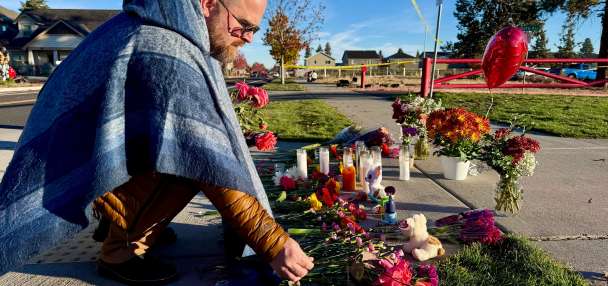
Family members say there was a history of domestic violence. At a vigil, family members said the victims moved here from Venezuela. They said the 33-year-old mother was too afraid to report domestic violence because she didn't want to be deported.
It's a situation Utah domestic violence nonprofits see more and more.
Kimmi Wolf with the Utah Domestic Violence Coalition said documentation status is a huge barrier to getting help.
"Making that call for any survivor is difficult regardless of personal situations, but when you have undocumented status, if you're fearful of anyone even suspecting that you might be undocumented, making that call, especially to a nonprofit, an agency, or even an organization like ours, the Utah Domestic Violence Coalition, it sounds like a state agency," Wolf said.
She wants survivors to know nonprofits are different from state agencies. Calls made to hotlines are confidential; the number isn't tracked. Callers do not have to provide their address or name.
She said language barriers are a big hurdle, too.
"Many of our organizations have Spanish-speaking advocates on staff; our 24/7 hotline has full language capabilities," Wolf said. "We understand that the call is difficult. It's even more daunting if the caller thinks that they can't articulate their needs and their situation in their native language. And so we don't want the fact that someone might not be comfortable or might not speak English at all to hold them back."
Related:

Mother, 2 kids killed in West Jordan blaze had come from Venezuela in search of better life
The mother and two children killed in the West Jordan house fire allegedly set by the kids' father had moved to Utah from Venezuela in search of a better life, like many immigrants.Wolf said when survivors step into a shelter, their identity is protected.
"As a nonprofit that receives federal funding, some of our funding is tied to confidentiality, so we are not allowed to confirm or deny that an individual, regardless of status, is a client or is residing in the shelter," she said.
She wants victims to know that they can get help for themselves or their children and that reaching out can save their lives.
"It's not surprising that in this heightened awareness, what's going on here in Utah, what's going on nationally, the threat of deportation is real, and we're seeing it in the news every day," Wolf said. "Now, we have victims (who) have always feared this could happen. Now they're seeing it unfold, sometimes within their own communities."
Wolf said they can offer all of their services to survivors regardless of immigration status. She said they also help.
Lindsey Boyer, executive director of South Valley Services, said they don't refuse service to anyone based on their demographic or status. She said they cannot track phone numbers or call back someone who uses their hotline without their consent.
South Valley Services' 24-hour helplines:
- Salt Lake County: 801-255-1095
- Tooele County: 435-231-3557
Domestic violence resources
Help for people in abusive relationships can be found by contacting:
- Utah Domestic Violence Coalition: Utah's confidential statewide, 24-hour domestic violence hotline at 1-800-897-LINK (5465)
- YWCA Utah Survivor Services: 801-537-8600
- Utah's statewide child abuse and neglect hotline: 1-855-323-DCFS (3237)
- National Domestic Violence Hotline: 1-800-799-7233