'%3e%3cpath%20d='M34.1406%205.85938C30.3906%202.10547%2025.3047%200%2020%200C14.6953%200%209.60938%202.10547%205.85938%205.85938C2.10938%209.61328%200%2014.6953%200%2020C0%2025.3047%202.10547%2030.3906%205.85938%2034.1406C9.61328%2037.8906%2014.6953%2040%2020%2040C25.3047%2040%2030.3906%2037.8945%2034.1406%2034.1406C37.8906%2030.3906%2040%2025.3047%2040%2020C40%2014.6953%2037.8945%209.60938%2034.1406%205.85938ZM37.0117%2023.543H31.1602V13.5391H27.6328V19.9414C28.1211%2020.6914%2028.3711%2021.582%2028.3711%2022.5625V22.625C28.3711%2023.668%2028.1172%2024.6055%2027.6328%2025.4297V26.6094H36.082C33.4883%2032.9375%2027.2891%2037.3789%2020.0039%2037.3789C10.3711%2037.3789%202.62109%2029.6289%202.62109%2020C2.62109%2010.3711%2010.3711%202.62109%2020%202.62109C29.6289%202.62109%2037.3789%2010.3711%2037.3789%2020C37.3789%2021.1484%2037.2617%2022.2656%2037.0508%2023.3477C37.0391%2023.4141%2037.0234%2023.4766%2037.0117%2023.543Z'%20fill='white'/%3e%3cpath%20d='M22.3086%2018.5352C20.4336%2018.125%2019.9531%2017.8398%2019.9766%2017.1836V17.1406C19.9766%2016.6992%2020.3477%2016.2148%2021.4023%2016.2148C22.582%2016.2148%2023.8867%2016.6797%2025.0781%2017.4766L26.8516%2015.0195C25.4453%2013.8906%2023.707%2013.3398%2021.5547%2013.3398C18.5195%2013.3398%2016.4375%2015%2016.4063%2017.4766V17.5352C16.3633%2020.2617%2018.5859%2020.9805%2021.293%2021.6016C23.0391%2021.9766%2023.5703%2022.3164%2023.5703%2022.9609L23.5469%2022.9766C23.5469%2023.3906%2023.2578%2023.7031%2022.7852%2023.8359C22.5742%2023.9062%2022.1289%2023.9727%2021.5156%2023.9727C20.7617%2023.9727%2019.7539%2023.8633%2018.6328%2023.4844C18.0898%2023.2891%2017.4727%2023.0039%2016.8047%2022.6133L20.1406%2026.625C20.2813%2026.6602%2021.0977%2026.8516%2021.7734%2026.8516C25.0039%2026.8516%2027.0859%2025.2461%2027.1094%2022.6328V22.5703C27.1602%2020.1133%2025.2148%2019.1719%2022.3086%2018.5352Z'%20fill='white'/%3e%3cpath%20d='M5.24219%2013.5664V26.6133H8.75391V23.7578L10.2969%2021.9531L14.2031%2026.6133H18.3867L12.3555%2019.5195L17.4023%2013.5664H13.4531L8.75391%2019.0586V13.5664H5.24219Z'%20fill='white'/%3e%3c/g%3e%3cdefs%3e%3cclipPath%20id='clip0_97_2430'%3e%3crect%20width='40'%20height='40'%20fill='white'/%3e%3c/clipPath%3e%3c/defs%3e%3c/svg%3e)


This archived news story is available only for your personal, non-commercial use. Information in the story may be outdated or superseded by additional information. Reading or replaying the story in its archived form does not constitute a republication of the story.
- BYU professor Phil Allen and students are using native wildflowers to fight wildfires.
- Invasive cheatgrass removal in Provo's Rock Canyon aids fire prevention efforts.
- Community and university collaboration enhances native plant restoration and sustainability.
PROVO — Brigham Young University professor Phil Allen spends many of his mornings scouring the Wasatch Front for wildflower seeds.
But these seeds aren't for Allen's personal collection, and they aren't your run-of-the-mill flower seeds you could find at any nursery.
Instead, they're intended for a greater purpose of helping to restore the land surrounding the Rock Canyon trailhead — one of Provo's most popular hiking spots — to its native glory.
Part of that restoration involves removing invasive cheatgrass.
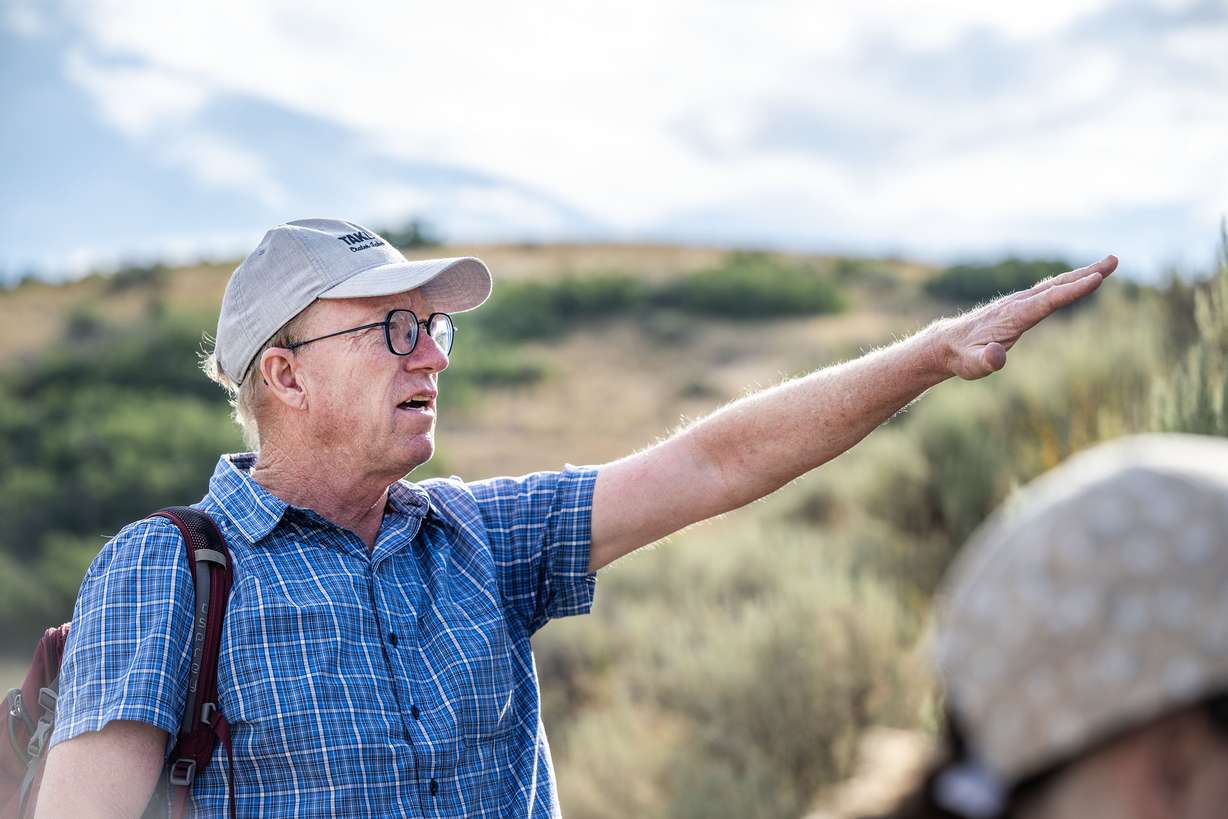
"Cheatgrass is probably the most common plant, by numbers, in Utah," said Allen, a BYU plant and wildlife sciences professor.
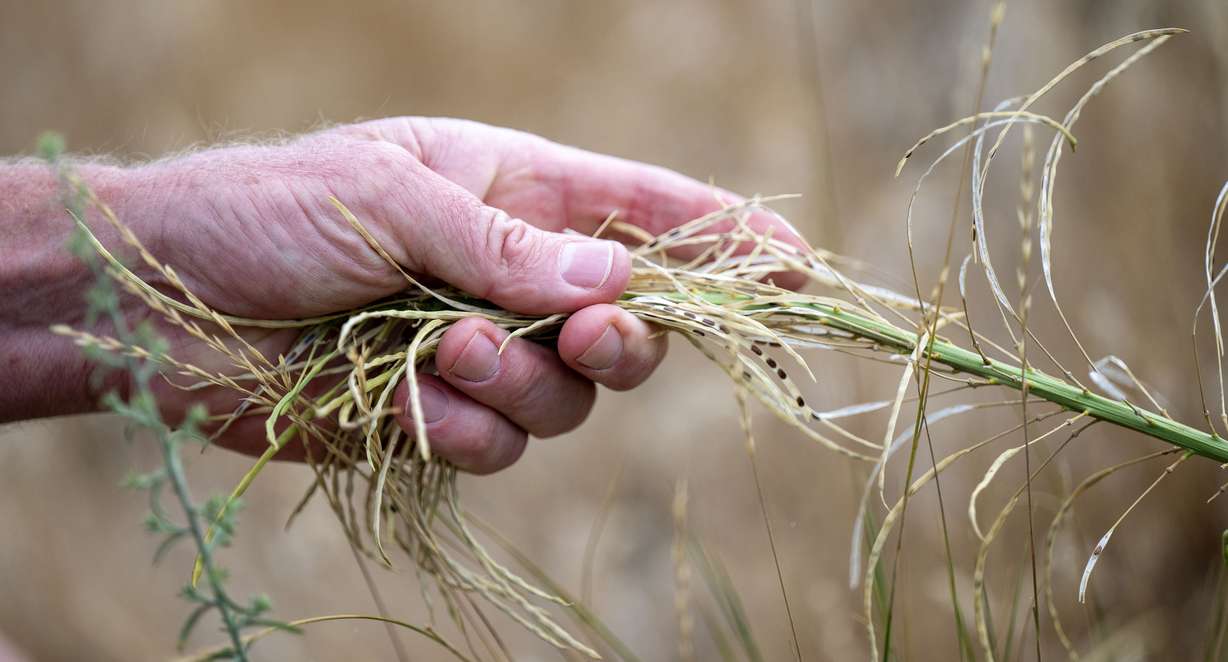
While it may seem harmless, as an invasive species, it turns dry and brittle in the summer, essentially acting as perfect kindling for wildfires. It also grows densely, consuming water and leaving little to no room for native plants.
"Cheatgrass invades as a foreigner ... it is highly, highly flammable, in part because it can produce up to 30,000 seeds per square meter. In doing so, it can saturate any vacancy that's there. When a fire comes ... that results in a pulse of nutrients. Most of the native plants thrive and benefit from very low nutrition in the soil," Allen said.
Essentially, fires set up a vicious cycle of sorts that favors the perpetuation of cheatgrass at the expense of native plants.
But how exactly do native wildflowers improve fire resiliency?
"The weeds are already straw colored. It's just like a bale of straw ready to burn. The natives are still bright green. So, they don't burn as early in the year. They don't have that potential hazard as early in the summer as the weeds because they stay green longer," Allen said.
The other reason native landscapes are a lower fire hazard, Allen said, is because they don't grow as close together as invasive species like cheatgrass, for example.
"They just aren't as tightly clustered. So for those two reasons, they represent a way of reducing the wildfire danger. But it's not a snap your fingers, and it's wildflower meadows. It takes years to achieve, but it's worth doing," Allen said. "And on public lands that are what I call the urban-wildland interface, it's going to require volunteers, and we've got great volunteers in the form of BYU students and the local residents who love Rock Canyon."
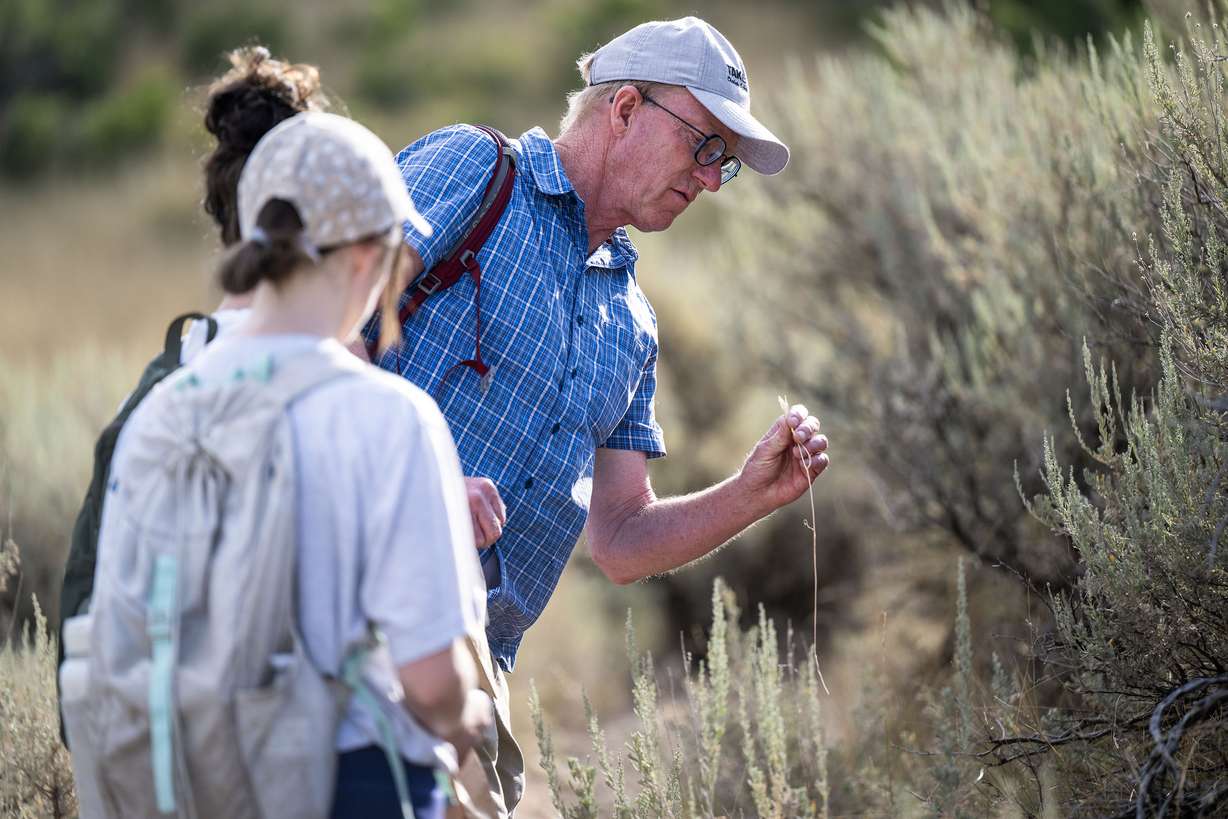
Allen and his students collect wildflower seeds from across the Wasatch Front and grow them in small test plots to see which ones will thrive at Rock Canyon.
Indeed, over the past 25 years, thousands of BYU students have helped to restore the Rock Canyon trailhead area to make way for the over 130 native plant species — including balsam root and the sego lily — that used to populate the area in abundance.
"Our goal is to create landscapes that require less water and are more sustainable," said Abigail Lundberg, one of the student researchers. "These wildflowers will also help prevent fires and are a lot more beautiful than cheatgrass."
The students' efforts are part of a larger restoration and improvement project in partnership with the city of Provo, which has added a new parking lot, amphitheater, educational signage and additional trails to the area.
Allen said the partnership between his department at BYU and Provo is "one of the best examples" of a community and a university environmental group working in unison.
"Because so many people love that canyon, when they see us working up there, they'll stop and talk to us and then they'll want to sign up to help," Allen said. "We are blessed to have such a treasure so close to campus. Taking care of these precious landscapes will enable more people to have deeper experiences with nature for years to come."