'%3e%3cpath%20d='M34.1406%205.85938C30.3906%202.10547%2025.3047%200%2020%200C14.6953%200%209.60938%202.10547%205.85938%205.85938C2.10938%209.61328%200%2014.6953%200%2020C0%2025.3047%202.10547%2030.3906%205.85938%2034.1406C9.61328%2037.8906%2014.6953%2040%2020%2040C25.3047%2040%2030.3906%2037.8945%2034.1406%2034.1406C37.8906%2030.3906%2040%2025.3047%2040%2020C40%2014.6953%2037.8945%209.60938%2034.1406%205.85938ZM37.0117%2023.543H31.1602V13.5391H27.6328V19.9414C28.1211%2020.6914%2028.3711%2021.582%2028.3711%2022.5625V22.625C28.3711%2023.668%2028.1172%2024.6055%2027.6328%2025.4297V26.6094H36.082C33.4883%2032.9375%2027.2891%2037.3789%2020.0039%2037.3789C10.3711%2037.3789%202.62109%2029.6289%202.62109%2020C2.62109%2010.3711%2010.3711%202.62109%2020%202.62109C29.6289%202.62109%2037.3789%2010.3711%2037.3789%2020C37.3789%2021.1484%2037.2617%2022.2656%2037.0508%2023.3477C37.0391%2023.4141%2037.0234%2023.4766%2037.0117%2023.543Z'%20fill='white'/%3e%3cpath%20d='M22.3086%2018.5352C20.4336%2018.125%2019.9531%2017.8398%2019.9766%2017.1836V17.1406C19.9766%2016.6992%2020.3477%2016.2148%2021.4023%2016.2148C22.582%2016.2148%2023.8867%2016.6797%2025.0781%2017.4766L26.8516%2015.0195C25.4453%2013.8906%2023.707%2013.3398%2021.5547%2013.3398C18.5195%2013.3398%2016.4375%2015%2016.4063%2017.4766V17.5352C16.3633%2020.2617%2018.5859%2020.9805%2021.293%2021.6016C23.0391%2021.9766%2023.5703%2022.3164%2023.5703%2022.9609L23.5469%2022.9766C23.5469%2023.3906%2023.2578%2023.7031%2022.7852%2023.8359C22.5742%2023.9062%2022.1289%2023.9727%2021.5156%2023.9727C20.7617%2023.9727%2019.7539%2023.8633%2018.6328%2023.4844C18.0898%2023.2891%2017.4727%2023.0039%2016.8047%2022.6133L20.1406%2026.625C20.2813%2026.6602%2021.0977%2026.8516%2021.7734%2026.8516C25.0039%2026.8516%2027.0859%2025.2461%2027.1094%2022.6328V22.5703C27.1602%2020.1133%2025.2148%2019.1719%2022.3086%2018.5352Z'%20fill='white'/%3e%3cpath%20d='M5.24219%2013.5664V26.6133H8.75391V23.7578L10.2969%2021.9531L14.2031%2026.6133H18.3867L12.3555%2019.5195L17.4023%2013.5664H13.4531L8.75391%2019.0586V13.5664H5.24219Z'%20fill='white'/%3e%3c/g%3e%3cdefs%3e%3cclipPath%20id='clip0_97_2430'%3e%3crect%20width='40'%20height='40'%20fill='white'/%3e%3c/clipPath%3e%3c/defs%3e%3c/svg%3e)






Estimated read time: 2-3 minutes
This archived news story is available only for your personal, non-commercial use. Information in the story may be outdated or superseded by additional information. Reading or replaying the story in its archived form does not constitute a republication of the story.
- Water managers express safety concerns over fluorosilicic acid used in drinking water.
- The chemical's corrosiveness poses health risks to workers and damages infrastructure.
- The Utah Legislature considers HB8, which debates fluoride's benefits versus potential health impacts.
LAYTON — Personal choice and dental hygiene are up for debate as a bill that would take fluoride out of drinking water moves on to our state senate. Still, some water providers say there's even more at stake. Among other things, it's a safety concern.
A distribution station off state Route 193 and North Hills Drive is one of 10 in Davis County that help mix a fluoride additive into the drinking water.
The Weber Basin Water Conservancy District built and started operating the stations more than 20 years ago.
"Weber (County) voted not to have it in. Davis County voted to have it, which made it very complicated and expensive for us because we delivered water to both counties," the water district's CEO, Scott Paxman explained.

But beyond cost, Paxman says a number of concerns have popped up over the two decades since the additive started being used in the area. A couple of those come from the corrosiveness of the fluorosilicic acid that is used.
"It's a very, very strong chemical," Paxman said. "Our operators are in and out of those buildings every single day, just just checking on things. And so it's has become more of a health issue for our operators."
Lead distribution operator, Paul Spens says workers have to be very careful.
"You have to handle it with respect. It's an acid. It'll burn you," Spens said. "It's corrosive, so whenever we are checking stations, we open all the doors."
Spens says the chemical and the gas that comes off it corrodes the pipes and machinery inside. PVC parts especially, have to be changed out on a regular basis.
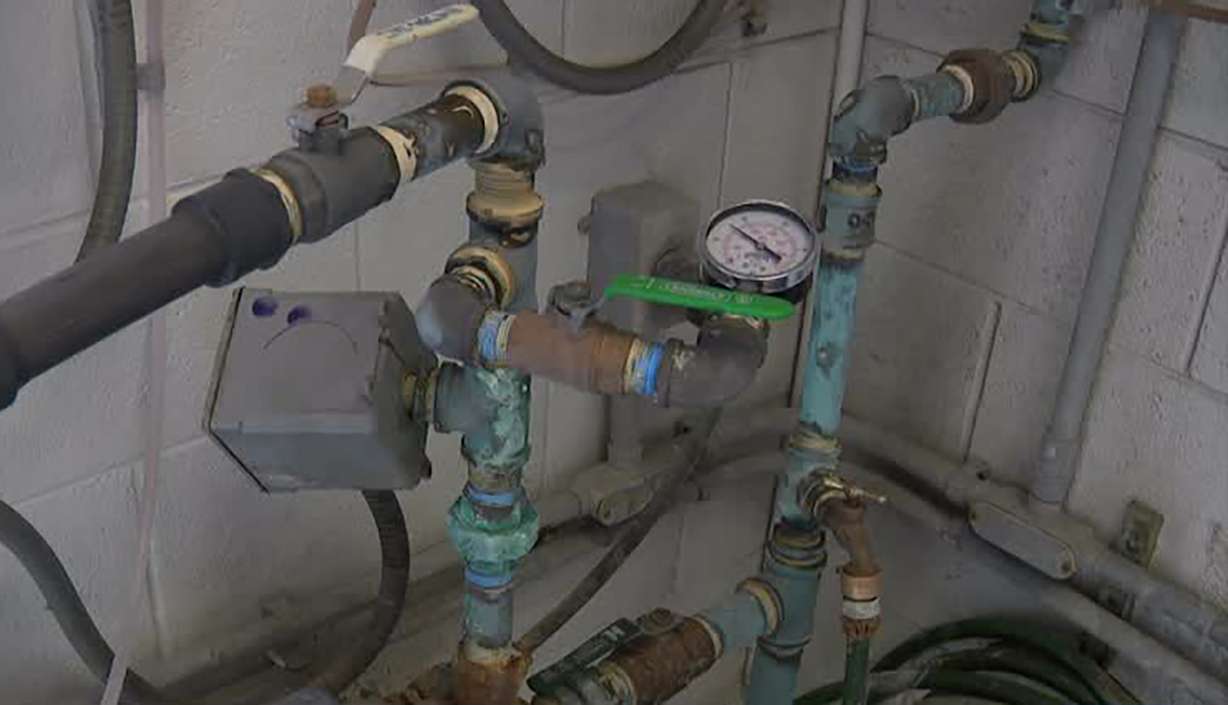
"Any metal is immediately affected," he said. "You notice a difference in color within a matter of days, and no matter how hard you try to keep the fumes at a minimum, there's always a little bit of a fume there."
Besides the safety risks to employees, Paxman says a completely different concern brought the district to reach out to lawmakers: a U.S. Department of Health and Human Services study.
"They came out with a summary of many different studies throughout the world of the impacts of fluoridated water on neural development of children," Paxman said. "And they basically say that it impacts their IQ."
HB81, sponsored by Rep. Stephanie Gricus, R-Eagle Mountain, recently passed through the house, and is up for a second reading in the Senate. The debate so far has focused mostly on fluoride's benefits in helping prevent cavities and personal choice.