'%3e%3cpath%20d='M34.1406%205.85938C30.3906%202.10547%2025.3047%200%2020%200C14.6953%200%209.60938%202.10547%205.85938%205.85938C2.10938%209.61328%200%2014.6953%200%2020C0%2025.3047%202.10547%2030.3906%205.85938%2034.1406C9.61328%2037.8906%2014.6953%2040%2020%2040C25.3047%2040%2030.3906%2037.8945%2034.1406%2034.1406C37.8906%2030.3906%2040%2025.3047%2040%2020C40%2014.6953%2037.8945%209.60938%2034.1406%205.85938ZM37.0117%2023.543H31.1602V13.5391H27.6328V19.9414C28.1211%2020.6914%2028.3711%2021.582%2028.3711%2022.5625V22.625C28.3711%2023.668%2028.1172%2024.6055%2027.6328%2025.4297V26.6094H36.082C33.4883%2032.9375%2027.2891%2037.3789%2020.0039%2037.3789C10.3711%2037.3789%202.62109%2029.6289%202.62109%2020C2.62109%2010.3711%2010.3711%202.62109%2020%202.62109C29.6289%202.62109%2037.3789%2010.3711%2037.3789%2020C37.3789%2021.1484%2037.2617%2022.2656%2037.0508%2023.3477C37.0391%2023.4141%2037.0234%2023.4766%2037.0117%2023.543Z'%20fill='white'/%3e%3cpath%20d='M22.3086%2018.5352C20.4336%2018.125%2019.9531%2017.8398%2019.9766%2017.1836V17.1406C19.9766%2016.6992%2020.3477%2016.2148%2021.4023%2016.2148C22.582%2016.2148%2023.8867%2016.6797%2025.0781%2017.4766L26.8516%2015.0195C25.4453%2013.8906%2023.707%2013.3398%2021.5547%2013.3398C18.5195%2013.3398%2016.4375%2015%2016.4063%2017.4766V17.5352C16.3633%2020.2617%2018.5859%2020.9805%2021.293%2021.6016C23.0391%2021.9766%2023.5703%2022.3164%2023.5703%2022.9609L23.5469%2022.9766C23.5469%2023.3906%2023.2578%2023.7031%2022.7852%2023.8359C22.5742%2023.9062%2022.1289%2023.9727%2021.5156%2023.9727C20.7617%2023.9727%2019.7539%2023.8633%2018.6328%2023.4844C18.0898%2023.2891%2017.4727%2023.0039%2016.8047%2022.6133L20.1406%2026.625C20.2813%2026.6602%2021.0977%2026.8516%2021.7734%2026.8516C25.0039%2026.8516%2027.0859%2025.2461%2027.1094%2022.6328V22.5703C27.1602%2020.1133%2025.2148%2019.1719%2022.3086%2018.5352Z'%20fill='white'/%3e%3cpath%20d='M5.24219%2013.5664V26.6133H8.75391V23.7578L10.2969%2021.9531L14.2031%2026.6133H18.3867L12.3555%2019.5195L17.4023%2013.5664H13.4531L8.75391%2019.0586V13.5664H5.24219Z'%20fill='white'/%3e%3c/g%3e%3cdefs%3e%3cclipPath%20id='clip0_97_2430'%3e%3crect%20width='40'%20height='40'%20fill='white'/%3e%3c/clipPath%3e%3c/defs%3e%3c/svg%3e)





Estimated read time: 2-3 minutes
This archived news story is available only for your personal, non-commercial use. Information in the story may be outdated or superseded by additional information. Reading or replaying the story in its archived form does not constitute a republication of the story.
- University of Utah law professor Amos Guiora and his family took cover in an underground safe room in Jerusalem as Iran launched dozens of rockets at Israel.
- Guiora said he had to scramble with family members as air raid sirens were sounding.
- He viewed the incident as an escalation complicating the regional situation but doubted it would lead to a broader conflict.
SALT LAKE CITY — A University of Utah law professor said he and his family took cover in an underground safe room in Jerusalem Tuesday as Iran fired dozens of rockets at Israel.
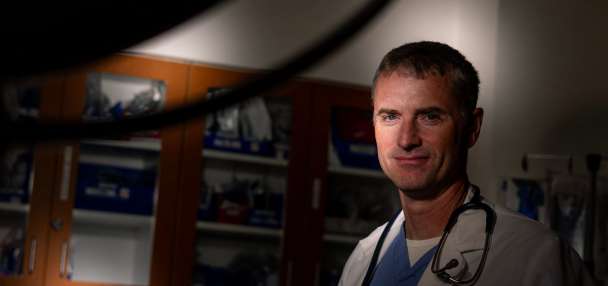
Amos Guiora — also considered an expert on topics like national security, geopolitics and international law — told KSL-TV he had to scramble with family members as air raid sirens were sounding.
"The booms were very, very loud — I mean, they were very loud," Guiora said.
He said it wasn't until roughly 20 minutes that everyone received an "all-clear."
"It's not pleasant," Guiora said of his time in the bunker. "You're constantly checking your phone to see where it's hitting, where it's landing, if there are injuries."
Officials said the missile attack was largely intercepted.
Guiora, who lives part-time in Israel, acknowledged the move from Iran was an escalation and would likely only complicate the already complex situation in the region.
"(It's) the equivalent of a seven-front war—Hezbollah, Hamas, the Houthis in Yemen, we've attacked obviously inside Iran, attacked in Syria and in the West Bank, don't forget the West Bank, there is Palestinian terrorism and Jewish terrorism," Guiora said.
He didn't believe a broader conflict would emerge from the latest attack.
"I've always thought that the Iranian regime, for all of the bluster — highly rational regime and very cognizant of its limits," Guiora said. "Nobody's going to win here. It's not going to resolve itself in a shooting war."
Guiora hoped, somehow, cooler heads would eventually prevail.
"There will be a need for some kind of diplomatic resolution, which will be difficult, complex, challenging," Guiora said. "There will be a lot of screaming and yelling in the room. That's the only way forward."