'%3e%3cpath%20d='M34.1406%205.85938C30.3906%202.10547%2025.3047%200%2020%200C14.6953%200%209.60938%202.10547%205.85938%205.85938C2.10938%209.61328%200%2014.6953%200%2020C0%2025.3047%202.10547%2030.3906%205.85938%2034.1406C9.61328%2037.8906%2014.6953%2040%2020%2040C25.3047%2040%2030.3906%2037.8945%2034.1406%2034.1406C37.8906%2030.3906%2040%2025.3047%2040%2020C40%2014.6953%2037.8945%209.60938%2034.1406%205.85938ZM37.0117%2023.543H31.1602V13.5391H27.6328V19.9414C28.1211%2020.6914%2028.3711%2021.582%2028.3711%2022.5625V22.625C28.3711%2023.668%2028.1172%2024.6055%2027.6328%2025.4297V26.6094H36.082C33.4883%2032.9375%2027.2891%2037.3789%2020.0039%2037.3789C10.3711%2037.3789%202.62109%2029.6289%202.62109%2020C2.62109%2010.3711%2010.3711%202.62109%2020%202.62109C29.6289%202.62109%2037.3789%2010.3711%2037.3789%2020C37.3789%2021.1484%2037.2617%2022.2656%2037.0508%2023.3477C37.0391%2023.4141%2037.0234%2023.4766%2037.0117%2023.543Z'%20fill='white'/%3e%3cpath%20d='M22.3086%2018.5352C20.4336%2018.125%2019.9531%2017.8398%2019.9766%2017.1836V17.1406C19.9766%2016.6992%2020.3477%2016.2148%2021.4023%2016.2148C22.582%2016.2148%2023.8867%2016.6797%2025.0781%2017.4766L26.8516%2015.0195C25.4453%2013.8906%2023.707%2013.3398%2021.5547%2013.3398C18.5195%2013.3398%2016.4375%2015%2016.4063%2017.4766V17.5352C16.3633%2020.2617%2018.5859%2020.9805%2021.293%2021.6016C23.0391%2021.9766%2023.5703%2022.3164%2023.5703%2022.9609L23.5469%2022.9766C23.5469%2023.3906%2023.2578%2023.7031%2022.7852%2023.8359C22.5742%2023.9062%2022.1289%2023.9727%2021.5156%2023.9727C20.7617%2023.9727%2019.7539%2023.8633%2018.6328%2023.4844C18.0898%2023.2891%2017.4727%2023.0039%2016.8047%2022.6133L20.1406%2026.625C20.2813%2026.6602%2021.0977%2026.8516%2021.7734%2026.8516C25.0039%2026.8516%2027.0859%2025.2461%2027.1094%2022.6328V22.5703C27.1602%2020.1133%2025.2148%2019.1719%2022.3086%2018.5352Z'%20fill='white'/%3e%3cpath%20d='M5.24219%2013.5664V26.6133H8.75391V23.7578L10.2969%2021.9531L14.2031%2026.6133H18.3867L12.3555%2019.5195L17.4023%2013.5664H13.4531L8.75391%2019.0586V13.5664H5.24219Z'%20fill='white'/%3e%3c/g%3e%3cdefs%3e%3cclipPath%20id='clip0_97_2430'%3e%3crect%20width='40'%20height='40'%20fill='white'/%3e%3c/clipPath%3e%3c/defs%3e%3c/svg%3e)


Estimated read time: 2-3 minutes
This archived news story is available only for your personal, non-commercial use. Information in the story may be outdated or superseded by additional information. Reading or replaying the story in its archived form does not constitute a republication of the story.
SALT LAKE CITY — A national environmental group is calling on Gov. Spencer Cox to veto a bill Utah lawmakers passed Thursday that prohibits the use of legal personhood in cases involving many nonhuman entities, including artificial intelligence or a body of water.
The Utah Senate voted 19-6 on Thursday, along party lines, to adopt HB249. It followed a 58-11 vote in the Utah House of Representatives on Jan. 30 to approve it.
The bill prevents any government entity — legislative or court — from granting or recognizing "legal personhood" in several uses, such as artificial intelligence, a body of water, any inanimate object, land, real property, atmospheric gases, an astronomical object, weather, a plant, a nonhuman animal and any member of a taxonomic domain that isn't a human being.
Rep. Walt Brooks, R-St. George, the bill's sponsor, explained the idea had been attempted in various cases to differing levels of success.
In one case, a group tried and failed to free an elephant from a New York Zoo using the legal concept; however, a town in Brazil successfully applied the concept to ensure that an important river flowed to Indigenous communities in the country.
Other lawmakers said they believed it could cause a legal mess if applied in Utah, and that there are different ways to address those types of topics.
"Giving them the same rights as a person creates a whole morass of problems that we would now have to think through," said Rep. Norm Thurston, R-Provo, during a committee hearing on the bill last month. "I really appreciate what this bill does. It says, with these problems, this is not the right tool."
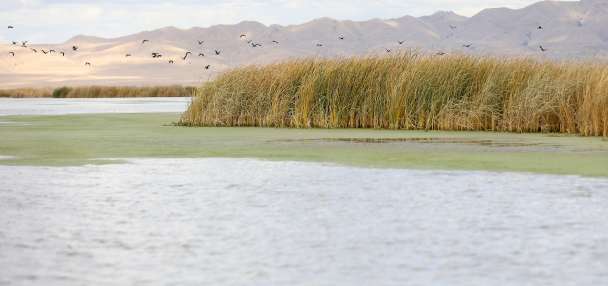
But environmental groups pushed against the bill, citing its potential. Members of the coalition Save Our Great Salt Lake spoke against the bill during that committee meeting, arguing that it could provide an avenue to get water to the lake.
The Nonhuman Rights Project, the group that filed the New York elephant case, is now calling on Cox to veto the bill.
"This bill is wrong, legally and ethically. It's based on a troublingly inaccurate conflation of the terms 'human' and 'legal person' and it will leave Utahns without a vital, powerful instrument of justice to protect nonhuman animals and the environment," the group wrote in a statement. "This bill will also unconstitutionally strip legislative bodies and the judiciary of core powers and their ability to recognize nonhumans as rights-holders now or in the future."
Cox has until March 21 to sign or veto any laws, but he said Thursday he wasn't aware of any bills he would veto at the moment. If signed, the bill will go into law on May 1.