'%3e%3cpath%20d='M34.1406%205.85938C30.3906%202.10547%2025.3047%200%2020%200C14.6953%200%209.60938%202.10547%205.85938%205.85938C2.10938%209.61328%200%2014.6953%200%2020C0%2025.3047%202.10547%2030.3906%205.85938%2034.1406C9.61328%2037.8906%2014.6953%2040%2020%2040C25.3047%2040%2030.3906%2037.8945%2034.1406%2034.1406C37.8906%2030.3906%2040%2025.3047%2040%2020C40%2014.6953%2037.8945%209.60938%2034.1406%205.85938ZM37.0117%2023.543H31.1602V13.5391H27.6328V19.9414C28.1211%2020.6914%2028.3711%2021.582%2028.3711%2022.5625V22.625C28.3711%2023.668%2028.1172%2024.6055%2027.6328%2025.4297V26.6094H36.082C33.4883%2032.9375%2027.2891%2037.3789%2020.0039%2037.3789C10.3711%2037.3789%202.62109%2029.6289%202.62109%2020C2.62109%2010.3711%2010.3711%202.62109%2020%202.62109C29.6289%202.62109%2037.3789%2010.3711%2037.3789%2020C37.3789%2021.1484%2037.2617%2022.2656%2037.0508%2023.3477C37.0391%2023.4141%2037.0234%2023.4766%2037.0117%2023.543Z'%20fill='white'/%3e%3cpath%20d='M22.3086%2018.5352C20.4336%2018.125%2019.9531%2017.8398%2019.9766%2017.1836V17.1406C19.9766%2016.6992%2020.3477%2016.2148%2021.4023%2016.2148C22.582%2016.2148%2023.8867%2016.6797%2025.0781%2017.4766L26.8516%2015.0195C25.4453%2013.8906%2023.707%2013.3398%2021.5547%2013.3398C18.5195%2013.3398%2016.4375%2015%2016.4063%2017.4766V17.5352C16.3633%2020.2617%2018.5859%2020.9805%2021.293%2021.6016C23.0391%2021.9766%2023.5703%2022.3164%2023.5703%2022.9609L23.5469%2022.9766C23.5469%2023.3906%2023.2578%2023.7031%2022.7852%2023.8359C22.5742%2023.9062%2022.1289%2023.9727%2021.5156%2023.9727C20.7617%2023.9727%2019.7539%2023.8633%2018.6328%2023.4844C18.0898%2023.2891%2017.4727%2023.0039%2016.8047%2022.6133L20.1406%2026.625C20.2813%2026.6602%2021.0977%2026.8516%2021.7734%2026.8516C25.0039%2026.8516%2027.0859%2025.2461%2027.1094%2022.6328V22.5703C27.1602%2020.1133%2025.2148%2019.1719%2022.3086%2018.5352Z'%20fill='white'/%3e%3cpath%20d='M5.24219%2013.5664V26.6133H8.75391V23.7578L10.2969%2021.9531L14.2031%2026.6133H18.3867L12.3555%2019.5195L17.4023%2013.5664H13.4531L8.75391%2019.0586V13.5664H5.24219Z'%20fill='white'/%3e%3c/g%3e%3cdefs%3e%3cclipPath%20id='clip0_97_2430'%3e%3crect%20width='40'%20height='40'%20fill='white'/%3e%3c/clipPath%3e%3c/defs%3e%3c/svg%3e)




Estimated read time: 4-5 minutes
This archived news story is available only for your personal, non-commercial use. Information in the story may be outdated or superseded by additional information. Reading or replaying the story in its archived form does not constitute a republication of the story.
SALT LAKE CITY — Reyes Salazar learned about the benign mass in his mouth in June 2023. Doctors told him the cyst was about the size of his thumb and located at the back of his tongue.
The diagnosis of an oral cyst wasn't anything new for Salizar. However, in the past, the Salt Lake City man has had them in his airway, creating a more urgent need to get them removed due to the possibility they could move and stop his ability to breathe.
With this cyst, Salazar had more time to meet with doctors and consider how to move forward — but he still didn't take it lightly.
Salazar's first cyst was found during surgery to remove a tumor and was immediately removed with a laser. That time, it took more than a week to get his voice back. With the possibility of using a surgical robot this time, doctors said there should be no scarring and less pain, just some discomfort for about a week.
The DaVinci SP
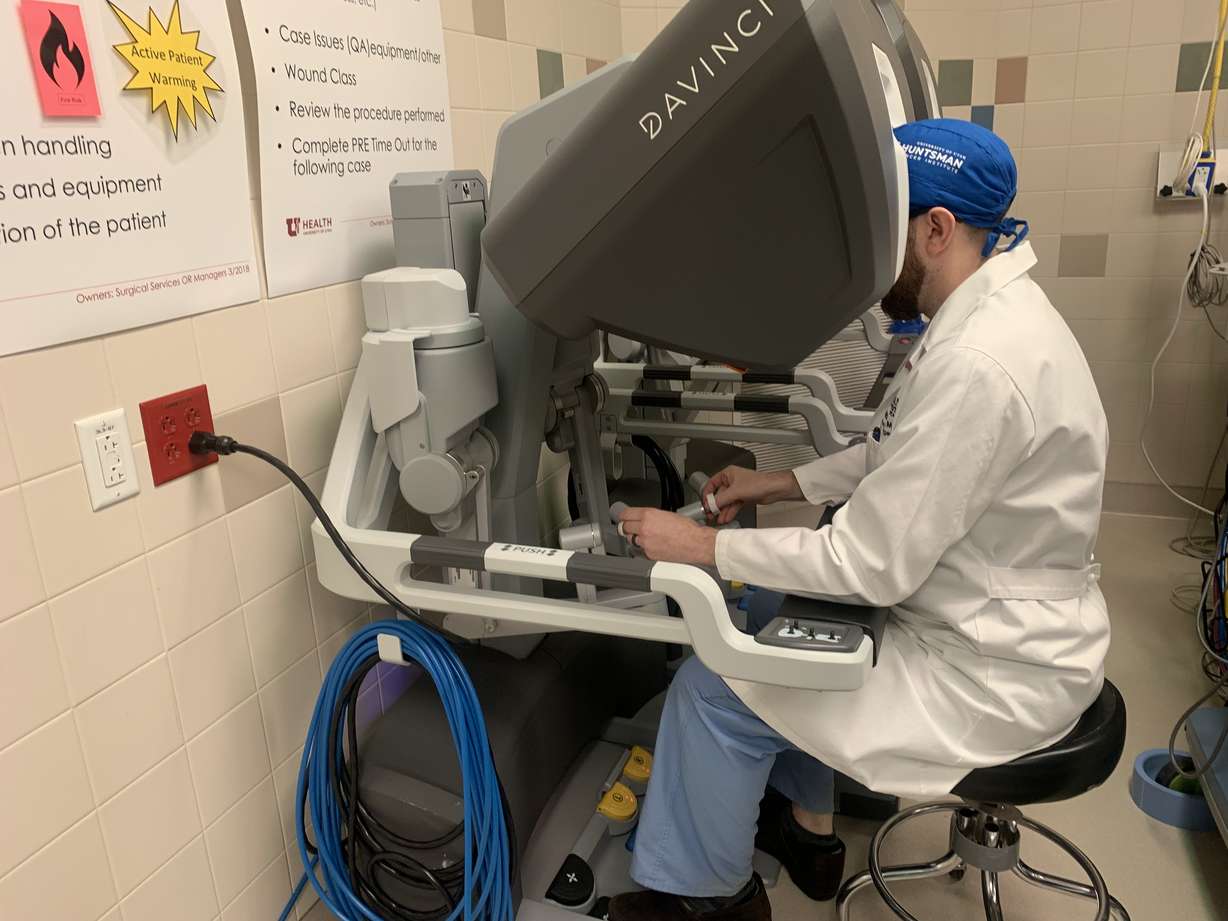
The Huntsman Cancer Institute recently added the DaVinci SP robot to its group of surgery robots, training doctors and nurses on the robot last week and putting it into use this week with Salazar's surgery. It is the first single-port robot of its kind in the Intermountain West.
Dr. Brian Mitzman, a thoracic surgeon who specializes in robotic surgery, said the new robot shows the Huntsman Cancer Institute and University of Utah Health's commitment to having the most advanced equipment and quality care for their patients.
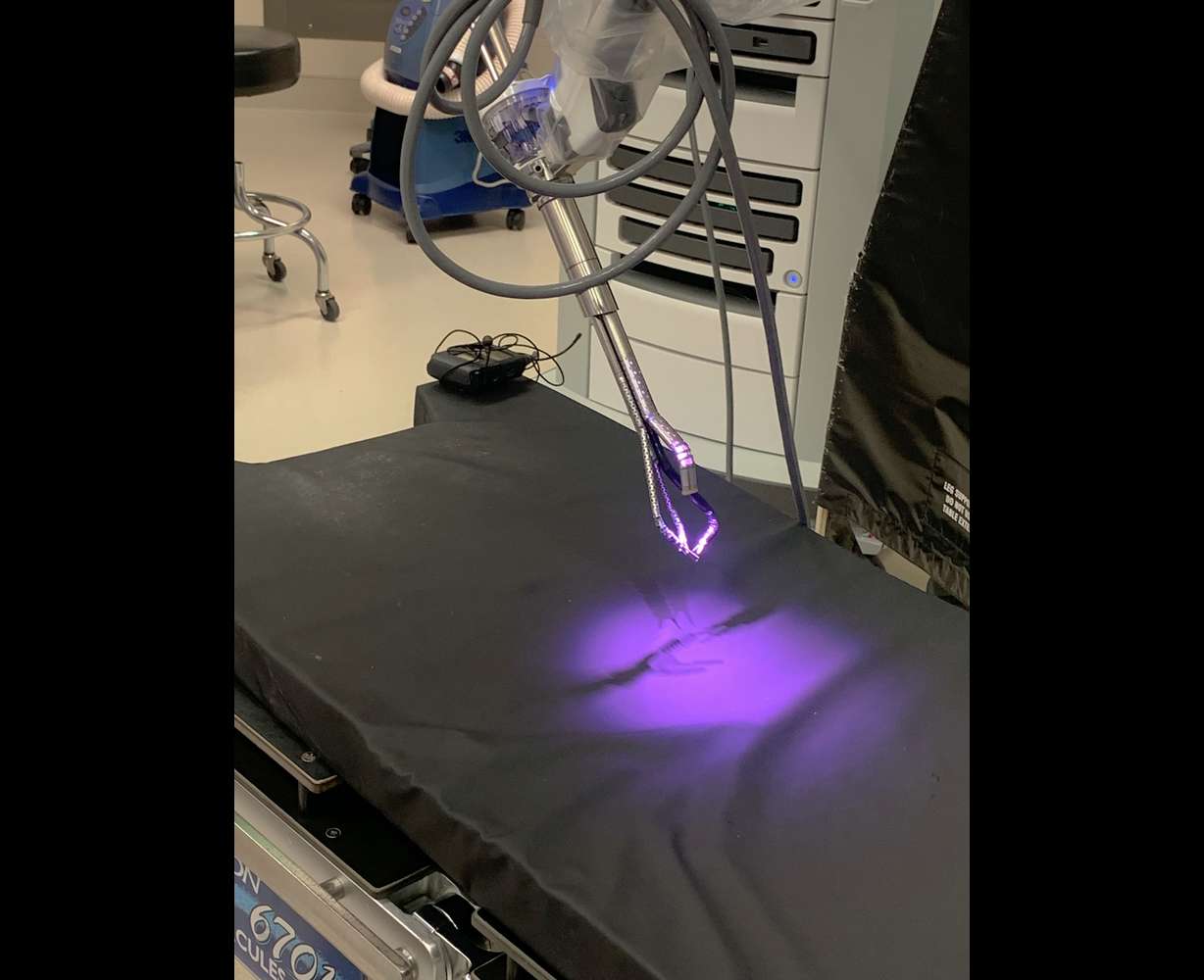
He said many of DaVinci SP's benefits are similar to the previous DaVinci robot they already have. The most obvious difference is it can use multiple surgical instruments in one incision rather than needing to make four incisions in different locations.
"This allows us to get into much tighter spaces through much smaller incisions to more precise surgery, which leads to faster recovery and better operations for the patients," he said.
Mitzman said surgeons can see in 3D and have up to 10 times magnification in their view. They control each move of the robot from a console using their hands and can zoom in and out with foot pedals.
"It's very precise," he said.
Minimally invasive
Dr. Hilary McCrary, a head and neck surgeon and Salazar's doctor at the Huntsman Cancer Institute, suggested moving his surgery from Jan. 22 to Jan. 29 so they could use the DaVinci machine. She said the single-port robot will likely lead to a better outcome for him.
"It allows us very ... novel and minimal invasive techniques to take care of cancer patients," she explained.
McCrary said she used the single-port robot frequently during her fellowship at Ohio State University. She said the post-operation experience is similar with the single-port robot to the previous iteration of the DaVinci robot, but where the single port makes a big difference is time and efficiency in the operating room.
The new robot, she explained, has a unique camera that can change shape and allow surgeons to see around corners in the back of the throat, rather than changing cameras and arm angles.
"It just makes ... the stress of the procedure go down," McCrary said.
Post surgery, Salazar said McCary has high hopes that his cyst won't return because of the benefits of the robot. He's had several surgeries over the past 26 years for various medical issues and said he believes if this technology had been available for him when his medical issues began, he may have avoided some of those surgeries.
"I felt like my body just needs that rest now, after so many years. ... I've dealt with so much and it's time to put an end to it," he said.
Uses for the new robot
McCrary said the robot will be used primarily for oropharynx cancer, and 70% to 90% of those cancers are caused by the HPV virus — which she said can be prevented with a vaccine. It will also be used, like in Salazar's case, for removing benign masses.
For Salazar, McCrary said the surgery took one to two hours, but many of the cancer surgeries will take four hours because there are more steps to those procedures.
She said most people who are candidates choose to have robotic surgery because it offers a minimally invasive procedure that gives the best surgical, oncologic and social outcomes. For now, the Huntsman Cancer Institute expects to be using the robot a few times each week.
McCrary said getting the DaVinci SP up and running has been a long process involving a lot of people, but it is a crucial step in improving the standard of care for patients with cancers in the back of the throat.
Mitzman said, right now, the robot will likely only be used for surgeries for mouth and throat cancers and neurologic conditions, reducing face incisions. They hope to expand use to more specialties so the robot is being used every day to benefit patients with lung, colorectal and breast cancers.
He said the use of robots in surgery had "changed everything." For lung cancer surgery, it allows access without needing to break or spread ribs, and surgeons are able to stay relaxed sitting at a comfortable console. For throat cancer, it avoids breaking the jaw.
Mitzman said patients who have the robotic surgery leave the hospital faster and can often return to work immediately.