'%3e%3cpath%20d='M34.1406%205.85938C30.3906%202.10547%2025.3047%200%2020%200C14.6953%200%209.60938%202.10547%205.85938%205.85938C2.10938%209.61328%200%2014.6953%200%2020C0%2025.3047%202.10547%2030.3906%205.85938%2034.1406C9.61328%2037.8906%2014.6953%2040%2020%2040C25.3047%2040%2030.3906%2037.8945%2034.1406%2034.1406C37.8906%2030.3906%2040%2025.3047%2040%2020C40%2014.6953%2037.8945%209.60938%2034.1406%205.85938ZM37.0117%2023.543H31.1602V13.5391H27.6328V19.9414C28.1211%2020.6914%2028.3711%2021.582%2028.3711%2022.5625V22.625C28.3711%2023.668%2028.1172%2024.6055%2027.6328%2025.4297V26.6094H36.082C33.4883%2032.9375%2027.2891%2037.3789%2020.0039%2037.3789C10.3711%2037.3789%202.62109%2029.6289%202.62109%2020C2.62109%2010.3711%2010.3711%202.62109%2020%202.62109C29.6289%202.62109%2037.3789%2010.3711%2037.3789%2020C37.3789%2021.1484%2037.2617%2022.2656%2037.0508%2023.3477C37.0391%2023.4141%2037.0234%2023.4766%2037.0117%2023.543Z'%20fill='white'/%3e%3cpath%20d='M22.3086%2018.5352C20.4336%2018.125%2019.9531%2017.8398%2019.9766%2017.1836V17.1406C19.9766%2016.6992%2020.3477%2016.2148%2021.4023%2016.2148C22.582%2016.2148%2023.8867%2016.6797%2025.0781%2017.4766L26.8516%2015.0195C25.4453%2013.8906%2023.707%2013.3398%2021.5547%2013.3398C18.5195%2013.3398%2016.4375%2015%2016.4063%2017.4766V17.5352C16.3633%2020.2617%2018.5859%2020.9805%2021.293%2021.6016C23.0391%2021.9766%2023.5703%2022.3164%2023.5703%2022.9609L23.5469%2022.9766C23.5469%2023.3906%2023.2578%2023.7031%2022.7852%2023.8359C22.5742%2023.9062%2022.1289%2023.9727%2021.5156%2023.9727C20.7617%2023.9727%2019.7539%2023.8633%2018.6328%2023.4844C18.0898%2023.2891%2017.4727%2023.0039%2016.8047%2022.6133L20.1406%2026.625C20.2813%2026.6602%2021.0977%2026.8516%2021.7734%2026.8516C25.0039%2026.8516%2027.0859%2025.2461%2027.1094%2022.6328V22.5703C27.1602%2020.1133%2025.2148%2019.1719%2022.3086%2018.5352Z'%20fill='white'/%3e%3cpath%20d='M5.24219%2013.5664V26.6133H8.75391V23.7578L10.2969%2021.9531L14.2031%2026.6133H18.3867L12.3555%2019.5195L17.4023%2013.5664H13.4531L8.75391%2019.0586V13.5664H5.24219Z'%20fill='white'/%3e%3c/g%3e%3cdefs%3e%3cclipPath%20id='clip0_97_2430'%3e%3crect%20width='40'%20height='40'%20fill='white'/%3e%3c/clipPath%3e%3c/defs%3e%3c/svg%3e)


Estimated read time: 2-3 minutes
This archived news story is available only for your personal, non-commercial use. Information in the story may be outdated or superseded by additional information. Reading or replaying the story in its archived form does not constitute a republication of the story.
CAPE CANAVERAL, Fla. — Scientists on Tuesday unveiled the first pictures taken by the European space telescope Euclid, a shimmering and stunning collection of galaxies too numerous to count.
The photos were revealed by the European Space Agency, four months after the telescope launched from Cape Canaveral.
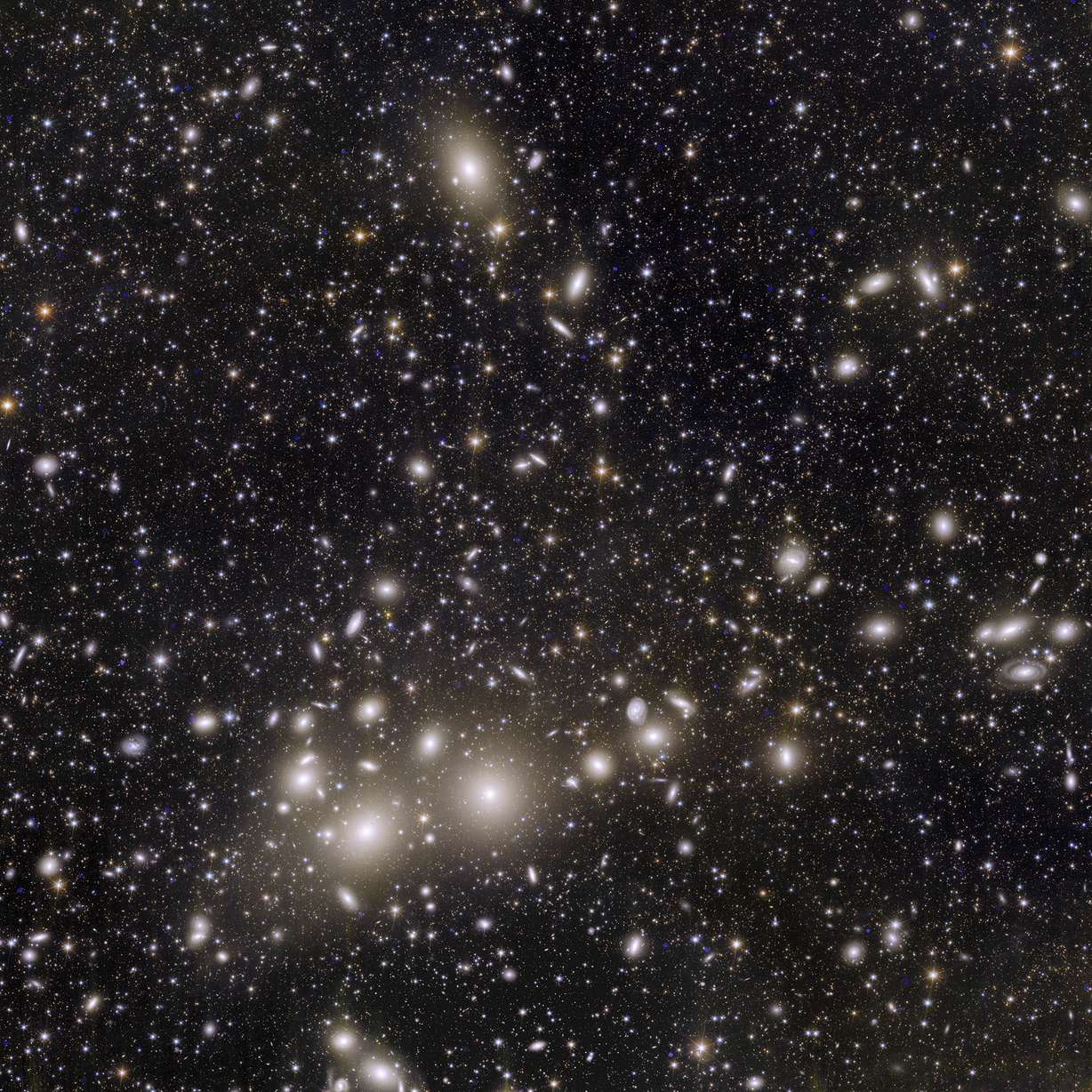
Although these celestial landscapes have been observed before by the Hubble Space Telescope and others, Euclid's snapshots provide "razor-sharp astronomical images across such a large patch of the sky, and looking so far into the distant universe," the agency said.
In one picture, Euclid captured a group shot of 1,000 galaxies in a cluster 240 million light-years away, against a backdrop of more than 100,000 galaxies billions of light-years away. A light-year is 5.8 trillion miles.
"Dazzling," said the space agency's science director, Carole Mundell, as she showed off the galaxy cluster shot on a large screen at the control center in Germany.
Euclid's instruments are sensitive enough to pick up the smallest galaxies, which were too faint to see until now. The results are "crystal-clear and stunning images going back in cosmic time," Mundell said.
The telescope snapped pictures of a relatively close spiral galaxy that is a ringer for our own Milky Way. Although the Hubble Space Telescope previously observed the heart of this galaxy, Euclid's shot reveals star formation across the entire region, scientists said.
Euclid also took fresh photos of the Horsehead Nebula in the constellation Orion, a dramatic nursery of baby stars made famous by Hubble.
By measuring the shape and movement of galaxies as far as 10 billion light-years away, astronomers hope to learn more about the dark energy and matter that make up 95% of the universe.
The observatory will survey billions of galaxies over the next six years, creating the most comprehensive 3D map of the cosmos ever made. NASA is a partner in the $1.5 billion mission and supplied the telescope's infrared detectors.
Launched in July, Euclid orbits the sun some 1 million miles from Earth. The telescope is named after the mathematician of ancient Greece.