'%3e%3cpath%20d='M34.1406%205.85938C30.3906%202.10547%2025.3047%200%2020%200C14.6953%200%209.60938%202.10547%205.85938%205.85938C2.10938%209.61328%200%2014.6953%200%2020C0%2025.3047%202.10547%2030.3906%205.85938%2034.1406C9.61328%2037.8906%2014.6953%2040%2020%2040C25.3047%2040%2030.3906%2037.8945%2034.1406%2034.1406C37.8906%2030.3906%2040%2025.3047%2040%2020C40%2014.6953%2037.8945%209.60938%2034.1406%205.85938ZM37.0117%2023.543H31.1602V13.5391H27.6328V19.9414C28.1211%2020.6914%2028.3711%2021.582%2028.3711%2022.5625V22.625C28.3711%2023.668%2028.1172%2024.6055%2027.6328%2025.4297V26.6094H36.082C33.4883%2032.9375%2027.2891%2037.3789%2020.0039%2037.3789C10.3711%2037.3789%202.62109%2029.6289%202.62109%2020C2.62109%2010.3711%2010.3711%202.62109%2020%202.62109C29.6289%202.62109%2037.3789%2010.3711%2037.3789%2020C37.3789%2021.1484%2037.2617%2022.2656%2037.0508%2023.3477C37.0391%2023.4141%2037.0234%2023.4766%2037.0117%2023.543Z'%20fill='white'/%3e%3cpath%20d='M22.3086%2018.5352C20.4336%2018.125%2019.9531%2017.8398%2019.9766%2017.1836V17.1406C19.9766%2016.6992%2020.3477%2016.2148%2021.4023%2016.2148C22.582%2016.2148%2023.8867%2016.6797%2025.0781%2017.4766L26.8516%2015.0195C25.4453%2013.8906%2023.707%2013.3398%2021.5547%2013.3398C18.5195%2013.3398%2016.4375%2015%2016.4063%2017.4766V17.5352C16.3633%2020.2617%2018.5859%2020.9805%2021.293%2021.6016C23.0391%2021.9766%2023.5703%2022.3164%2023.5703%2022.9609L23.5469%2022.9766C23.5469%2023.3906%2023.2578%2023.7031%2022.7852%2023.8359C22.5742%2023.9062%2022.1289%2023.9727%2021.5156%2023.9727C20.7617%2023.9727%2019.7539%2023.8633%2018.6328%2023.4844C18.0898%2023.2891%2017.4727%2023.0039%2016.8047%2022.6133L20.1406%2026.625C20.2813%2026.6602%2021.0977%2026.8516%2021.7734%2026.8516C25.0039%2026.8516%2027.0859%2025.2461%2027.1094%2022.6328V22.5703C27.1602%2020.1133%2025.2148%2019.1719%2022.3086%2018.5352Z'%20fill='white'/%3e%3cpath%20d='M5.24219%2013.5664V26.6133H8.75391V23.7578L10.2969%2021.9531L14.2031%2026.6133H18.3867L12.3555%2019.5195L17.4023%2013.5664H13.4531L8.75391%2019.0586V13.5664H5.24219Z'%20fill='white'/%3e%3c/g%3e%3cdefs%3e%3cclipPath%20id='clip0_97_2430'%3e%3crect%20width='40'%20height='40'%20fill='white'/%3e%3c/clipPath%3e%3c/defs%3e%3c/svg%3e)


Estimated read time: 4-5 minutes
This archived news story is available only for your personal, non-commercial use. Information in the story may be outdated or superseded by additional information. Reading or replaying the story in its archived form does not constitute a republication of the story.
BINGHAM CANYON — Nine months after announcing a return to underground copper mining operations after a centurylong hiatus, Rio Tinto on Tuesday revealed more steps aimed at strengthening the U.S. copper supply through a $920 million investment in the Kennecott Copper Mine.
The mine — which began operations in 1906 — started as an underground copper mine before ceasing with that method and becoming iconic for its claim as the largest man-made excavation and deepest open-pit mine in the world.
Officials said $498 million of the funding — the largest chunk — will go toward the underground development and necessary infrastructure for an underground area of the mine known as the north rim skarn.
In September, Rio Tinto announced a $55 million investment in development capital in a section of its underground copper deposit known as the lower commercial skarns.
"This is what we think is the next phase of growth," said Clayton Walker, chief operating officer for Rio Tinto's Copper product group. "The north rim skarn is the next ore body, so by developing that, that's when we get into real underground mining and that will continue to allow us to expand."
Walker added he believes there are additional copper deposits underground at the Kennecott Copper Mine and developing the north rim skarn will be a gateway to accessing more of them.
Copper production from the north rim skarn will begin in 2024 — delivering around 250,000 tons of mined copper over the next 10 years alongside open-cut operations.
To put this into perspective, 250,000 tons of copper would be enough to make approximately 3 million electric vehicles, Walker said.
"This is now going underground where we can access different ore at a different grade," he said.
Additionally, the copper ore pulled from the surface of the Kennecott Copper Mine contains around 0.5% copper per ton, while the copper ore pulled from underground is around 2.5% copper per ton.
"It's really rich ore that we're going to be able to access underground without having to remove all that waste or that rock to get to it like you do in the open pit," Walker said.
While the move to underground mining will allow Kennecott to continue mining from the Kennecott Copper Mine without increasing the mine's visible footprint, underground mining does carry some environmental concerns — specifically related to water, Carl Fisher, executive director of the environmental group Save Our Canyons, said after Rio Tinto announced a return to underground operations.
Fisher said subterranean water systems could be impacted.
"Not a lot is known about where these water systems go, but sometimes manifest themselves as springs. I suspect folks that live in the vicinity of Kennecott could see their wells dry up as underground mining can totally alter the flow of water; this could also compound aquifers that rest underneath the Salt Lake (and possibly even the Tooele) Valley," Fisher told KSL.
Related:
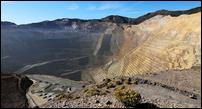
Nodding to the past, looking to the future. Utah's Kennecott again mining copper underground
The Kennecott Copper Mine on Tuesday announced that it will be moving mining operations underground again after more than a century in its next step to extract copper.He also said underground mining causes dust emissions, something that is "killing" the snowpack.
"Dust on snow leads to a faster rate of melt and faster evapotranspiration. This means our snowpack, which in the greater Salt Lake region is our water reservoir, isn't lasting as long through the summer months as it used to be and the evapotranspiration in many instances means less water in the Great Salt Lake watershed," Fisher said.
Along with the $498 million allocated to underground mining, $300 million is going toward a rebuild of the Kennecott smelter that started in May — the largest rebuild in Kennecott's history.
The rest of the investment — $120 million — will be used to upgrade the refinery tank house structure and update Kennecott's molybdenum flotation circuit with a state-of-the-art, fully automated system.
Walker explained that copper goes through the smelter, emerging as an anode, which is then refined into a copper cathode that comes out at 99.99% pure copper that is sold to Kennecott's customers.
"Not only are we fixing our smelter, we're upgrading or fixing our refinery so we can continue to meet the demand for copper cathodes," Walker said.
He added that copper is a key material for domestic manufacturing and the energy transition, two priorities Rio Tinto has as the second-largest copper producer in the United States.
"Rio Tinto is committed to investing in the U.S. and continuing to be part of that solution on how we can meet those demands that are out there, and we're just committed to doing that," Walker said.