'%3e%3cpath%20d='M34.1406%205.85938C30.3906%202.10547%2025.3047%200%2020%200C14.6953%200%209.60938%202.10547%205.85938%205.85938C2.10938%209.61328%200%2014.6953%200%2020C0%2025.3047%202.10547%2030.3906%205.85938%2034.1406C9.61328%2037.8906%2014.6953%2040%2020%2040C25.3047%2040%2030.3906%2037.8945%2034.1406%2034.1406C37.8906%2030.3906%2040%2025.3047%2040%2020C40%2014.6953%2037.8945%209.60938%2034.1406%205.85938ZM37.0117%2023.543H31.1602V13.5391H27.6328V19.9414C28.1211%2020.6914%2028.3711%2021.582%2028.3711%2022.5625V22.625C28.3711%2023.668%2028.1172%2024.6055%2027.6328%2025.4297V26.6094H36.082C33.4883%2032.9375%2027.2891%2037.3789%2020.0039%2037.3789C10.3711%2037.3789%202.62109%2029.6289%202.62109%2020C2.62109%2010.3711%2010.3711%202.62109%2020%202.62109C29.6289%202.62109%2037.3789%2010.3711%2037.3789%2020C37.3789%2021.1484%2037.2617%2022.2656%2037.0508%2023.3477C37.0391%2023.4141%2037.0234%2023.4766%2037.0117%2023.543Z'%20fill='white'/%3e%3cpath%20d='M22.3086%2018.5352C20.4336%2018.125%2019.9531%2017.8398%2019.9766%2017.1836V17.1406C19.9766%2016.6992%2020.3477%2016.2148%2021.4023%2016.2148C22.582%2016.2148%2023.8867%2016.6797%2025.0781%2017.4766L26.8516%2015.0195C25.4453%2013.8906%2023.707%2013.3398%2021.5547%2013.3398C18.5195%2013.3398%2016.4375%2015%2016.4063%2017.4766V17.5352C16.3633%2020.2617%2018.5859%2020.9805%2021.293%2021.6016C23.0391%2021.9766%2023.5703%2022.3164%2023.5703%2022.9609L23.5469%2022.9766C23.5469%2023.3906%2023.2578%2023.7031%2022.7852%2023.8359C22.5742%2023.9062%2022.1289%2023.9727%2021.5156%2023.9727C20.7617%2023.9727%2019.7539%2023.8633%2018.6328%2023.4844C18.0898%2023.2891%2017.4727%2023.0039%2016.8047%2022.6133L20.1406%2026.625C20.2813%2026.6602%2021.0977%2026.8516%2021.7734%2026.8516C25.0039%2026.8516%2027.0859%2025.2461%2027.1094%2022.6328V22.5703C27.1602%2020.1133%2025.2148%2019.1719%2022.3086%2018.5352Z'%20fill='white'/%3e%3cpath%20d='M5.24219%2013.5664V26.6133H8.75391V23.7578L10.2969%2021.9531L14.2031%2026.6133H18.3867L12.3555%2019.5195L17.4023%2013.5664H13.4531L8.75391%2019.0586V13.5664H5.24219Z'%20fill='white'/%3e%3c/g%3e%3cdefs%3e%3cclipPath%20id='clip0_97_2430'%3e%3crect%20width='40'%20height='40'%20fill='white'/%3e%3c/clipPath%3e%3c/defs%3e%3c/svg%3e)






Estimated read time: 3-4 minutes
This archived news story is available only for your personal, non-commercial use. Information in the story may be outdated or superseded by additional information. Reading or replaying the story in its archived form does not constitute a republication of the story.
SALT LAKE CITY — When did Utahns start to recognize the pollution problem in the Salt Lake Valley and start to advocate for cleaner air?
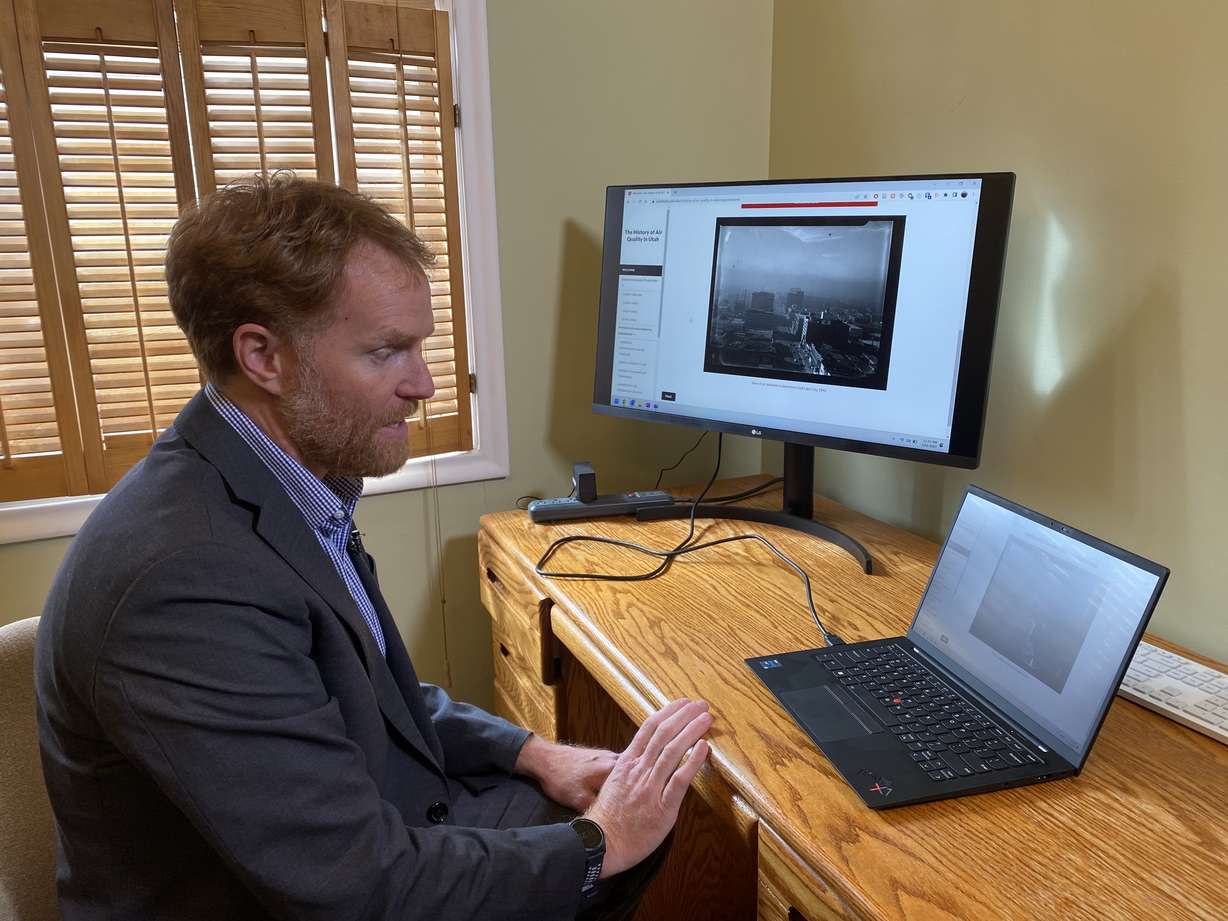
That simple question led one local scientist to create a digital exhibit called The History of Air Quality in Utah.
It is a fascinating digital compilation of historical photos and articles from the University of Utah's J. Willard Marriott Library. It details Utah's unique air pollution problem going back to the 1880s when Utahns referred to the winter pollution as "smoke evil" or the "smoke nuisance."
"If you look back in time, there's a lot of folks who've been working on this problem for a really long time," Logan Mitchell said. He's a climate and energy analyst at Utah Clean Energy and affiliated faculty at the University of Utah.
The exhibit, which includes links to photos and articles expands on a research paper Mitchell wrote last year.
"There was always an awareness that this was bad for our health," he said.
When he first pursued the question, he thought, maybe pollution had become a public issue in the last decade or two. As he scoured the archives, he discovered air quality has been a persistent concern as long as people have lived on the Wasatch Front.
"People were really concerned about air quality going back to Brigham Young. He talked about how air quality is really essential for life," Mitchell said.
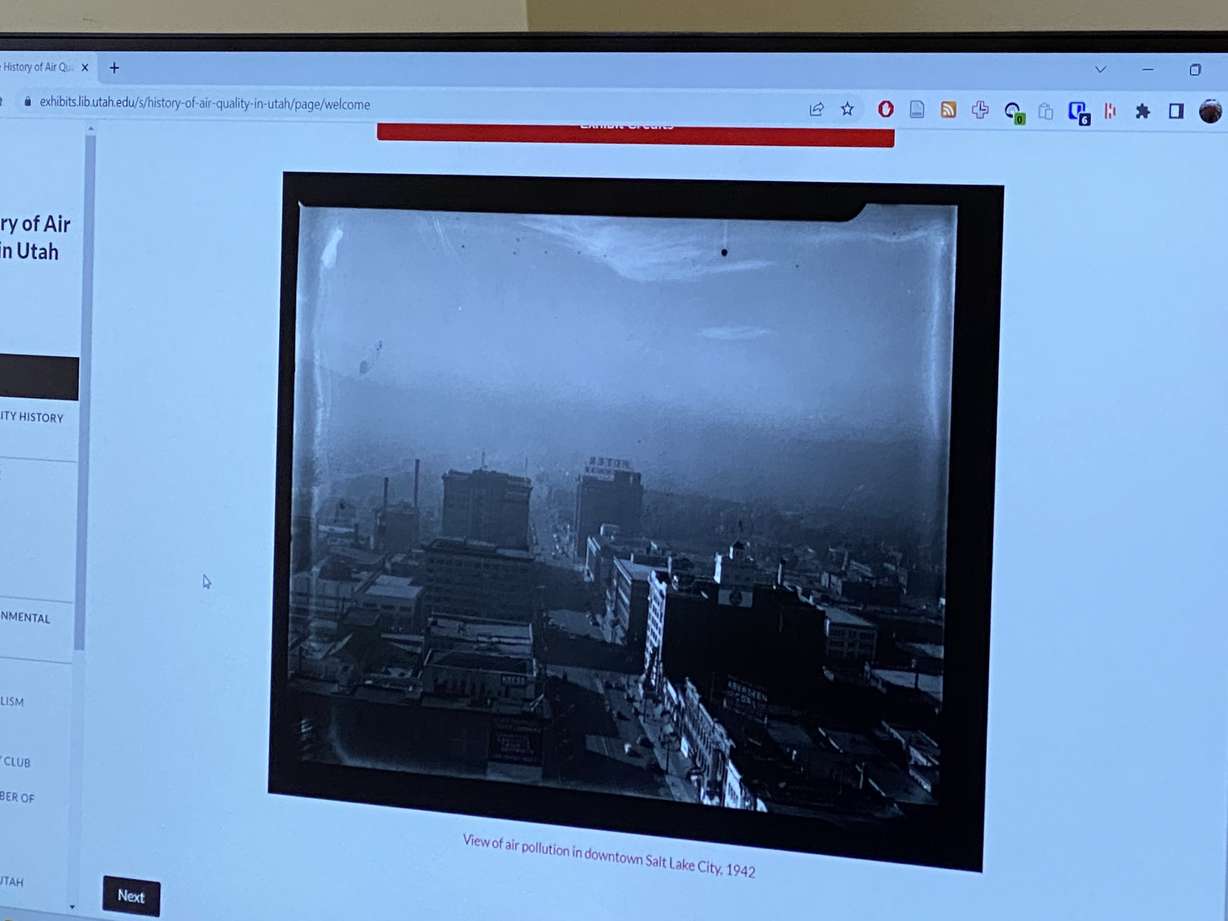
In the 1880s, editorials in the Deseret News addressed the persistent "smoke nuisance."
"They didn't talk about air quality back then," he said. "They talked about smoke, because you could see these plumes of smoke coming out of chimneys, and they were like, 'That is bad. That's bad for our health.'"
A timeline in the exhibit shows incremental improvement in our air quality due to a legacy of environmental stewardship.
Last century, when Utahns used coal to heat their homes and buildings, the bowl-like topography created some of the worst air quality in the world.
In 1919, Salt Lake City performed the first study on urban air quality.
In the 1940s, scientists at the University of Utah started to understand that Utah's topography and meteorology trapped the pollution during our temperature inversions.
"It's very clear that our air quality today is probably better than it has been since any time since probably the 1880s," Mitchell said.
As he dug through the digital archives, he also discovered that women took a lead role in advocating for cleaner air and better technologies. "In many ways, they were the front lines dealing with this challenge," he said.
A century ago, women dealt with the soot from coal as they cleaned it out of clothes and curtains and cared for people sickened by smoke. Alice Horne and Cornelius Lund advocated for city ordinances to reduce pollution.
"They made educational pamphlets and handed them out across the city so that people had the best information about how to run their stoves to produce less smoke," Mitchell said.
There's a lot to explore that provides a historical perspective on where we are now.