'%3e%3cpath%20d='M34.1406%205.85938C30.3906%202.10547%2025.3047%200%2020%200C14.6953%200%209.60938%202.10547%205.85938%205.85938C2.10938%209.61328%200%2014.6953%200%2020C0%2025.3047%202.10547%2030.3906%205.85938%2034.1406C9.61328%2037.8906%2014.6953%2040%2020%2040C25.3047%2040%2030.3906%2037.8945%2034.1406%2034.1406C37.8906%2030.3906%2040%2025.3047%2040%2020C40%2014.6953%2037.8945%209.60938%2034.1406%205.85938ZM37.0117%2023.543H31.1602V13.5391H27.6328V19.9414C28.1211%2020.6914%2028.3711%2021.582%2028.3711%2022.5625V22.625C28.3711%2023.668%2028.1172%2024.6055%2027.6328%2025.4297V26.6094H36.082C33.4883%2032.9375%2027.2891%2037.3789%2020.0039%2037.3789C10.3711%2037.3789%202.62109%2029.6289%202.62109%2020C2.62109%2010.3711%2010.3711%202.62109%2020%202.62109C29.6289%202.62109%2037.3789%2010.3711%2037.3789%2020C37.3789%2021.1484%2037.2617%2022.2656%2037.0508%2023.3477C37.0391%2023.4141%2037.0234%2023.4766%2037.0117%2023.543Z'%20fill='white'/%3e%3cpath%20d='M22.3086%2018.5352C20.4336%2018.125%2019.9531%2017.8398%2019.9766%2017.1836V17.1406C19.9766%2016.6992%2020.3477%2016.2148%2021.4023%2016.2148C22.582%2016.2148%2023.8867%2016.6797%2025.0781%2017.4766L26.8516%2015.0195C25.4453%2013.8906%2023.707%2013.3398%2021.5547%2013.3398C18.5195%2013.3398%2016.4375%2015%2016.4063%2017.4766V17.5352C16.3633%2020.2617%2018.5859%2020.9805%2021.293%2021.6016C23.0391%2021.9766%2023.5703%2022.3164%2023.5703%2022.9609L23.5469%2022.9766C23.5469%2023.3906%2023.2578%2023.7031%2022.7852%2023.8359C22.5742%2023.9062%2022.1289%2023.9727%2021.5156%2023.9727C20.7617%2023.9727%2019.7539%2023.8633%2018.6328%2023.4844C18.0898%2023.2891%2017.4727%2023.0039%2016.8047%2022.6133L20.1406%2026.625C20.2813%2026.6602%2021.0977%2026.8516%2021.7734%2026.8516C25.0039%2026.8516%2027.0859%2025.2461%2027.1094%2022.6328V22.5703C27.1602%2020.1133%2025.2148%2019.1719%2022.3086%2018.5352Z'%20fill='white'/%3e%3cpath%20d='M5.24219%2013.5664V26.6133H8.75391V23.7578L10.2969%2021.9531L14.2031%2026.6133H18.3867L12.3555%2019.5195L17.4023%2013.5664H13.4531L8.75391%2019.0586V13.5664H5.24219Z'%20fill='white'/%3e%3c/g%3e%3cdefs%3e%3cclipPath%20id='clip0_97_2430'%3e%3crect%20width='40'%20height='40'%20fill='white'/%3e%3c/clipPath%3e%3c/defs%3e%3c/svg%3e)





Estimated read time: 3-4 minutes
This archived news story is available only for your personal, non-commercial use. Information in the story may be outdated or superseded by additional information. Reading or replaying the story in its archived form does not constitute a republication of the story.
SALT LAKE CITY — More than 81,000 American troops remain missing from our country's conflicts dating back to World War II. Efforts to find them are ongoing.
Researchers at the University of Utah are using the chemistry in teeth to develop a tool to help identify remains and unite them with their families.
"The promise is made to them when they sign up that they will not be left behind, and so really what everybody involved in this effort is doing is trying to make good on that promise," said Gabriel Bowen, the lead researcher on this project, and a professor of geology and geophysics at the University of Utah.
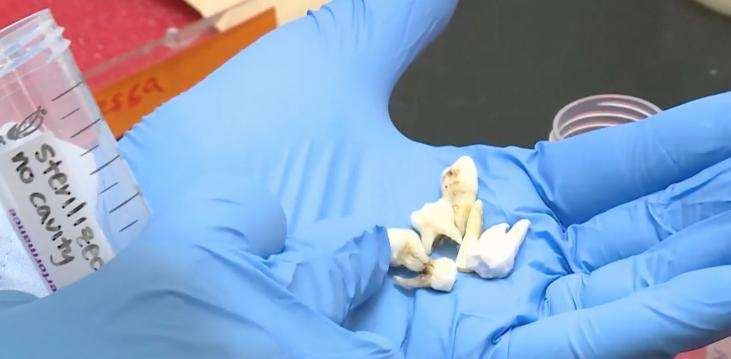
Our teeth, much like an accent, tell part of the tale of where we've lived without our even knowing it, Bowen said. Working with a team of eight researchers, he is analyzing the chemistry of teeth as a way to help identify the remains of lost soldiers.
"We're trying to use the natural chemistry of a body as an indicator of where someone has lived in the past," Bowen said.
The isotopes in our teeth contain a record of where we've lived and those environments, the professor said. Our teeth record the history of where we've lived through the water.
"That chemistry is locked into the teeth," Bowen said. "It's preserved throughout life, and it can be preserved for decades after an individual dies. We just have to reach in and measure that chemistry."
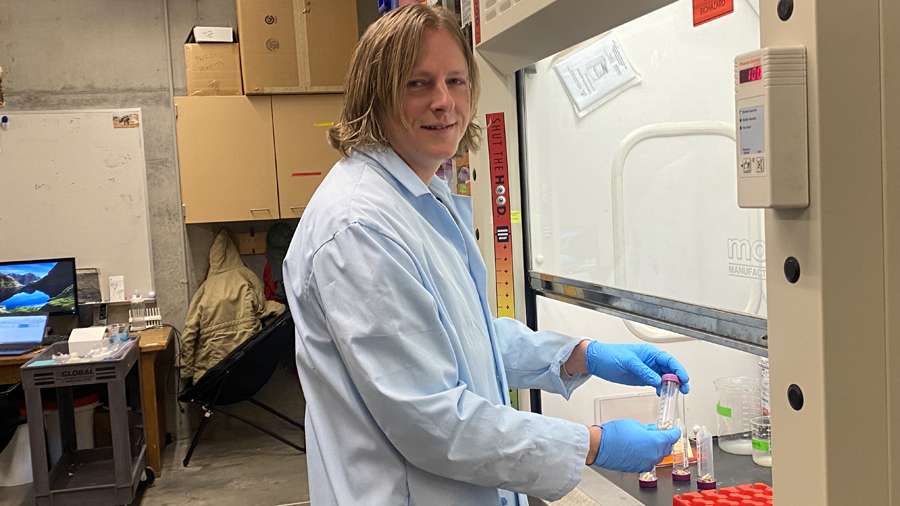
His research team, working with the Defense POW/MIA Accounting Agency, hopes to expand the ability of investigators to determine the hometown of unidentified troops. It's called Project FIND-EM or, Forensic Identification of our Nation's Deceased with Element Mapping.
Typically, investigators have some information about a group of soldiers they are trying to identify.
"Where the chemistry of the teeth comes into play is we can analyze that chemistry and we can use it to exclude or highlight certain parts of the United States as a potential home for that individual."
The researchers are using donated molars from across the country to build a map of where those teeth came from. They can then compare the teeth from unidentified remains with those on the map to narrow down their origin.
That chemistry is locked into the teeth. It's preserved throughout life, and it can be preserved for decades after an individual dies. We just have to reach in and measure that chemistry.
–Gabriel Bowen, University of Utah
"We are providing a piece of the puzzle that helps them focus their search image, and make that identification much more effectively," the researcher said.
It's a work in progress — they're developing the scientific knowledge that's needed to apply this in case work.
"If we can get that going as quickly as we hope to, this could be operational in two years and contributing routinely to the identification efforts at that point," Bowen said.
Their research is adding to the work of many others.
"We're just hoping to provide another tool in the toolbox that makes that work more effective," Bowen said.
They need more molars from across the country to build their map.
They need more molars from across the country to build their map. You can get more information on Project FIND-EM by clicking here.