'%3e%3cpath%20d='M34.1406%205.85938C30.3906%202.10547%2025.3047%200%2020%200C14.6953%200%209.60938%202.10547%205.85938%205.85938C2.10938%209.61328%200%2014.6953%200%2020C0%2025.3047%202.10547%2030.3906%205.85938%2034.1406C9.61328%2037.8906%2014.6953%2040%2020%2040C25.3047%2040%2030.3906%2037.8945%2034.1406%2034.1406C37.8906%2030.3906%2040%2025.3047%2040%2020C40%2014.6953%2037.8945%209.60938%2034.1406%205.85938ZM37.0117%2023.543H31.1602V13.5391H27.6328V19.9414C28.1211%2020.6914%2028.3711%2021.582%2028.3711%2022.5625V22.625C28.3711%2023.668%2028.1172%2024.6055%2027.6328%2025.4297V26.6094H36.082C33.4883%2032.9375%2027.2891%2037.3789%2020.0039%2037.3789C10.3711%2037.3789%202.62109%2029.6289%202.62109%2020C2.62109%2010.3711%2010.3711%202.62109%2020%202.62109C29.6289%202.62109%2037.3789%2010.3711%2037.3789%2020C37.3789%2021.1484%2037.2617%2022.2656%2037.0508%2023.3477C37.0391%2023.4141%2037.0234%2023.4766%2037.0117%2023.543Z'%20fill='white'/%3e%3cpath%20d='M22.3086%2018.5352C20.4336%2018.125%2019.9531%2017.8398%2019.9766%2017.1836V17.1406C19.9766%2016.6992%2020.3477%2016.2148%2021.4023%2016.2148C22.582%2016.2148%2023.8867%2016.6797%2025.0781%2017.4766L26.8516%2015.0195C25.4453%2013.8906%2023.707%2013.3398%2021.5547%2013.3398C18.5195%2013.3398%2016.4375%2015%2016.4063%2017.4766V17.5352C16.3633%2020.2617%2018.5859%2020.9805%2021.293%2021.6016C23.0391%2021.9766%2023.5703%2022.3164%2023.5703%2022.9609L23.5469%2022.9766C23.5469%2023.3906%2023.2578%2023.7031%2022.7852%2023.8359C22.5742%2023.9062%2022.1289%2023.9727%2021.5156%2023.9727C20.7617%2023.9727%2019.7539%2023.8633%2018.6328%2023.4844C18.0898%2023.2891%2017.4727%2023.0039%2016.8047%2022.6133L20.1406%2026.625C20.2813%2026.6602%2021.0977%2026.8516%2021.7734%2026.8516C25.0039%2026.8516%2027.0859%2025.2461%2027.1094%2022.6328V22.5703C27.1602%2020.1133%2025.2148%2019.1719%2022.3086%2018.5352Z'%20fill='white'/%3e%3cpath%20d='M5.24219%2013.5664V26.6133H8.75391V23.7578L10.2969%2021.9531L14.2031%2026.6133H18.3867L12.3555%2019.5195L17.4023%2013.5664H13.4531L8.75391%2019.0586V13.5664H5.24219Z'%20fill='white'/%3e%3c/g%3e%3cdefs%3e%3cclipPath%20id='clip0_97_2430'%3e%3crect%20width='40'%20height='40'%20fill='white'/%3e%3c/clipPath%3e%3c/defs%3e%3c/svg%3e)


Estimated read time: 7-8 minutes
This archived news story is available only for your personal, non-commercial use. Information in the story may be outdated or superseded by additional information. Reading or replaying the story in its archived form does not constitute a republication of the story.
SALT LAKE CITY — A day before a special legislative session to address a $850 million budget shortfall created by COVID-19’s economic impacts is set to begin, Utah leaders on Wednesday unveiled an updated version of their plan to handle the pandemic.
But Utah Leads Together 4.0, unlike its previous three versions, takes perhaps the strongest look at economic recovery factors. It was also released as Utah continued what is now three straight weeks of at least 200 new cases per day amid the fastest spread of the disease.
Gov. Gary Herbert said he’s optimistic that Utah is already on a road to recovery. The pandemic has hit the state budget, creating a $757 million deficit in ongoing funds and a sudden cut to $93 million in one-time money. While it’s a sizable hit, Herbert said Utah is still much better off than what was originally expected. The state had forecast a possible $2 billion cut in the budget just last month.
In addition, Utah’s April unemployment, of 9.7%, was much lower than the nationwide 14.7% figure. Herbert said he’s hopeful that new figures, expected to be released later this week, will show that Utah’s unemployment rate shrank in May.
"That doesn’t make it any easier for those — the thousands of people who have disruptions in their lives. They’re out of work and on unemployment," Herbert said. "We understand that and have empathy for those who are waiting to go back to work."
Utah Senate President Stuart Adams said the state’s budget cuts likely won’t include social services or education. He said the budget would call for a nearly 6% increase to social services while education will receive about 2% and the weighted pupil per unit will be increased by 1.8%. Other budgets "might be cut 2-3%" and building projects will be stopped, Adams said.
But how will the state address economic concerns after the new budget goes into effect at the beginning of July?
A look into the new plan
The first three "Utah Leads Together" plans offered different adjustments many Utahns have grown accustomed to since the first COVID-19 case was reported on March 6. The first version created a system of urgent, stabilization and recovery phases; volume 2 created a color-coded health guidance plan; volume 3 added new ways to address multicultural communities and Utahns who may be at highest risk for COVID-19 illness.
"It’s been a dynamic plan which expands and reflects the needs of the day and new information as it comes to us," Herbert said. "This latest version lays out the foundation for recovery. That’s the essence of Volume 4, here. It has our priorities, what we need to take on as responsibility over the next 100 days, the next 250 days and the next 500 days."
The fourth installment, unveiled Wednesday, introduces an economic recovery and revitalization plan based on five principles outlined by Utah’s Economic Response Task Force. Those include acting fast, focusing on industries, locations and people who have suffered the most from the economic crisis, favoring policy solutions that solve current problems, being flexible to "combat uncertainty by preparing for a range of scenarios" and also finding ways to be innovative.
It outlines 100-day and 250-day horizons that seek to get Utahns back to either their jobs before the pandemic or create job opportunities that will work to rebuild the state’s infrastructure.
Derek Miller, president and CEO of the Salt Lake Chamber and Downtown Alliance, said 77% of people on the state’s unemployment sheets are "still attached to a job," which is why he said reopening businesses is the "best way to get people back to work."
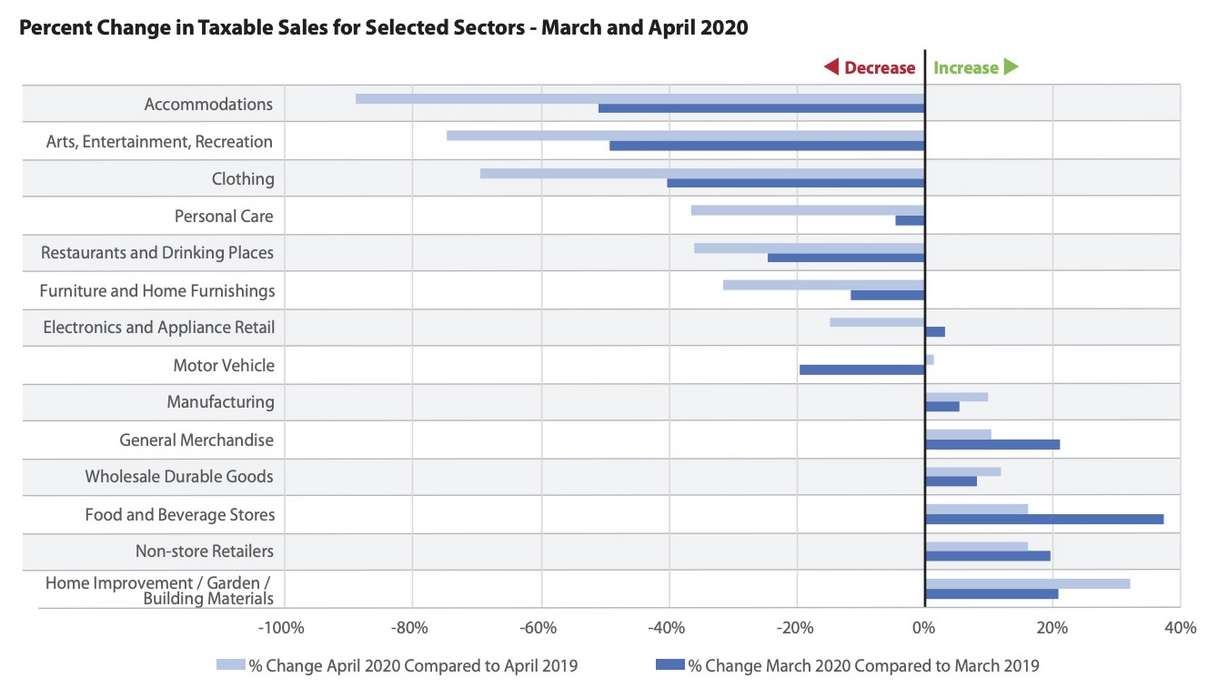
The 250-day horizon would focus on rebuilding infrastructure like transportation, transit, outdoor recreation, water, broadband internet and housing, as well as getting workers appropriate training for work skills. Theresa Foxley, CEO of the Economic Development Corporation of Utah, said it’s possible the program could turn into a modern-day version of the Civilian Conservation Corps.
"We start with tactical revitalization investments and move toward broader, more strategic investments that position Utah for long-term growth," she said.
Utah House Speaker Brad Wilson said a bill to be developed this week will direct the Utah Department of Workforce Services to help unemployed Utahns align worker skills with available jobs, which is forecast to employ about 21,000 Utahns. There’s also an economic recovery grant program bill that Wilson said would create a framework to use more than $50 million from the federal CARES Act to support businesses most affected by the pandemic, which is also outlined in the plan.
The bill would create new programs called Utah Shops Together, Utah Creates Together, Utah Works Together, Utah Innovates Together and Utah Stays Healthy Together. Every one of the new programs looks into ways to rebuild the hardest-hit sectors, like stores or the arts.
The goal for the 500-day horizon is to "ensure prosperity for the state over the next 5,000 days," the updated Utah Leads Together document says. Herbert said he believes the latest plan will prepare the state for "growth and prosperity" after the COVID-19 pandemic is over.
The plan includes researching "strategic investment options," sharpening "focus on economic inclusion," adopting "key sector strategy," reimagining "economic development and incentives" and achieving "higher trajectory of global leadership and growth."
"Stay Safe to Stay Open"
While the brunt of the newest update centers around economic recovery, it comes as COVID-19 cases are growing at the fastest rate the state has experienced since the pandemic began. The state has recorded at least 200 new cases since May 28; since Memorial Day (May 25), Utah has recorded 6,823 cases, which is 44.4% of the state's total cases that date back to March 6. In other words, Utah has nearly doubled its total cases since Memorial Day.
Hospitalizations have also gone up but in a less dramatic way. That's another key component Utah health experts look at. As of Wednesday, 147 Utahns were in hospitals due to COVID-19, and 64 of the people hospitalized were in intensive care units. That's up from 107 active hospitalizations reported on June 1.
Utah leaders say residents must continue to abide by public health recommendations, such as social distancing, using good hand hygiene, wearing face coverings and staying home if you are experiencing even mild symptoms. The document suggests referring to the top goal in the color-coded dial as the "new normal green."
"Utah’s color-coded health guidance recognizes that for the foreseeable future our actions cannot return to pre-pandemic life. We must manage risk in the face of a novel coronavirus that preys on high-risk individuals and vulnerable populations. For this reason, when it pertains to the color-coded health guidance we don’t use the term ‘green,’ but rather ‘new normal green,’" it states, adding that this phase requires Utahns to take personal responsibility in ensuring COVID-19 doesn’t continue to spread.
Related:

Utah sees 407 new cases of COVID-19, 4 more deaths as state unveils updated economic recovery plan
Utah’s number of COVID-19 cases has increased by 407 from Tuesday, with four new reported deaths, according to the Utah Department of Health.These changes were introduced to the state’s public health guidelines just before Kane County became the first area in the state to reach the so-called "new normal green."
"If we’re going to have success on this, it really comes down to each one of us as individuals to follow these guidelines," Herbert said. "If we do so, we’re going to slow the spread of this coronavirus and stop it, and be able to open up quicker the economy of Utah."
Earlier this year, Herbert issued a "stay safe, stay home" directive that urged Utahns to remain at home if possible as the pandemic first spread into the state. Months later, the updated plan introduces an initiative called "Stay Safe to Stay Open." Miller said it calls on Utah businesses to make a pledge to use the best practices for health and safety; businesses that participate can receive signs they can place on their businesses.
"Consumers who see the ‘Stay Safe to Stay Open’ signs can have confidence that those businesses are following state health guidelines," he said, adding that the program’s website will launch next week.
Miller echoed what Herbert said about following guidelines.
"Safety is integral throughout each component of the plan," Miller said, "and must be central to all of our activities and efforts to catapult Utah back to the economic summit."