'%3e%3cpath%20d='M34.1406%205.85938C30.3906%202.10547%2025.3047%200%2020%200C14.6953%200%209.60938%202.10547%205.85938%205.85938C2.10938%209.61328%200%2014.6953%200%2020C0%2025.3047%202.10547%2030.3906%205.85938%2034.1406C9.61328%2037.8906%2014.6953%2040%2020%2040C25.3047%2040%2030.3906%2037.8945%2034.1406%2034.1406C37.8906%2030.3906%2040%2025.3047%2040%2020C40%2014.6953%2037.8945%209.60938%2034.1406%205.85938ZM37.0117%2023.543H31.1602V13.5391H27.6328V19.9414C28.1211%2020.6914%2028.3711%2021.582%2028.3711%2022.5625V22.625C28.3711%2023.668%2028.1172%2024.6055%2027.6328%2025.4297V26.6094H36.082C33.4883%2032.9375%2027.2891%2037.3789%2020.0039%2037.3789C10.3711%2037.3789%202.62109%2029.6289%202.62109%2020C2.62109%2010.3711%2010.3711%202.62109%2020%202.62109C29.6289%202.62109%2037.3789%2010.3711%2037.3789%2020C37.3789%2021.1484%2037.2617%2022.2656%2037.0508%2023.3477C37.0391%2023.4141%2037.0234%2023.4766%2037.0117%2023.543Z'%20fill='white'/%3e%3cpath%20d='M22.3086%2018.5352C20.4336%2018.125%2019.9531%2017.8398%2019.9766%2017.1836V17.1406C19.9766%2016.6992%2020.3477%2016.2148%2021.4023%2016.2148C22.582%2016.2148%2023.8867%2016.6797%2025.0781%2017.4766L26.8516%2015.0195C25.4453%2013.8906%2023.707%2013.3398%2021.5547%2013.3398C18.5195%2013.3398%2016.4375%2015%2016.4063%2017.4766V17.5352C16.3633%2020.2617%2018.5859%2020.9805%2021.293%2021.6016C23.0391%2021.9766%2023.5703%2022.3164%2023.5703%2022.9609L23.5469%2022.9766C23.5469%2023.3906%2023.2578%2023.7031%2022.7852%2023.8359C22.5742%2023.9062%2022.1289%2023.9727%2021.5156%2023.9727C20.7617%2023.9727%2019.7539%2023.8633%2018.6328%2023.4844C18.0898%2023.2891%2017.4727%2023.0039%2016.8047%2022.6133L20.1406%2026.625C20.2813%2026.6602%2021.0977%2026.8516%2021.7734%2026.8516C25.0039%2026.8516%2027.0859%2025.2461%2027.1094%2022.6328V22.5703C27.1602%2020.1133%2025.2148%2019.1719%2022.3086%2018.5352Z'%20fill='white'/%3e%3cpath%20d='M5.24219%2013.5664V26.6133H8.75391V23.7578L10.2969%2021.9531L14.2031%2026.6133H18.3867L12.3555%2019.5195L17.4023%2013.5664H13.4531L8.75391%2019.0586V13.5664H5.24219Z'%20fill='white'/%3e%3c/g%3e%3cdefs%3e%3cclipPath%20id='clip0_97_2430'%3e%3crect%20width='40'%20height='40'%20fill='white'/%3e%3c/clipPath%3e%3c/defs%3e%3c/svg%3e)




Estimated read time: 8-9 minutes
This archived news story is available only for your personal, non-commercial use. Information in the story may be outdated or superseded by additional information. Reading or replaying the story in its archived form does not constitute a republication of the story.
SALT LAKE CITY — As COVID-19 cases in Utah continue to rise, state officials and health experts sat on a panel hosted by PBS Utah on Wednesday night to answer questions about the pandemic.
Here are some takeaways from the Q&A:
Testing concerns and potentially inaccurate case numbers
Testing shortages are an international problem impacting many infected areas, including Utah, making it hard to know how many people have been infected by the coronavirus and who can get tested.
“Testing has been a very important part of this response, but also very frustrating,” said Utah Department of Health state epidemiologist Dr. Angela Dunn. “We know there are people out there who want to get tested but can’t.”
Because of limited supplies, Dunn said the state has been “forced to prioritize who we test” — something that’s frustrated both residents and health care workers alike.
Currently, the state says someone needs to display COVID-19 symptoms (fever, dry cough, shortness of breath), have traveled recently to an infected area or come in close contact with a positive case to get tested.
Dr. David Mabey with Intermountain Medical Center said he had recently had two patients with COVID-19 symptoms and he was only able to approve one for testing since the second didn’t meet the qualifications for a test — even though Mabey said he was fairly sure that patient did have the illness.
“It is difficult to know just how many people have COVID-19 because of the aforementioned difficulty with getting those test kits and our limitations in being able to test everyone that we would like to,” Mabey noted.
However, he said regardless of if someone is able to get tested or not, the outcome is the same — anyone with COVID-19 symptoms should self-quarantine in their homes for at least 14 days.
As of Wednesday, 63 Utah residents and visitors had tested positive for the illness.
Later Wednesday evening, Rep. Ben McAdams, D-Utah, announced he had tested positive for COVID-19. It wasn’t immediately clear if Wednesday’s tally of 63 included McAdams.
Of those cases, most have been able to recover at home with a handful requiring hospitalization, Dunn said.
When will life return to normal?
While no expert or official could provide an exact timeline of when things will get back to normal after a pandemic, several did offer other countries’ responses as a rough outline for what Utahns can expect in the coming weeks and months.
At the University of Utah South Korea campus, students are preparing to go back to in-person classes in early April, Dr. Michael L. Good, CEO of University of Utah Health, said.
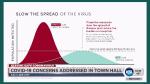
While no one can predict how Utah’s timeline will unfold, Good pointed out it’s a good sign to see another country recovering fairly quickly from the pandemic after taking efforts to flatten the curve, which means slowing the rate of COVID-19 infections.
“There are so many variables,” Good said. “We don’t know how fast, how tall our wave will be — that’s why the things we’re doing now are so important to try and flatten our curve. I can’t emphasize that enough.”
“So hopefully if we do the right things now we can keep our curve similarly in the 8-12 weeks,” he continued. “It’s so hard to put a number on it. But we need to do the right things now.”
As for an exact timeline, no one has those answers but Dunn emphasized Utah is in the very beginning of the outbreak, making actions taken now much more crucial.
“We do know that we’re at the very beginning of this outbreak in Utah and so by using these social distancing measures now, we can prevent the total number of cases that occur in Utah,” Dunn said.
Yes, COVID-19 is worse than the flu
A common misconception circulating about the novel coronavirus is that it’s no worse than the flu.
This is false.
First, the flu comes on at a slow rate and hospitals aren’t overwhelmed and are able to care for all infected patients, Good explained.
Second, in any given community, some immunity to the flu already exists. Because coronavirus is a novel virus, meaning it’s never been seen before, there is no immunity, allowing it to spread far more rapidly.
“If this rate of infection infects so many people at once, the worry is that there won’t be enough hospital beds and health care professionals and so on to take care of everybody at once,” Good said. “If we can slow this down, then we’ll be able to take care of citizens in our community who need the help of their health system.”
Additionally, a lot about the virus is unknown because it is new.
“These early steps we are taking, they will have big payoffs down the line,” Mabey added.
I am in the low-risk group for COVID-19, I am not scared of getting sick. Why should I practice social distancing?
This attitude is common among some young people who don’t think getting the virus is a big deal.
However, Dr. Kashif Memon, an infectious disease specialist with Steward Health Care, explained why this attitude can be dangerous.
So, why should a young and/or healthy person practice social distancing?
“The answer is simple — this is a sacrifice, you know, this is an effort and we are all part of it, we have to play our part,” he explained. “The idea is that these mild cases in healthy people don’t give the infection to the more susceptible and vulnerable patients because those are the ones who are going to get very sick, those are the ones that die from this infection.”
What do kids need to know about this virus?
In most cases of COVID-19, children have largely recovered from mild cases of the disease. However, that doesn’t mean people shouldn’t monitor children.
“Luckily the vast majority of cases are very mild and people recover on their own in their own homes, and children particularly tend to have very mild symptoms,” Dunn said.
“However, they are excellent carriers and spreaders of the disease,” she noted. “So it’s essential that we leave our sick kids at home and especially don’t expose them to our elderly populations.”
How can I volunteer to help people who are at increased risk and what services are needed most urgently?
Here are a few ideas panelists had when it comes to giving back during a pandemic:
- Meals on Wheels
- Providing child care for health care workers
- Shopping for elderly family members or neighbors
How can individuals deal with stress and anxiety during a pandemic?
Fear and stress seems to be building for most across the world as we enter the unknown of social distancing and quarantining.
While people should be concerned, experts emphasized it’s important not to let valid concerns rise to the level of panic.
“We encourage people to have an appropriate level of concern. We want people to be cautious, we want people to be concerned; we also don’t want people to feel overly anxious or feel panicky because we have an excellent system here, we have excellent support,” Mabey said.
“There’s a lot of social disruption going on now,” Dunn added. “But these are all necessary in order to prevent the spread of COVID-19. And so people are playing a part in the response by practicing social distancing and staying home when they’re sick. We urge them to try and find things that they still enjoy doing while all of the social disruption is going on.”
Luckily, we live in a digital age, making it easier to stay in touch with people without risking spreading the novel coronavirus.
“Go for walks outside, find a home project that you’ve been wanting to do, have small gatherings of friends and family, use video conferencing to get connected with people,” Dunn recommended. “Those are important things that will help us weather the storm because again, we are at the very beginning of this, we’ve got several weeks to go.”
And for those worrying about picking up the virus by simply being outside, Good quelled those fears, explaining it’s highly unlikely to get sick unless you have close contact with an infected person.
“Fear builds when we’re alone,” Good said. “Let’s take care of one another. Call a friend, call a family member, let’s check in with each other, see how we’re doing. Because these are fearful times and we need to help one another get through this, particularly the next month or so.”
“The world’s really changed for us and we need to reach out and help one another get through this,” he noted.
Watch the full panel discussion here