Estimated read time: 2-3 minutes
This archived news story is available only for your personal, non-commercial use. Information in the story may be outdated or superseded by additional information. Reading or replaying the story in its archived form does not constitute a republication of the story.
A Utah man has a warning about an old scam with a twist, and the thief is thousands of miles away.
This is the scam police are more familiar with: Thieves using someone's identity to buy stuff online, then stealing it when it's delivered to the victim's doorstep.

The new scam takes it further, and there are not one, but two victims. It's a scam Layne Wilson admits he could have fallen for.
It started with a delivery to his house on Friday. It was a laptop from Hewlett Packard. "FedEx came up and pulled up to the door, and they had a package for me and a computer, and I said, 'What's going on here?'" Wilson explained.
The problem was Wilson never ordered a computer. He called the company and discovered his credit card had been charged $1,000.
Wilson returned the computer to HP and got his money back. "So, I immediately put a fraud alert on the account, and that's when I thought that was the end of it," he said.
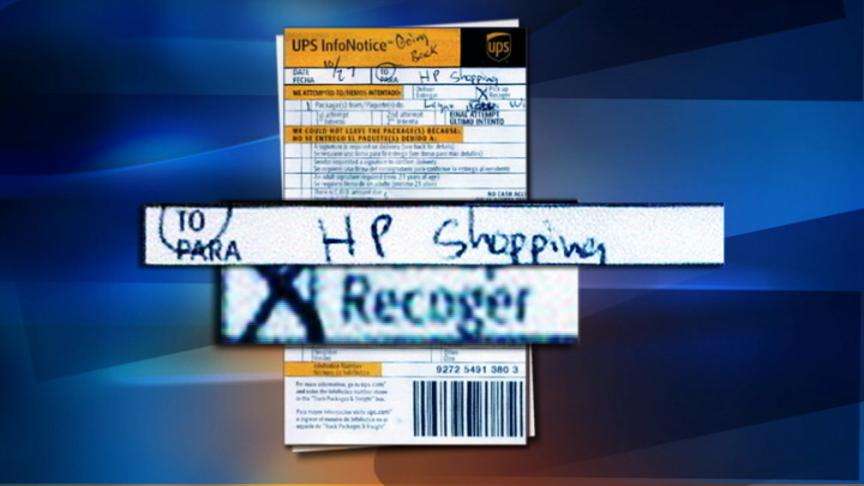
But the case took another turn. On Monday, UPS left a notice on his door. It was a pickup slip with the return address to HP. He got another one the next day.
"I said, 'Wait a minute, I've already returned this.' I said, 'Wait a minute, I smell a rat here,'" he said.
After a little detective work, Wilson found out HP didn't request the pickup. The notice said it was going to the company, but the recipient was a woman in Chicago.
Wilson says when he called HP to report it, the employee he talked to wasn't surprised. "They told me it was a scam. They told me that there's been about 80 cases of this nature going on a day," he said.
So here's how this scam was supposed to work: Wilson is charged for the computer that is sent to his house. The scammer arranges for a pickup. Wilson thinks the item is going back to the vendor, when in reality, it's going to the scammer.
So, the company gets ripped off and Wilson is left to clean up his credit. Consumer Protection says it's just another type of identity theft crime.
"If you use the Internet, if you use the telephone, if you get your mail, that makes you a target," said Kevin Olsen, director of the Utah Division of Consumer Protection.
There are ways to protect yourself. You'll find tips by clicking the related links to the right of this story.
We called Hewlett Packard and the spokeswoman told us she couldn't confirm what the customer service representative told Wilson. She says she'd never heard of this kind of scam.
E-mail: syi@ksl.com