Estimated read time: 6-7 minutes
This archived news story is available only for your personal, non-commercial use. Information in the story may be outdated or superseded by additional information. Reading or replaying the story in its archived form does not constitute a republication of the story.
HILL AIR FORCE BASE — Becoming a military officer is among the most coveted aspirations of many who wear the uniform. For two Utah airmen, being an officer is not just a rank, but "a calling" to be performed and executed with reverence for the country they serve and all the people they are sworn to protect.
The commander
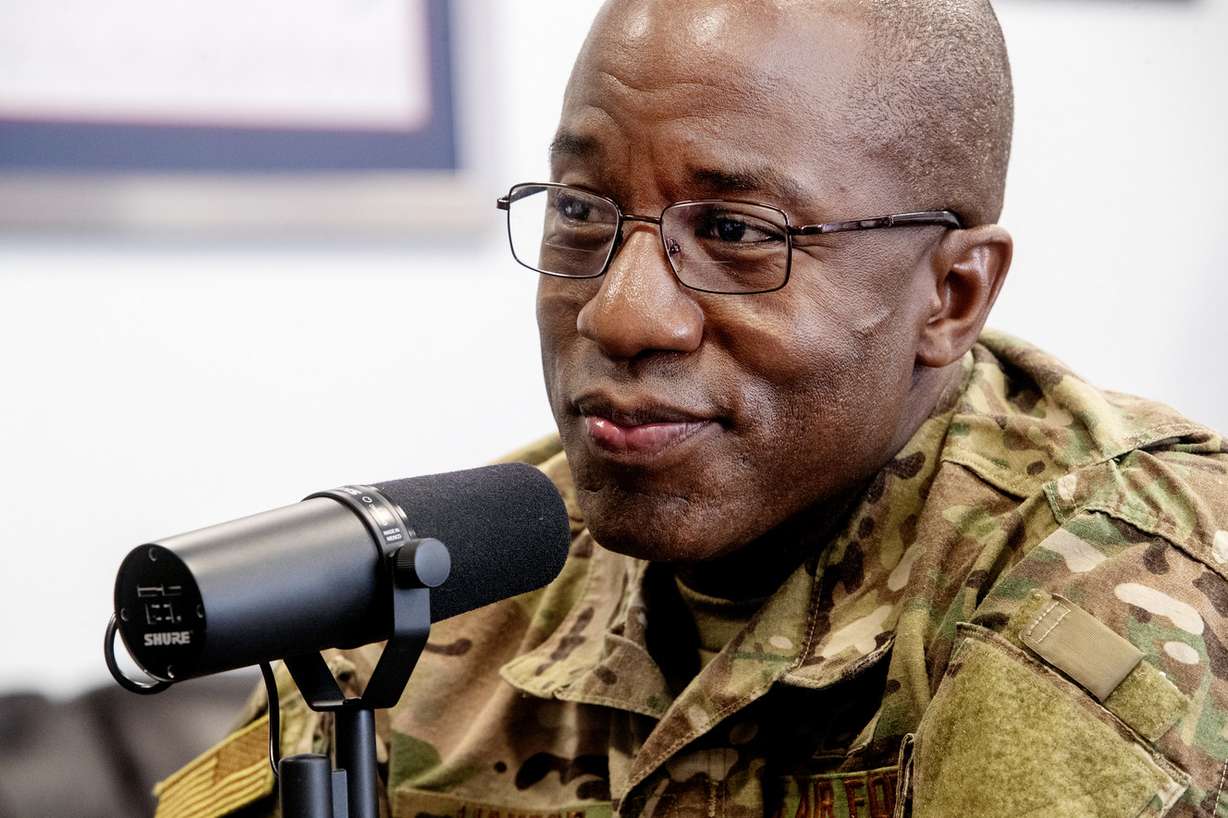
When Maj. Gen. Stacey Hawkins was growing up in Bastrop, Louisiana, a town of just over 10,000 people and the county seat of Morehouse Parish in the northeast corner of the state, he had little reason to believe he would one day become a high-ranking officer in the United States Air Force. The son of educators, like many young men in his small, predominantly African-American community, he participated in extracurricular activities and attended church regularly. His parents also stressed continuing his education beyond high school, he noted.
His interest in military service was piqued through a family summer car trip to Florida to visit his father's brother, Leo Hawkins Jr., he explained. "Uncle Leo" enlisted in the Air Force and eventually retired as a master sergeant in the late 1970s and was stationed at what was then Homestead Air Force Base in Miami-Dade County, he said.
"He had a nice ranch style house, two or three cars in the garage and driveway, palm trees in the front yard and a swimming pool in the back yard," Hawkins recalled. "I left saying, 'I want to be like Uncle Leo' and I figured if I joined the Air Force, I could have all that."
However, nearly three decades in the military later, he has been unable to emulate the life he observed Uncle Leo enjoying, he said.
"After 27-and-a-half years, I've not been stationed in Florida, never owned a swimming pool (and) all of my cars are used so I'm not sure what life Uncle Leo was living," Hawkins said jokingly. "That's not the airman life I've been afforded."
#hawkins_pic
With that visit sparking his initial motivation for joining the military, he went on to apply for and gain acceptance to all three national military academies out of high school.
"Fell in love with the service academy after I joined," he said. "I'm glad I had Uncle Leo to prompt me in that direction."
He added that the path to becoming an officer through the Air Force Academy was quite challenging, but the guidance and counsel of mentor officers he met along the way helped him to succeed. He credited one man who retired as a three-star Lt. General as having been a key catalyst for his success as a cadet in the academy.
Today, he is the commander of the Ogden Air Logistics Complex at Hill Air Force Base, which "provides logistics, support, maintenance and distribution for the nation's premier fighter aircraft" including the F-35, F-22, F-16 and A-10. Additionally, the complex maintains the C-130, T-38 and other weapon systems such as the Minuteman III Intercontinental Ballistic Missile.
The aspiring officer
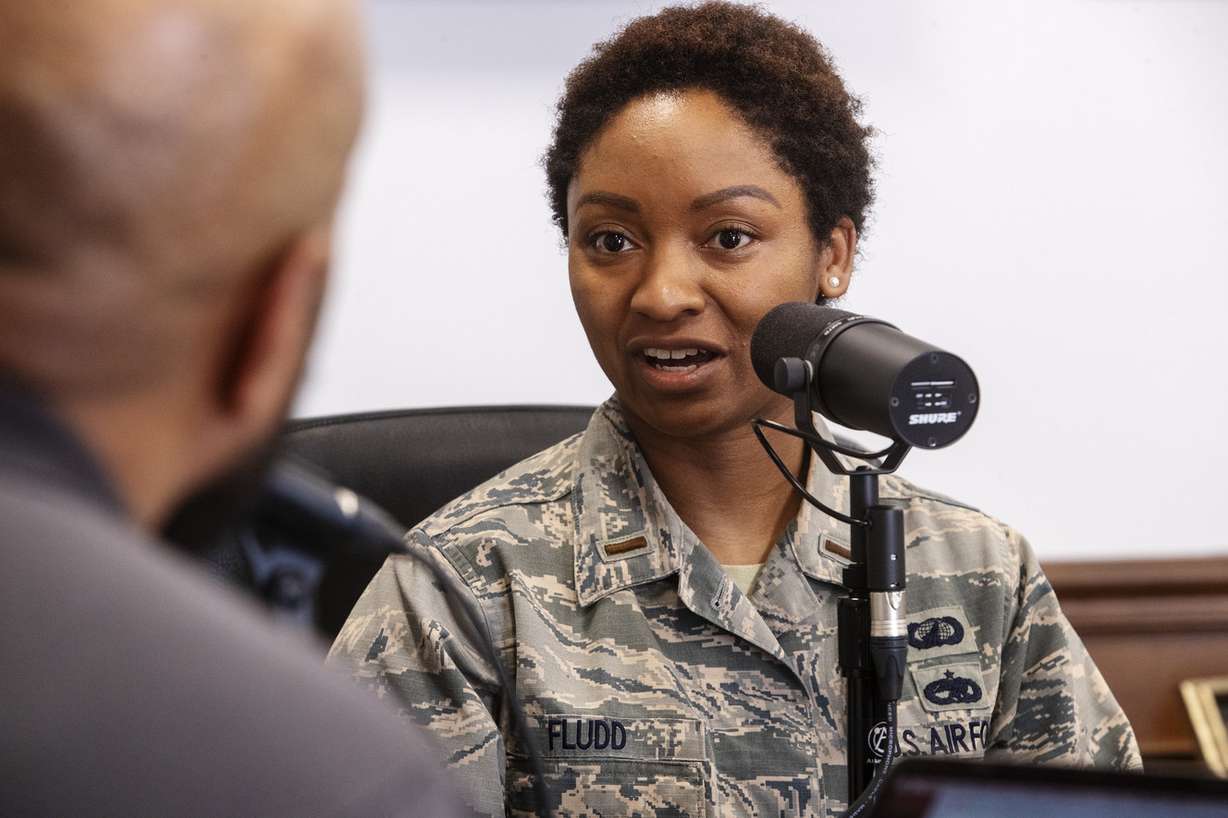
San Francisco native 2nd Lt. Laketa Fludd took a decidedly different path to officer commission. The daughter of Jamaican immigrants, she learned of the military from her father, who joined the U.S. Army as a way to gain citizenship. However, she hadn't really considered it for her own career until she was a young adult, right around the time of the Great Recession.
"(That) 2011, 2010 timeframe wasn't really a good time to just be a new grad right out of college without a lot of work experience," she said. "I started looking at different options."
#fludd_pic
With her Bachelor's of International Business degree in hand, she was initially told by her recruiter that becoming an officer would simply be a matter of applying, but in a cruel twist of fate, she discovered the Air Force was at the time eliminating officer positions and not looking to bring in any new ones. Despite the disappointment, Fludd made the decision to enlist anyway and became an aircraft maintainer working on C-130 military transport planes — a field in which she had no prior experience.
"I just knew (joining the Air Force) was something I wanted to do," she said. "Every step of the way, I had people there to help me and encourage me. I just knew overall I wanted to serve."
Her first assignment was to Yokota Air Base, Japan, and it would set the tone for her career.
"My goal was to be the best maintainer that I could and be a person that people would want to help to get to where I was going," Fludd added.
Through years of hard work and perseverance, as well as the support of her husband (who is also in the Air Force), supervisors and leadership, she was able to achieve her original goal of acceptance into Officer Training School. Currently, she is an acquisitions program manager with the Air Force Nuclear Weapons Center at Hill Air Force Base.
Race in the Air Force
Hawkins said that as an African-American person in the Air Force, he has observed some challenges during his tenure in uniform and was aware of concerns in its history, but he is proud of the way his branch has dealt with the issue and has led the way to a more forward-thinking, fair-minded attitude that permeates it today.
"We've had some problems in the Air Force over its history," he explained. "But if you look at our history, we've been able to resolve those problems fairly quickly. We've been at the forefront of any societal change. The Air Force has been able to successfully transition and grow and accommodate any differences between people."
Why we serve
In becoming leaders, both Hawkins and Fludd expressed the desire to do something that would aid in the development and improvement of their chosen military service branch rather than just working to attain a particular status or rank. But they each acknowledged that achieving those goals would likely include ascending the "chain of command."
"Being in the war-fighting business, we do it because we love our country (and) because we are patriotic," he said. "But when we're in the trenches and in the toughest situations, we do it for our fellow airmen."
Fludd said she would like to do something to help positively shape the culture of the Air Force as a leader of men and women.
"I would want to be able to work with and for airmen," Fludd said. "Big picture, at the end of the day my long-term goal at the end of my Air Force career is to at least be able to have been a commander."
Hawkins added that working closely with people who share the same "core values" is a strong tie that binds their everyday efforts and motivates all airmen to do their best for the people around them.
"It's about the work, it's about the purpose and it's about the service that you know you're rendering to the nation," Hawkins said.