Estimated read time: 3-4 minutes
This archived news story is available only for your personal, non-commercial use. Information in the story may be outdated or superseded by additional information. Reading or replaying the story in its archived form does not constitute a republication of the story.
BOISE — It started out as a conversation about how to bring passenger rail to the increasingly traffic-choked Treasure Valley and what planners here could learn from the Salt Lake Valley transit system.
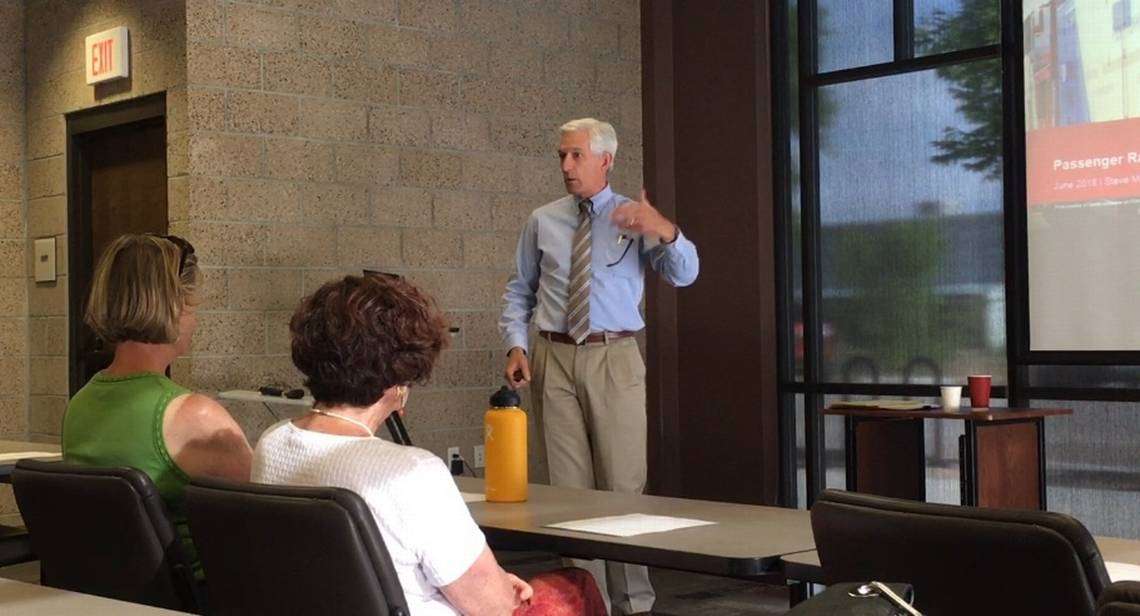
But the presentation by Steve Meyer, interim executive director of the Utah Transit Authority, quickly turned into a lecture on the fine art of lobbying.
Because, he told the 40 or so transit enthusiasts at a forum Wednesday in Meridian, there is no transit without dependable funding. And what Utah learned, Meyer said, is that there is no dependable funding without local taxes. And there are no local taxes without the state Legislature’s blessing.
When the Utah Transit Authority wanted to increase rail and bus service along the Wasatch Front, Meyer said, it reached out to the region’s business community to help persuade the public at all levels.
“We had advertisements from the local head of UPS saying, ‘We need these projects, because my trucks need to get through traffic to deliver packages’,” Meyer told the audience at the Community Planning Association of Southwest Idaho, or COMPASS, the regional planning agency. “The head of Utah Power and light ... said, ‘My crews need to get to outages, and they can’t fight this traffic’.”
Tap those “high level business people,” Meyer exhorted, “probably some guy at Micron that says, ‘I’m having trouble hiring employees, good quality employees who want to live where they want to live, work where they have to. How do I get them to work?’”
Salt Lake: 44 million passengers. Boise: 1.2 million
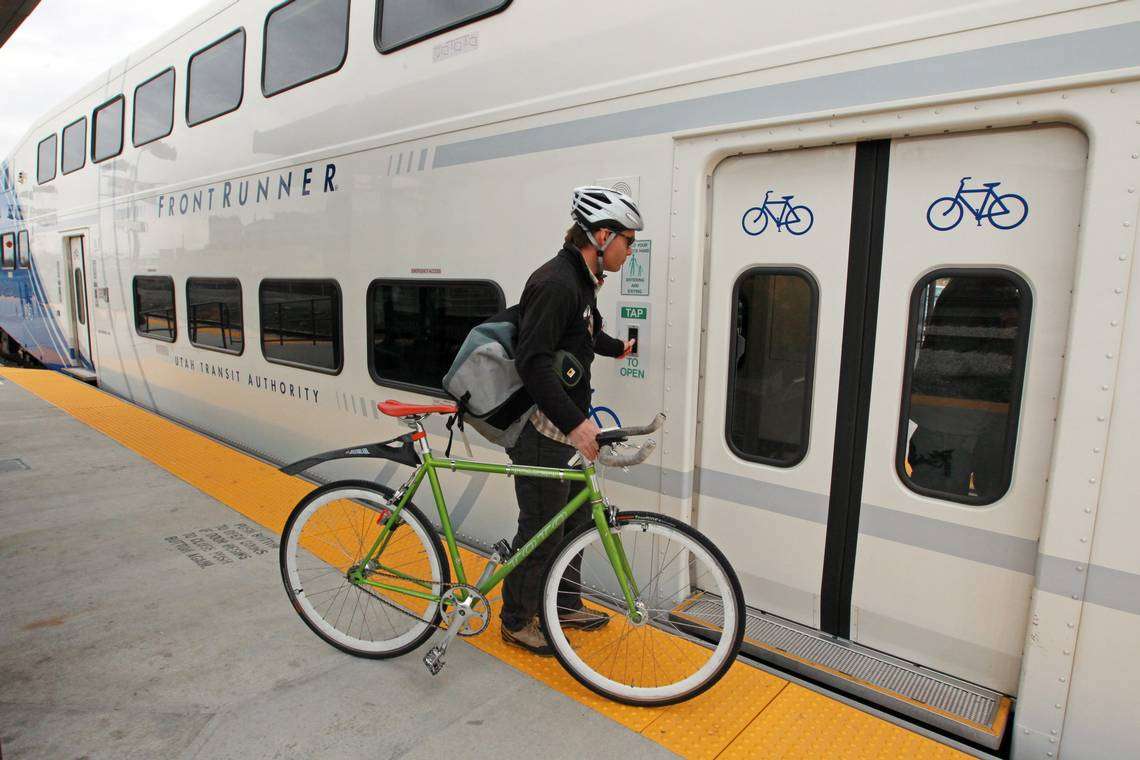
COMPASS invited Meyer to talk about his six-county system and how it has grown in the past 19 years to carry an annual 44 million passengers up and down the Wasatch Front. His agency operates 700 buses, 400 vans, 100 light rail vehicles, 60 commuter rail trains and 140 miles of track.
The idea was to see if this Gem State native, who went to Capital High School and the University of Idaho, could impart a little transit wisdom from the heart of the Beehive State.
The capital of the fastest growing state in the U.S. can use some as its traffic grows but ridership on its skeletal bus system doesn't. The Treasure Valley has less than half the Wasatch Front's population. Valley Regional Transit, which operates in Ada and Canyon counties, serves 1.2 million passengers per year with 75 buses.
The Utah Legislature created Meyer's agency in 1970 "out of a dying public transit system," he said. "We took over the buses. [The Legislature] felt there was a need for a transit system. There certainly was a need for people who wanted to ride transit and people who needed to ride transit."
Not long after that, Utah legislators passed a bill that allowed local governments to enact local sales taxes. When cities joined the transit authority, they agreed to an ongoing sales tax of a quarter cent, which went to run and improve bus service. But when a late 1970s recession gave way to an early 1980s boom, Meyer said, Interstate 15 began to fill up.
To read the full story, visit the Idaho Statesman.

KSL's Idaho News Section
Looking for more news about the Gem State? Visit KSL's Idaho news section for more stories about Idaho politics, events, and features.