
Estimated read time: 3-4 minutes
This archived news story is available only for your personal, non-commercial use. Information in the story may be outdated or superseded by additional information. Reading or replaying the story in its archived form does not constitute a republication of the story.
SALT LAKE CITY — When Cali Hinkley went into cardiac arrest 21 weeks pregnant one Sunday afternoon, she shouldn't have survived. No one else in the world has survived a spontaneous amniotic fluid embolism.
University Hospital's AirMed team landed on-scene less than 20 minutes after the 911 call. Windi Bray, the flight nurse, said she recognized Hinkley's internal bleeding and knew immediately what was happening.
"Their hard work and their knowledge and everything that they have to offer ... that's the only reason I'm alive today," Hinkley said.
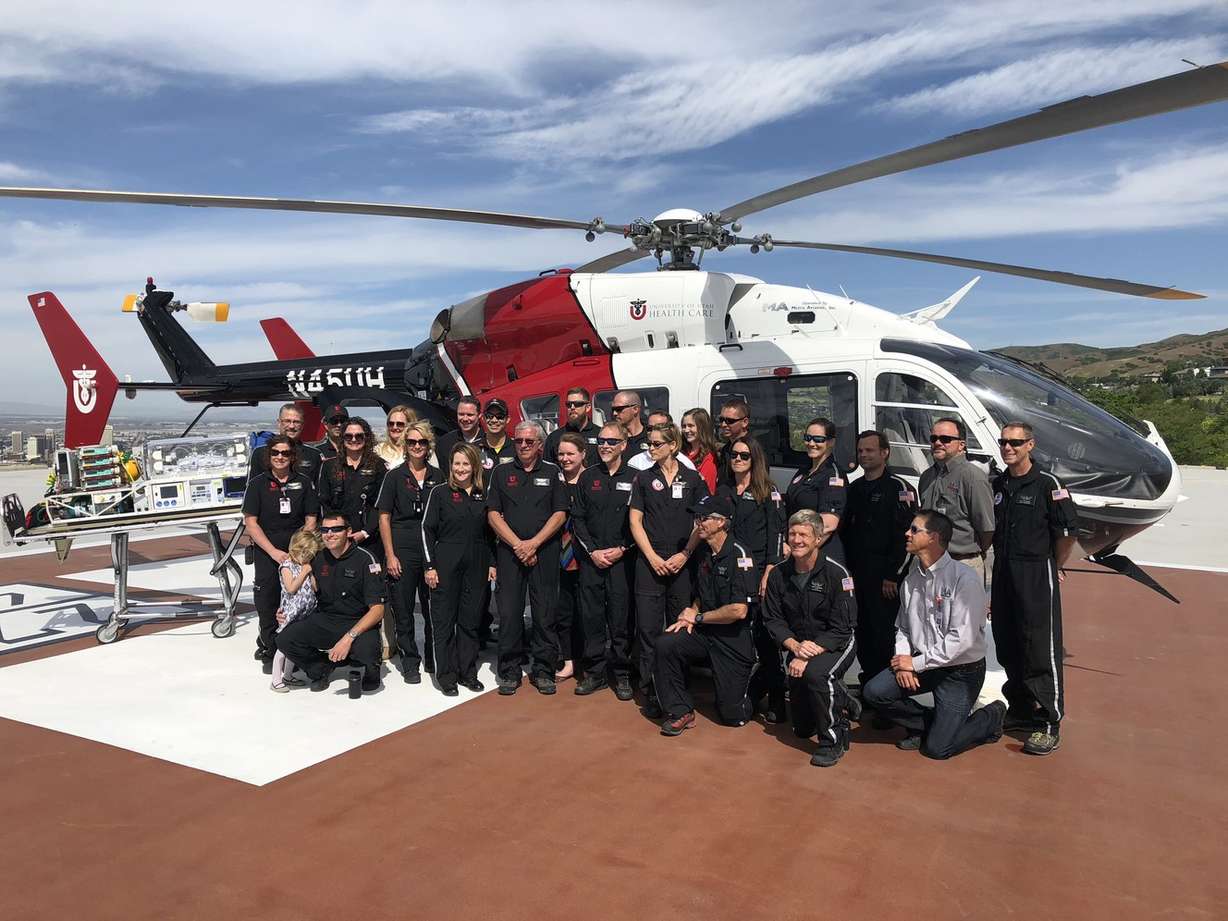
The AirMed team celebrated 40 years of operation Thursday on top of the U. hospital's helipad, and Hinkley came to share her story and express her gratitude.
"The AirMed personnel are some of the most amazing people you will ever meet," Hinkley said tearfully. "I'll never be able to tell them how much it means to me to have them in my life. To have AirMed for 40 years — I mean, think of all the people they have saved."
University Hospital's AirMed is the eighth-oldest university medical helicopter program in the country. It has grown from one helicopter working 8 a.m. to 5 p.m. to a fleet of six helicopters and two airplanes working 24/7. The operation serves the biggest geographical area of any academic medical center in the U.S., covering a tenth of the country's region: a 1,700-mile radius covering Utah, Wyoming, Idaho, Nevada and Montana.
"As we've grown in size we've also grown in the complexity of care that we deliver," said Eric Swanson, AirMed's medical director. "We transport some of the most complicated medical patients… we have some of the most advanced training procedures and protocols in the industry."
Swanson said despite all these medical advances and growth, the thing he's most proud of is AirMed's personnel.
"I've had the privilege to work with some of the most motivated, passionate and talented group of people I've ever seen," he said.
John Matthews, the AirMed pilot who responded to Hinkley's emergency call, said the best part of his job is being able to help people on their worst day.
"(It's) being their silver lining and trying to make things better for them and getting the care they need so that they can continue on," Matthews said.
Bray said Hinkley's survival is a miracle. In a very rare medical condition, the amniotic fluid surrounding Hinkley's baby got into her bloodstream, and when it traveled back to her heart, she went into cardiac arrest.
"In her case, minutes probably made a difference in her life," she said.
When Bray responded to the scene six years ago, she found Hinkley's husband performing CPR. The team immediately took command of the situation and flew her to University Hospital. Hinkley lost her baby, but medical personnel were able to revive Hinkley.
"I have been able to go on and adopt two little boys and be a mom and be a wife, and I'm so grateful for that," Hinkley said.
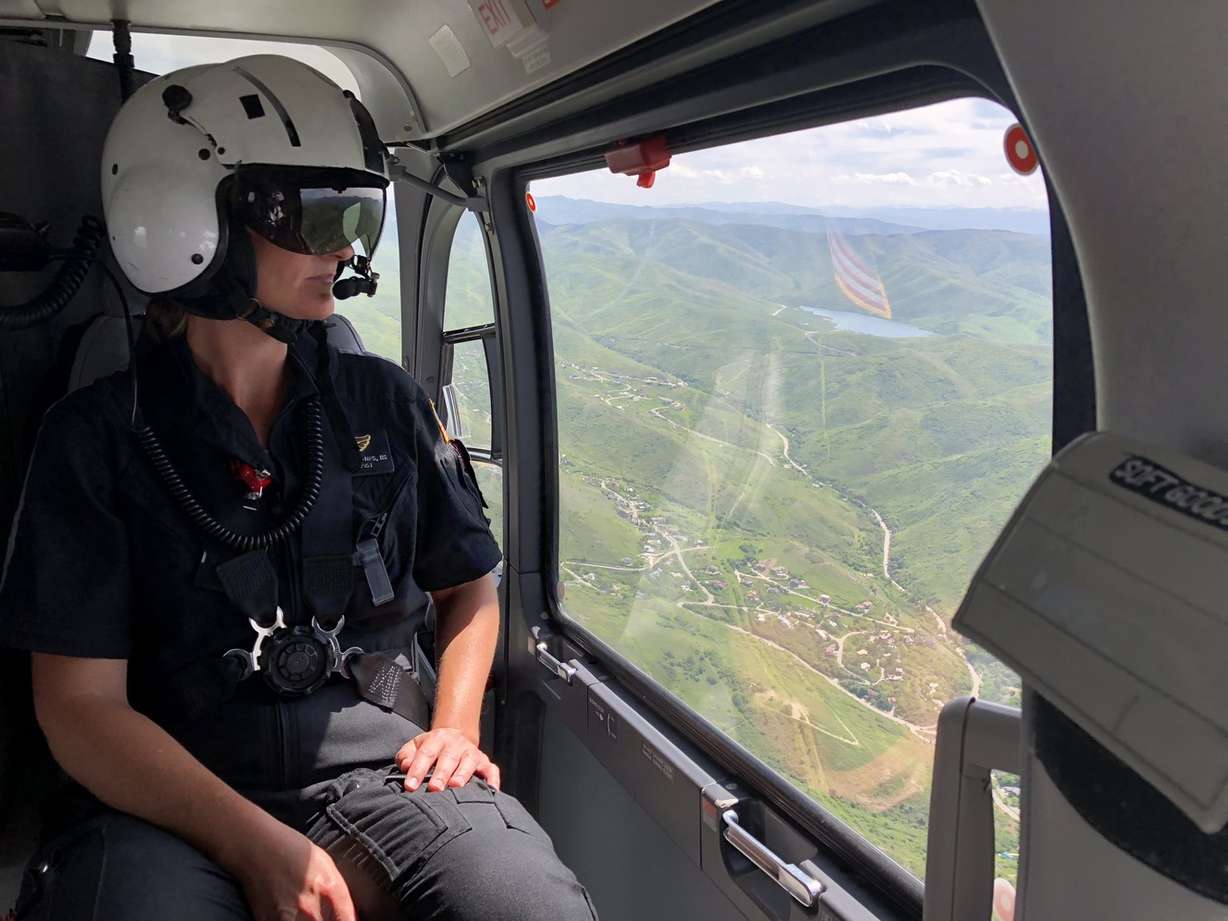
Brent Speirs, a 35-year flight paramedic, said tearfully that he got into the profession because he wanted to help people who were in need.
"I've really enjoyed my association with so many people from pilots to mechanics to flight nurses and flight paramedics," he said. "It's just been a privilege to me to work with such high-quality people."
Dan Lundergan, chief operating officer for University of Utah Health, said what sets its AirMed operations apart is that it's an academic organization, so it incorporate a lot of research to advance its services.
"We continue learning as we go forward and serve our community," Lundergan said.
The University Hospital's AirMed team has received multiple national and international awards, including being named the international air medical service program of the year.
"I look forward to the next 40 years of AirMed," Swanson said.