'%3e%3cpath%20d='M34.1406%205.85938C30.3906%202.10547%2025.3047%200%2020%200C14.6953%200%209.60938%202.10547%205.85938%205.85938C2.10938%209.61328%200%2014.6953%200%2020C0%2025.3047%202.10547%2030.3906%205.85938%2034.1406C9.61328%2037.8906%2014.6953%2040%2020%2040C25.3047%2040%2030.3906%2037.8945%2034.1406%2034.1406C37.8906%2030.3906%2040%2025.3047%2040%2020C40%2014.6953%2037.8945%209.60938%2034.1406%205.85938ZM37.0117%2023.543H31.1602V13.5391H27.6328V19.9414C28.1211%2020.6914%2028.3711%2021.582%2028.3711%2022.5625V22.625C28.3711%2023.668%2028.1172%2024.6055%2027.6328%2025.4297V26.6094H36.082C33.4883%2032.9375%2027.2891%2037.3789%2020.0039%2037.3789C10.3711%2037.3789%202.62109%2029.6289%202.62109%2020C2.62109%2010.3711%2010.3711%202.62109%2020%202.62109C29.6289%202.62109%2037.3789%2010.3711%2037.3789%2020C37.3789%2021.1484%2037.2617%2022.2656%2037.0508%2023.3477C37.0391%2023.4141%2037.0234%2023.4766%2037.0117%2023.543Z'%20fill='white'/%3e%3cpath%20d='M22.3086%2018.5352C20.4336%2018.125%2019.9531%2017.8398%2019.9766%2017.1836V17.1406C19.9766%2016.6992%2020.3477%2016.2148%2021.4023%2016.2148C22.582%2016.2148%2023.8867%2016.6797%2025.0781%2017.4766L26.8516%2015.0195C25.4453%2013.8906%2023.707%2013.3398%2021.5547%2013.3398C18.5195%2013.3398%2016.4375%2015%2016.4063%2017.4766V17.5352C16.3633%2020.2617%2018.5859%2020.9805%2021.293%2021.6016C23.0391%2021.9766%2023.5703%2022.3164%2023.5703%2022.9609L23.5469%2022.9766C23.5469%2023.3906%2023.2578%2023.7031%2022.7852%2023.8359C22.5742%2023.9062%2022.1289%2023.9727%2021.5156%2023.9727C20.7617%2023.9727%2019.7539%2023.8633%2018.6328%2023.4844C18.0898%2023.2891%2017.4727%2023.0039%2016.8047%2022.6133L20.1406%2026.625C20.2813%2026.6602%2021.0977%2026.8516%2021.7734%2026.8516C25.0039%2026.8516%2027.0859%2025.2461%2027.1094%2022.6328V22.5703C27.1602%2020.1133%2025.2148%2019.1719%2022.3086%2018.5352Z'%20fill='white'/%3e%3cpath%20d='M5.24219%2013.5664V26.6133H8.75391V23.7578L10.2969%2021.9531L14.2031%2026.6133H18.3867L12.3555%2019.5195L17.4023%2013.5664H13.4531L8.75391%2019.0586V13.5664H5.24219Z'%20fill='white'/%3e%3c/g%3e%3cdefs%3e%3cclipPath%20id='clip0_97_2430'%3e%3crect%20width='40'%20height='40'%20fill='white'/%3e%3c/clipPath%3e%3c/defs%3e%3c/svg%3e)


Estimated read time: 6-7 minutes
This archived news story is available only for your personal, non-commercial use. Information in the story may be outdated or superseded by additional information. Reading or replaying the story in its archived form does not constitute a republication of the story.
SALT LAKE CITY — Operation Rio Grande quickly transformed a place known for large-scale urban camping, open-air drug use, and drug deals into a spot someone might actually dare to attempt a sack lunch.
Now, police believe a large percentage of the street dwellers who have vacated the neighborhood might not have been homeless at all.
“We suppose they went back home,” said Salt Lake City police detective Greg Wilking. “I think we disrupted a lot of people that were down there for just all the wrong reasons.”
Still, at least some of the same troubles and criminal element that plagued the Rio Grande area appear to have moved elsewhere.
South of town
Cities south and west of downtown had already been dealing with numerous transient camps along the Jordan River, with some camps large enough to house 40 people.
Since Operation Rio Grande, South Salt Lake police said interactions with transients had nearly quadrupled.
Chief Jack Carruth said “contacts” had previously occurred at a rate of roughly 60 per month.
In August and September, police averaged approximately 230 contacts per month. More than half of those contacts resulted in arrests, Carruth said.
The city has now become “very aggressive” about encampment issues, according to its police chief, and the small department now has one officer assigned to deal with them full-time. That officer, Cody Coggle, said he is perpetually busy patrolling the riverbanks as well as combing through abandoned properties.
On one night last month, he carefully paced through one abandoned home where the floor was covered in trash.
“The big problem (is) human waste, feces,” Coggle said. “They don’t have a restroom. There’s no way for them to go to the restroom, so they often times do it inside the building, they do it outside, and then syringes, drug waste — that’s being left behind.”
Just across the street, Coggle came into contact with a woman staying in a tent which was pitched inside an abandoned garage.
“What you don’t see is there’s actually a bunch of electronics,” Coggle said after the interaction. “There’s a big-screen, 60-inch TV behind that tent. I don’t know if you noticed that. And there’s a whole bunch of bikes back there. You would assume they don’t have the resources to acquire so many bikes, and, unfortunately, this is pretty normal for a camp. You’re going to find a bunch of bikes and you can only assume where they’re coming from.”
Not widespread
While South Salt Lake appears to have seen noticeable changes since Operation Rio Grande, Carruth said he is “fully in support” of Operation Rio Grande.
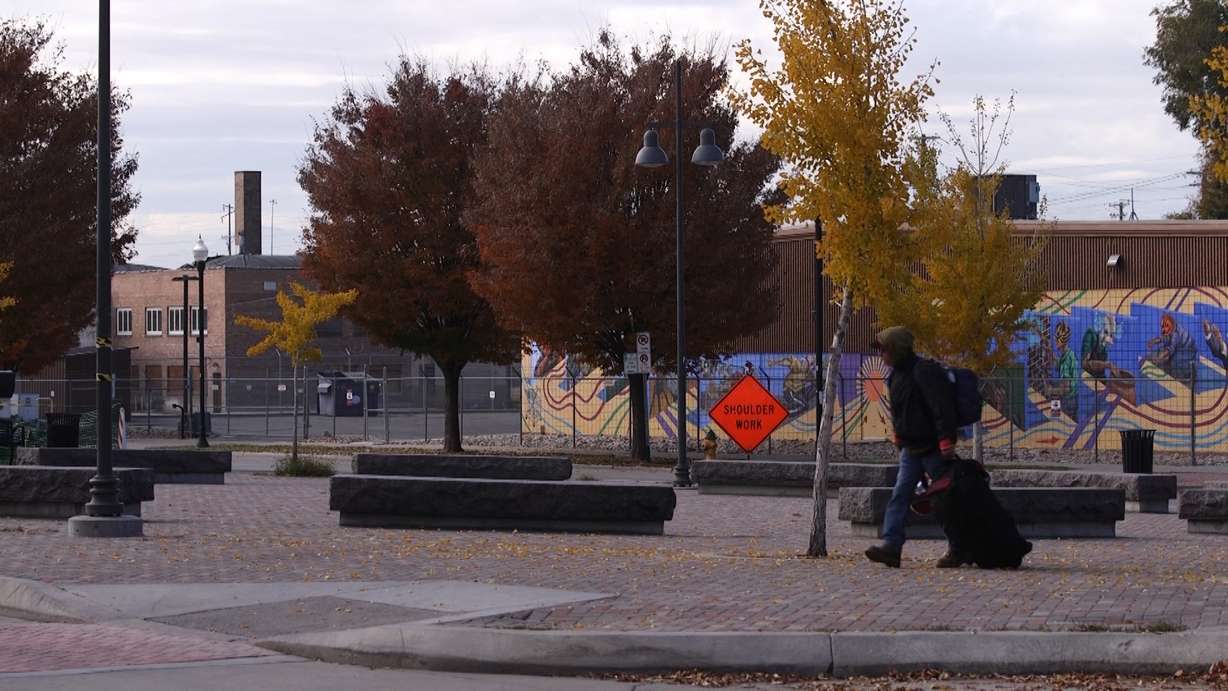
Other police jurisdictions — including West Valley City Police Department, Unified Police Department, Bountiful Police Department, Davis County Sheriff’s Office and Ogden Police — said they had not seen a significant difference in crime or transient contacts.
Spokesperson Marissa Cote said the Utah Department of Public Safety and Utah Highway Patrol have been tasked with working closely with local jurisdictions to identify problems and resolve them.
Some troubles were expected since the outset of the operation, she reminded.
Cote said the department to date had not received any requests for assistance from local jurisdictions in addressing transient crime issues.
Police have repeatedly encouraged the public to report whatever they see that appears to be criminal or suspicious activity.
The case of Utah County
Utah County Sheriff’s Deputy Ron Mitchell said calls to dispatch about car break-ins in Provo Canyon this summer ultimately led them to look much more closely at the woods surrounding the Provo River.
Mitchell said deputies traced a stolen iPhone with the Find-My-iPhone app to a transient camp just west of U.S. Route 189.
Deputies subsequently identified nearly 30 additional transient camps near the riverbanks they previously did not know existed, Mitchell said.
Sgt. Wayne Keith said the sheriff’s office traffic team is now tasked with monitoring transient problems in the county’s canyons and patrolling areas like the Provo River Parkway Trail.
He said the number of transients had grown since Operation Rio Grande, with many telling deputies they had come from Salt Lake.
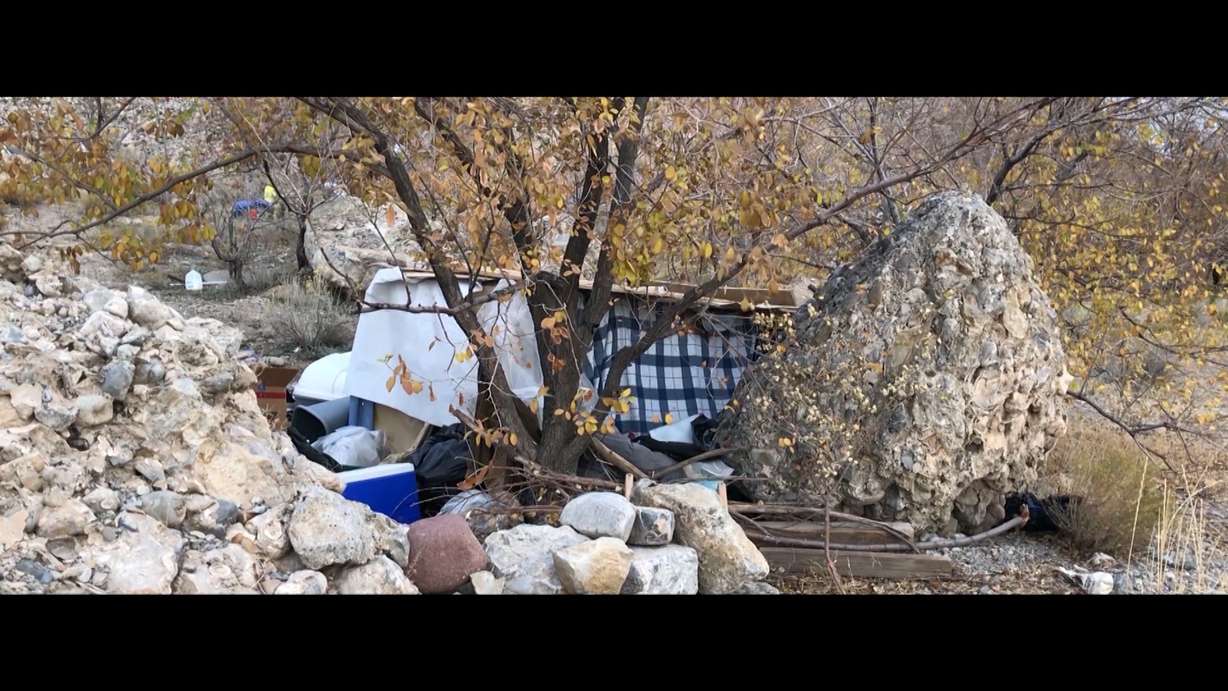
Recently, Mitchell discovered signs that transients had been staying in a man-made cave east of University Avenue near the mouth of Provo Canyon.
“We were getting complaints from drivers coming up the canyon that there were some (transients) coming from this location, so we started looking around and noticed this cave sitting here,” Mitchell said.
Inside the crevice that surrounded a pipeline, Mitchell said he found multiple bags that potentially could have been stolen out of cars.
“You can look around, get an idea of exactly what it is — all the things that are reported,” Mitchell explained, silhouetted by the light coming from the cave’s entrance. “(There are a) lot of IDs and a lot of things that have been reported missing that we can attach to cases. The bad thing is we can’t attach it to people, so that’s what we’re trying to do.”
Mitchell said he also found dried human feces near the entrance, a walker, votive candles placed along the sides of the cave, as well as a wall made of pallets at the far end that had been covered in pornographic images.
“This is a good spot for these guys to come and basically live,” Mitchell said. “It’s underground. The temperature here is fairly consistent, probably doesn’t ever freeze in here, so it’s a good spot for them.”
Services
While the Rio Grande neighborhood appears now to be largely cleared out, homeless advocates maintain the requests for their services have not declined.
Volunteers of America homeless outreach program director Charlie Swett said the organization’s clients had spread out since Operation Rio Grande.
Executive director Matt Minkevitch said The Road Home’s numbers had not gone down, either.
“The people that were using our shelter before are still using it,” Minkevitch said. “That leaves me hopeful that we are still meeting the need. There is certainly the prospect and it is always an unknown, frankly, of how many of the people currently camping will turn to us when the weather gets cold. We certainly hope that they do.”
Perspective of the Homeless
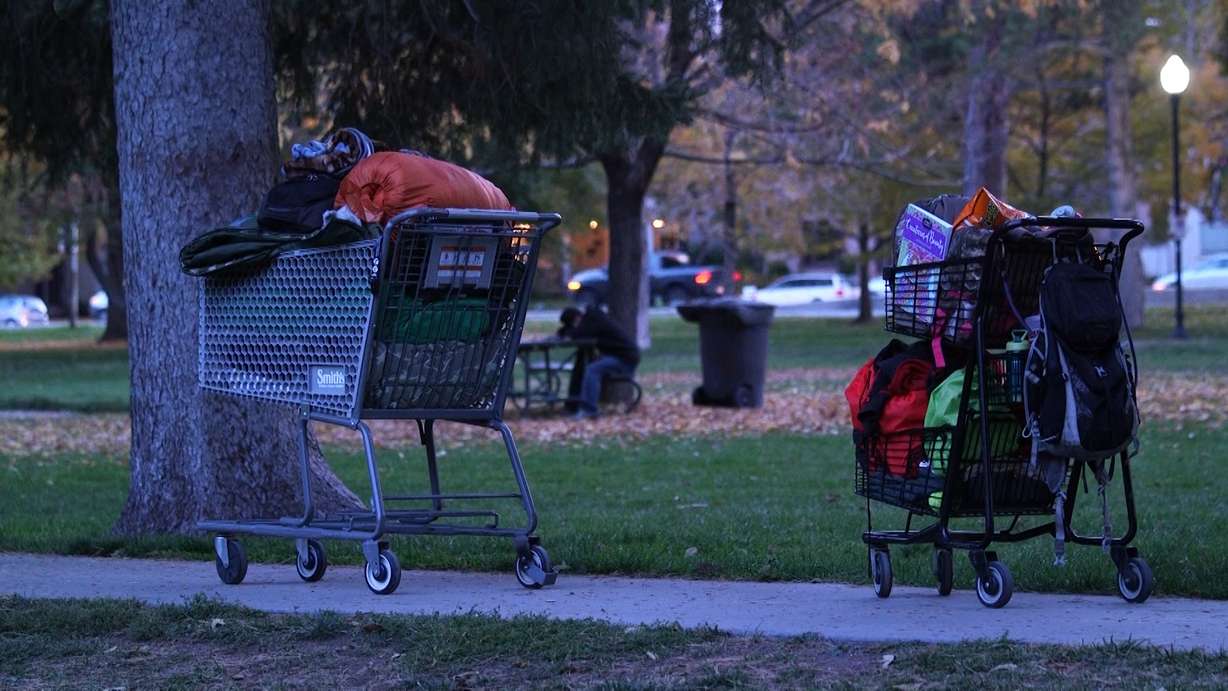
Richard Rueckert said he has been homeless for much of the past decade and has been living in Liberty Park for the past four to five months.
He said some of the problems that had plagued the Rio Grande neighborhood have moved there since the operation.
“There have always been drug deals going on down here, but it’s to the point where they don’t even try to hide it anymore,” Rueckert said. “It’ll be in broad daylight. I mean, a couple of the dealers will actually sit there and finish their deal in front of a cop’s nose and the cop is completely oblivious.”
Rueckert said the park had been rattled by gunfire on multiple occasions recently.
“All of the crime, the drugs, the prostitution, the lawlessness that they were so against on Rio Grande—is now up here,” he said.
Still, Rueckert said he believed Operation Rio Grande will succeed in time. He encouraged community leaders to seek input from the homeless on the plight they know best.
“Talk to the homeless, get our ideas, get our impressions on things,” Rueckert said. “Nobody can represent us better than us.”