'%3e%3cpath%20d='M34.1406%205.85938C30.3906%202.10547%2025.3047%200%2020%200C14.6953%200%209.60938%202.10547%205.85938%205.85938C2.10938%209.61328%200%2014.6953%200%2020C0%2025.3047%202.10547%2030.3906%205.85938%2034.1406C9.61328%2037.8906%2014.6953%2040%2020%2040C25.3047%2040%2030.3906%2037.8945%2034.1406%2034.1406C37.8906%2030.3906%2040%2025.3047%2040%2020C40%2014.6953%2037.8945%209.60938%2034.1406%205.85938ZM37.0117%2023.543H31.1602V13.5391H27.6328V19.9414C28.1211%2020.6914%2028.3711%2021.582%2028.3711%2022.5625V22.625C28.3711%2023.668%2028.1172%2024.6055%2027.6328%2025.4297V26.6094H36.082C33.4883%2032.9375%2027.2891%2037.3789%2020.0039%2037.3789C10.3711%2037.3789%202.62109%2029.6289%202.62109%2020C2.62109%2010.3711%2010.3711%202.62109%2020%202.62109C29.6289%202.62109%2037.3789%2010.3711%2037.3789%2020C37.3789%2021.1484%2037.2617%2022.2656%2037.0508%2023.3477C37.0391%2023.4141%2037.0234%2023.4766%2037.0117%2023.543Z'%20fill='white'/%3e%3cpath%20d='M22.3086%2018.5352C20.4336%2018.125%2019.9531%2017.8398%2019.9766%2017.1836V17.1406C19.9766%2016.6992%2020.3477%2016.2148%2021.4023%2016.2148C22.582%2016.2148%2023.8867%2016.6797%2025.0781%2017.4766L26.8516%2015.0195C25.4453%2013.8906%2023.707%2013.3398%2021.5547%2013.3398C18.5195%2013.3398%2016.4375%2015%2016.4063%2017.4766V17.5352C16.3633%2020.2617%2018.5859%2020.9805%2021.293%2021.6016C23.0391%2021.9766%2023.5703%2022.3164%2023.5703%2022.9609L23.5469%2022.9766C23.5469%2023.3906%2023.2578%2023.7031%2022.7852%2023.8359C22.5742%2023.9062%2022.1289%2023.9727%2021.5156%2023.9727C20.7617%2023.9727%2019.7539%2023.8633%2018.6328%2023.4844C18.0898%2023.2891%2017.4727%2023.0039%2016.8047%2022.6133L20.1406%2026.625C20.2813%2026.6602%2021.0977%2026.8516%2021.7734%2026.8516C25.0039%2026.8516%2027.0859%2025.2461%2027.1094%2022.6328V22.5703C27.1602%2020.1133%2025.2148%2019.1719%2022.3086%2018.5352Z'%20fill='white'/%3e%3cpath%20d='M5.24219%2013.5664V26.6133H8.75391V23.7578L10.2969%2021.9531L14.2031%2026.6133H18.3867L12.3555%2019.5195L17.4023%2013.5664H13.4531L8.75391%2019.0586V13.5664H5.24219Z'%20fill='white'/%3e%3c/g%3e%3cdefs%3e%3cclipPath%20id='clip0_97_2430'%3e%3crect%20width='40'%20height='40'%20fill='white'/%3e%3c/clipPath%3e%3c/defs%3e%3c/svg%3e)



Estimated read time: 5-6 minutes
This archived news story is available only for your personal, non-commercial use. Information in the story may be outdated or superseded by additional information. Reading or replaying the story in its archived form does not constitute a republication of the story.
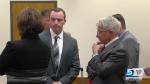
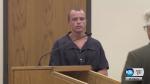
PROVO — For the second time, a jury must decide whether Conrad Truman shot and killed his wife or whether she died by her own hand in 2012.
A jury convicted Truman in 2014 of killing his 25-year-old wife, Heidy, in their Orem home, maintaining throughout the trial and at his sentencing that he was innocent. The conviction was overturned in August after Truman claimed inaccurate crime scene evidence taken by police influenced the verdict.
Now Truman, who turned 35 last month, is again in court insisting he didn't kill his wife, who died from a single gunshot wound to the head on Sept. 30, 2012.
While prosecutors described Truman during opening arguments Thursday as aggressive and erratic, threatening paramedics if they didn't save his wife's life and spouting off different explanations of how she may have been shot, defense attorneys claim he was a grieving man facing a grisly scene even as officers pressed him with questions he didn't know how to answer.
Truman is charged with murder, a first-degree felony, and obstructing justice, a second-degree felony.
The couple had been home that Sunday evening watching television and drinking whiskey. At one point the couple bickered, according to Truman, though not about anything consequential, and his wife had gone to take a bath. Just before 11 p.m, a 911 call was made.
Prosecutor Sam Pead told jurors Truman made "bizarre and incomplete" statements as officers responding to the frantic 911 call, swearing and threatening first responders and the dispatcher on the phone if they didn't save his wife. As they continued to question him, Pead said Truman tried to "verbally manipulate" the chaotic scene in order to cast attention away from himself.
"He did it because he killed Heidy," Pead told jurors, saying that Truman's actions "greatly distracted" first responders as they assisted Heidy Truman.
Pead asked jurors to pay attention throughout the trial to Truman's varying stories about what he was doing before the gun went off, where in the home he was at when Heidy Truman was shot, whether she was naked or had a towel and whether or not he had caught his wife when she collapsed.
Speaking with officers, Truman insisted his wife couldn't have killed herself, talked about the possibility she was shot by someone else who maybe was outside the home, and urged police to find out who killed her, Pead said.
In the weeks that followed, the details of Truman's story continued to vary as he talked to police and family members, Pead said.
Related

New trial set for Orem man convicted of wife's 2012 death
Conrad Truman, 34, was convicted two years ago of murdering his wife, Heidy Truman, 25, who was found with a single gunshot wound to her head in the couple's Orem home on Sept. 30, 2012. Truman was sentenced to 15 years to life in the Utah State Prison.Annie Taliaferro, Truman's attorney, said that while he can't remember exactly what happened or a specific timeline of the incident, his story has been clear: his wife had gone to take a bath, he heard a door in the home open, he heard a noise he described as a "pop," and then he saw Heidy Truman standing nearby.
"He saw her and he thought something was wrong," Taliaferro explained, noting that Truman had mentioned a vacant look in his wife's eyes.
That's when the woman collapsed, Taliaferro said, noting that Truman can't recall whether she fell to the floor or if he caught her and laid her down. At the sight of blood gushing from his wife's head, nose and mouth, "he loses it," Taliaferro said.
In the hour or so that followed, Truman faced a horrifying scene as medical personnel responded to his wife just a few feet away from where police were already questioning him, Taliaferro said, and where he remained begging to see his wife after she had been taken to the hospital.
It's a scene that Taliaferro apologized for having to show the jury.
"This is real life, and it's gruesome," she said.
Truman's frantic words and actions in the wake of the shooting do not prove he shot his wife and then lied about what happened, Taliaferro said. His questions to police, including about whether someone could have killed Heidy Truman, were simply him "trying to make sense of something he couldn't explain," she said.
"He never once wavered that he didn't hurt his wife," Taliaferro said.
Taliaferro also said the defense will endeavor to prove "there was a faulty investigation here," and that investigators single-mindedly pursued their belief that the woman's death was a homicide without properly considering any other possibilities.
Additionally, during the course of the investigation, deputy medical examiner Edward Leis initially found the cause of Heidy Truman's death to be undetermined, then ruled it a homicide, and later amended it again to undetermined, Taliaferro noted.
The defense will also address the gunshot residue was found on Heidy Truman's right hand but not her left, Taliaferro said, while prosecutors noted that residue can disperse from a weapon when it is discharged and doesn't conclusively show who fired the gun.
"Every gun in every circumstance is different, and this case has some pretty unique circumstances in the collection of forensic evidence," Pead said.
While Truman testified in his own defense during the first trial, it is unclear whether he will take the stand this time, his attorneys said following Thursday's proceedings.
The seven-man, five-woman jury is scheduled to hear the case for 16 days. Truman remains in custody in Utah State Prison on $1 million bail after 4th District Judge Samuel McVey declined to reduce the bond last summer when Truman's previous conviction was tossed.