
Estimated read time: 2-3 minutes
This archived news story is available only for your personal, non-commercial use. Information in the story may be outdated or superseded by additional information. Reading or replaying the story in its archived form does not constitute a republication of the story.
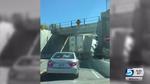
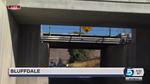
BLUFFDALE — At a train trestle, the Union Pacific uses one side and UTA FrontRunner uses the other side. There’s a one-lane road underneath on 14600 South with a stop sign on each side.
The traffic alone can be pretty heavy during peak hours. When a truck gets stuck under the railroad trestle, it can be a wait of an hour or more.
"It's a headache, for sure," said Bluffdale resident Annalee Hawkins.
Hawkins recently got caught behind a truck that got stuck under the railroad trestle.
"It literally peels the top off of their truck like a tuna can," Hawkins said. "It happens quite frequently. I think five times a week."
Turns out, when residents tracked the problem for a City Council member, they discovered a truck gets stuck here an average of five times a week — with a maximum of three trucks in one day.
Many people drive through here several times a day.
"In the morning it's rush-hour traffic and school traffic to get to Summit Academy and high school, and then coming home, it's the same thing," Hawkins said.
Who owns the road? UDOT did until last Friday. That's when the city of Bluffdale swapped Porter Rockwell Boulevard, still under construction, for 14600 South.
Mayor Dirk Timothy said Bluffdale had already been working on that swap so the city can start to solve this problem. The mayor said that the city is already taking bids on a traffic signal for motorists that will prioritize traffic based on the volume at different times of day. The city will also install height sensors that detect trucks that are too big and alerts them before it's too late.
"A light would definitely help," Hawkins said.
The City Council plans a special meeting Wednesday night to look over those bids and get the project moving. The lights and sensors will have to suffice until the city can work out a way to pay to enlarge the passage.
Contributing: Xoel Cardenas