'%3e%3cpath%20d='M34.1406%205.85938C30.3906%202.10547%2025.3047%200%2020%200C14.6953%200%209.60938%202.10547%205.85938%205.85938C2.10938%209.61328%200%2014.6953%200%2020C0%2025.3047%202.10547%2030.3906%205.85938%2034.1406C9.61328%2037.8906%2014.6953%2040%2020%2040C25.3047%2040%2030.3906%2037.8945%2034.1406%2034.1406C37.8906%2030.3906%2040%2025.3047%2040%2020C40%2014.6953%2037.8945%209.60938%2034.1406%205.85938ZM37.0117%2023.543H31.1602V13.5391H27.6328V19.9414C28.1211%2020.6914%2028.3711%2021.582%2028.3711%2022.5625V22.625C28.3711%2023.668%2028.1172%2024.6055%2027.6328%2025.4297V26.6094H36.082C33.4883%2032.9375%2027.2891%2037.3789%2020.0039%2037.3789C10.3711%2037.3789%202.62109%2029.6289%202.62109%2020C2.62109%2010.3711%2010.3711%202.62109%2020%202.62109C29.6289%202.62109%2037.3789%2010.3711%2037.3789%2020C37.3789%2021.1484%2037.2617%2022.2656%2037.0508%2023.3477C37.0391%2023.4141%2037.0234%2023.4766%2037.0117%2023.543Z'%20fill='white'/%3e%3cpath%20d='M22.3086%2018.5352C20.4336%2018.125%2019.9531%2017.8398%2019.9766%2017.1836V17.1406C19.9766%2016.6992%2020.3477%2016.2148%2021.4023%2016.2148C22.582%2016.2148%2023.8867%2016.6797%2025.0781%2017.4766L26.8516%2015.0195C25.4453%2013.8906%2023.707%2013.3398%2021.5547%2013.3398C18.5195%2013.3398%2016.4375%2015%2016.4063%2017.4766V17.5352C16.3633%2020.2617%2018.5859%2020.9805%2021.293%2021.6016C23.0391%2021.9766%2023.5703%2022.3164%2023.5703%2022.9609L23.5469%2022.9766C23.5469%2023.3906%2023.2578%2023.7031%2022.7852%2023.8359C22.5742%2023.9062%2022.1289%2023.9727%2021.5156%2023.9727C20.7617%2023.9727%2019.7539%2023.8633%2018.6328%2023.4844C18.0898%2023.2891%2017.4727%2023.0039%2016.8047%2022.6133L20.1406%2026.625C20.2813%2026.6602%2021.0977%2026.8516%2021.7734%2026.8516C25.0039%2026.8516%2027.0859%2025.2461%2027.1094%2022.6328V22.5703C27.1602%2020.1133%2025.2148%2019.1719%2022.3086%2018.5352Z'%20fill='white'/%3e%3cpath%20d='M5.24219%2013.5664V26.6133H8.75391V23.7578L10.2969%2021.9531L14.2031%2026.6133H18.3867L12.3555%2019.5195L17.4023%2013.5664H13.4531L8.75391%2019.0586V13.5664H5.24219Z'%20fill='white'/%3e%3c/g%3e%3cdefs%3e%3cclipPath%20id='clip0_97_2430'%3e%3crect%20width='40'%20height='40'%20fill='white'/%3e%3c/clipPath%3e%3c/defs%3e%3c/svg%3e)


Estimated read time: 4-5 minutes
This archived news story is available only for your personal, non-commercial use. Information in the story may be outdated or superseded by additional information. Reading or replaying the story in its archived form does not constitute a republication of the story.
SALT LAKE CITY — Rep. Rob Bishop, R-Utah, said he likes the idea of Native American tribes co-managing the Bears Ears region in southeastern Utah and is working to incorporate new language into his massive public lands bill.
In a meeting Tuesday with the Deseret News and KSL editorial boards, Bishop said he has reached out to Interior Secretary Sally Jewell on the proposal.
"I actually like the concept of co-management in the public lands initiative," he said.
Bishop's public lands bill, scheduled for a hearing in September before the House Natural Resources Committee he chairs, covers 18 million acres in seven counties in eastern Utah, including San Juan County's Bears Ears region.
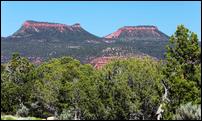
He proposes two National Conservation Areas of 1.4 million acres for Indian Creek and Bears Ears, so named for twin buttes that rise prominently on the skyline.
Bishop's bill now includes language to create a Bears Ears Tribal Commission and an Interior Department appointed tribal liaison. It also would create an advisory committee and a process for Native American tribes to obtain "cooperating agency" status for greater say in management of the region.
In the editorial board meeting, Bishop said he wants to strengthen that language.
The Bears Ears Inter-Tribal Coalition, which seeks a monument designation of 1.9 million acres, panned Bishop's public lands initiative and has said it does not go far enough to instill protections for the region or give tribes enough management responsibility.
Bishop said the co-management authority the tribes seek through a monument designation isn't possible.
"For a national monument, it has a flaw to it that I think is fatal," he said. "I think the administration realizes it as well. They have promised the Native Americans a co-management feature that cannot be legally done."
Bishop said a copy of his bill has been given to the U.S. Department of the Interior for a technical review that's slated to be completed this month.
In the interim, Bishop said he has talked with Jewell over a new co-management provision for Native American tribes.
Related:
Bears Ears controversy ramps up with Jewell's visit, Bishop's planned legislation
The proposed 1.4 million acres of the Bears Ears region contained in a massive public lands bill being unveiled this week would actually be split in two, with the southern portion set aside for traditional Native American uses."I did call Secretary Jewell last week and said, 'Look, you can't deliver. You know you can't deliver. We can. Give us your language. I would be happy to incorporate it in there,'" he said. "It is an intriguing co-management idea that I actually like."
Bishop said he received a positive response.
Jewell visited the region last month on a whirlwind tour that included a packed meeting with San Juan County officials, visits to vandalized petroglyphs and a trip to the Bears Ears meadows to hear tribal representatives describe their reasons supporting monument designation.
At tour's end, she and other top federal land officials convened a listening session in Bluff attended by more than 1,500 people with views on the monument debate.
While the Obama administration has made assurances to Utah's congressional delegation and Gov. Gary Herbert that no monument designation will be made without getting local input, Bishop stressed that the very use of the Antiquities Act is "gotcha" in nature.
"The sad part is the way the Antiquities Act is written, it has to be sprung on you," Bishop said. "There cannot be public involvement. The Antiquities Act has to be a gotcha or it cannot be used. … (Jewell) cannot work in conjunction with the White House. "
Any collaboration between Jewell's office and the White House would trigger a lengthy public comment and review process on land-use designations required under the National Environmental Policy Act, Bishop said.
In 1996, then-President Bill Clinton infuriated Utah's political leaders when he used the Antiquities Act to designate the nearly 1.9 million Grand Staircase-Escalante National Monument in Garfield and Kane counties. The president made the announcement from Arizona and gave Utah's congressional delegation and the governor a 24-hour heads up.
Bishop has a companion bill to his lands package that prohibits using the Antiquities Act for the areas covered by the public lands initiative.
Critics rail against such a prohibition, but Bishop said it is a necessity.
"If the Antiquities Act can be used to overturn what this bill does, the bill is useless," he said. "There has to be some way at achieving finality. At some stage of the game, the Antiquities Act has to be addressed, otherwise we have not solved anything."
Environmental groups and conservation organizations — many at the negotiating table early on in the discussion phase of mapping the provisions in the public lands initiative — have largely bowed out of the process and withdrawn their support.
Scott Groene, executive director of the Southern Utah Wilderness Alliance, has said Bishop's measure is an "utter disaster" for Utah's wildlands and rolls back protections.
Bishop said he isn't surprised environmental organizations are rejecting his bill.
"The biggest problem I have, what has surprised me, is the inability of getting people to truly compromise. That has been a harder process than I thought it would be," he said. "But at the end of the day, I am going to put in a bill that is a good bill regardless."