'%3e%3cpath%20d='M34.1406%205.85938C30.3906%202.10547%2025.3047%200%2020%200C14.6953%200%209.60938%202.10547%205.85938%205.85938C2.10938%209.61328%200%2014.6953%200%2020C0%2025.3047%202.10547%2030.3906%205.85938%2034.1406C9.61328%2037.8906%2014.6953%2040%2020%2040C25.3047%2040%2030.3906%2037.8945%2034.1406%2034.1406C37.8906%2030.3906%2040%2025.3047%2040%2020C40%2014.6953%2037.8945%209.60938%2034.1406%205.85938ZM37.0117%2023.543H31.1602V13.5391H27.6328V19.9414C28.1211%2020.6914%2028.3711%2021.582%2028.3711%2022.5625V22.625C28.3711%2023.668%2028.1172%2024.6055%2027.6328%2025.4297V26.6094H36.082C33.4883%2032.9375%2027.2891%2037.3789%2020.0039%2037.3789C10.3711%2037.3789%202.62109%2029.6289%202.62109%2020C2.62109%2010.3711%2010.3711%202.62109%2020%202.62109C29.6289%202.62109%2037.3789%2010.3711%2037.3789%2020C37.3789%2021.1484%2037.2617%2022.2656%2037.0508%2023.3477C37.0391%2023.4141%2037.0234%2023.4766%2037.0117%2023.543Z'%20fill='white'/%3e%3cpath%20d='M22.3086%2018.5352C20.4336%2018.125%2019.9531%2017.8398%2019.9766%2017.1836V17.1406C19.9766%2016.6992%2020.3477%2016.2148%2021.4023%2016.2148C22.582%2016.2148%2023.8867%2016.6797%2025.0781%2017.4766L26.8516%2015.0195C25.4453%2013.8906%2023.707%2013.3398%2021.5547%2013.3398C18.5195%2013.3398%2016.4375%2015%2016.4063%2017.4766V17.5352C16.3633%2020.2617%2018.5859%2020.9805%2021.293%2021.6016C23.0391%2021.9766%2023.5703%2022.3164%2023.5703%2022.9609L23.5469%2022.9766C23.5469%2023.3906%2023.2578%2023.7031%2022.7852%2023.8359C22.5742%2023.9062%2022.1289%2023.9727%2021.5156%2023.9727C20.7617%2023.9727%2019.7539%2023.8633%2018.6328%2023.4844C18.0898%2023.2891%2017.4727%2023.0039%2016.8047%2022.6133L20.1406%2026.625C20.2813%2026.6602%2021.0977%2026.8516%2021.7734%2026.8516C25.0039%2026.8516%2027.0859%2025.2461%2027.1094%2022.6328V22.5703C27.1602%2020.1133%2025.2148%2019.1719%2022.3086%2018.5352Z'%20fill='white'/%3e%3cpath%20d='M5.24219%2013.5664V26.6133H8.75391V23.7578L10.2969%2021.9531L14.2031%2026.6133H18.3867L12.3555%2019.5195L17.4023%2013.5664H13.4531L8.75391%2019.0586V13.5664H5.24219Z'%20fill='white'/%3e%3c/g%3e%3cdefs%3e%3cclipPath%20id='clip0_97_2430'%3e%3crect%20width='40'%20height='40'%20fill='white'/%3e%3c/clipPath%3e%3c/defs%3e%3c/svg%3e)


Estimated read time: 2-3 minutes
This archived news story is available only for your personal, non-commercial use. Information in the story may be outdated or superseded by additional information. Reading or replaying the story in its archived form does not constitute a republication of the story.
SALT LAKE CITY — It’s hard not to notice the terraces across many of the mountains around Northern Utah. But what are they and how did they get there?
They date back to the Great Depression era and an ambitious project that both helped shape Utah’s landscape and employed thousands at a time when more than 35 percent of Utahns were unemployed.
It all started with the Civilian Conservation Corps (CCC), which began in 1933 under the direction of newly elected President Franklin Roosevelt. Those in the CCC based in Utah perhaps most notably worked on improving the trails at Utah’s national parks and other trails, and built recreational areas that still stand today. However, the CCC did more than just that.
The CCC, which lasted from 1933 to 1942, also planted more than 3 million trees in Utah’s mountains and rangelands, built roads, developed thousands of campgrounds and even dams. Many of the projects completed are still in use today.
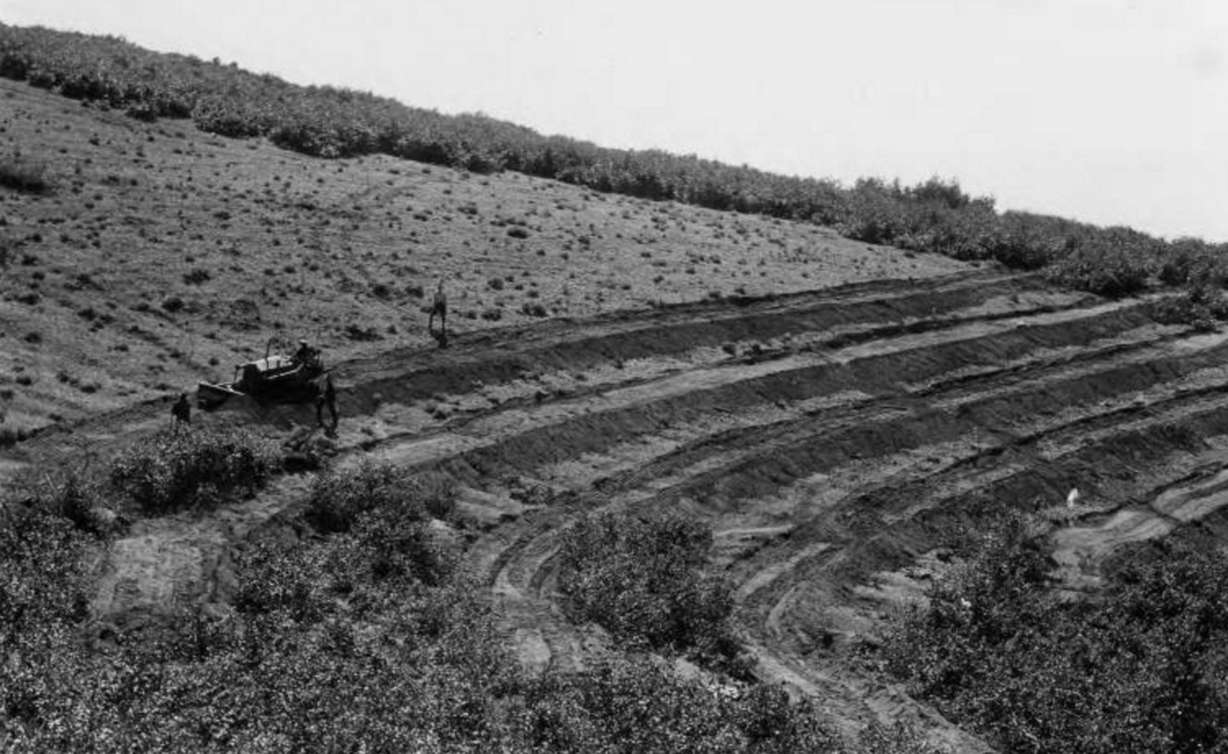
One of the most visible of those projects — aside from the buildings — are terraces that were built for erosion control and helped contain flooding in the valleys below, which had previously caused problems.
For example, a 1923 cloud burst resulted in a flood that made its way down the Wasatch Front from Willard to Farmington Canyon, killing seven people — including four Boy Scouts camping in the area. It also created massive damage, destroying homes and even a portion of Lagoon.
The CCC terrace project helped reduce flooding, which not only was a risk to homeowners, but farmers too. A 1990 Deseret News article about the history behind the terraces built in Davis County described the features of the terraces in that area, which were designed to control rains up to 2 inches per hour and melting snow in spring.
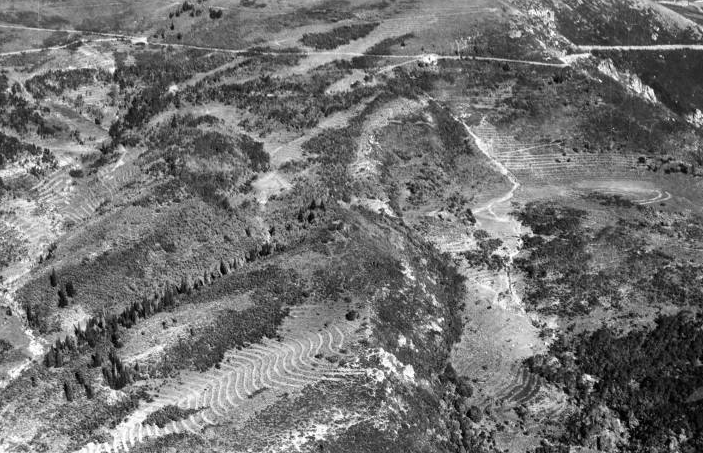
Crews constructed 9-foot-wide trenches that were spaced up to 20 feet apart that followed the slope contours. It caused the water to trickle down into the trench below it if it overflowed, instead of rushing downhill all at once.
Similar terraces were built in areas across the Wasatch Front — more than 700 miles worth of terraces.
In 1936, those terraces faced a major test when a rainstorm brought nearly an inch of rain in 15 minutes, but the terraces kept water from reaching the Davis Valley.
Those terraces remain in Utah to this day.