Estimated read time: 3-4 minutes
This archived news story is available only for your personal, non-commercial use. Information in the story may be outdated or superseded by additional information. Reading or replaying the story in its archived form does not constitute a republication of the story.
SALT LAKE CITY — It's hard to imagine two settings more different than the urban "jungle" of Salt Lake City and the fictional jungles of Tarzan.
But there is a connection: The creator of "The King of the Jungle" was once — briefly — a uniformed police officer in downtown Salt Lake City.
Years after he turned in his badge, Edgar Rice Burroughs launched a centurylong franchise that shows no signs of slowing down. The "ape man" is portrayed in yet another movie — "The Legend of Tarzan" — now playing in theaters across the country.
Tarzan grabbed his vine and swung his way through more than two dozen Tarzan novels. Burroughs wrote them early in the 20th century along with more than a dozen science-fiction novels in the "John Carter of Mars" series.
There's just one John Carter movie so far. But the King of the Jungle might be the king of the movies, as well. He has outperformed some of the most prolific movie heroes. According to internet sources, there are just eight Superman movies. Batman had 16 films. James Bond is in 25. Sources disagree on the exact number of Tarzan movies, but one source lists 56, not including the latest film.
All that literary and cinematic success stemmed from the writings of a man who served for just a few months as a uniformed policeman but left behind little in the way of records to show for it.
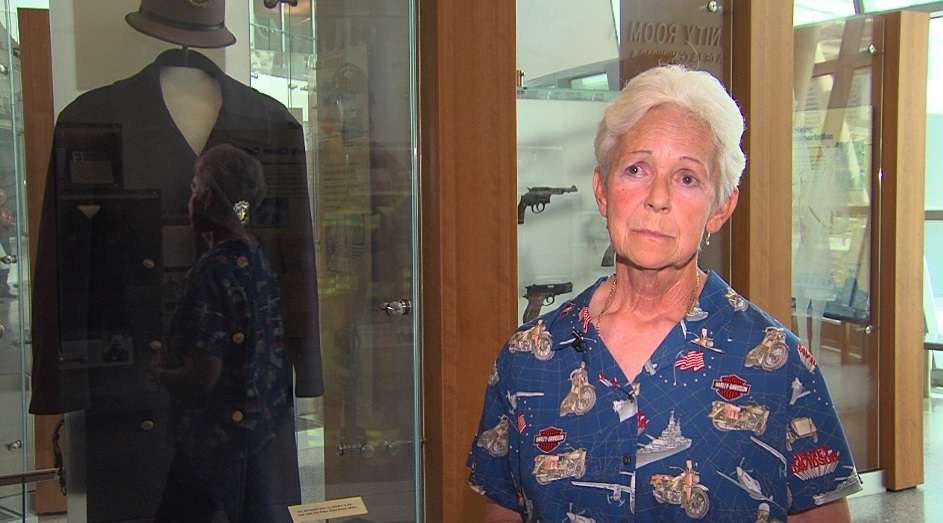
"We don't have anything," said retired police Capt. Judy Dencker who now oversees the Salt Lake City Police and Fire Museum.
The museum's record go back to 1851 and contain details of nearly every officer who served. But Burroughs' name doesn't appear. Nevertheless, his brief tenure in uniform is mentioned in most of Burroughs' biographical accounts and in a family history kept by his descendants. His relatives have photos of Burroughs in a police uniform; evidently he dressed in his uniform to pose for the pictures many years after he left Salt Lake City.
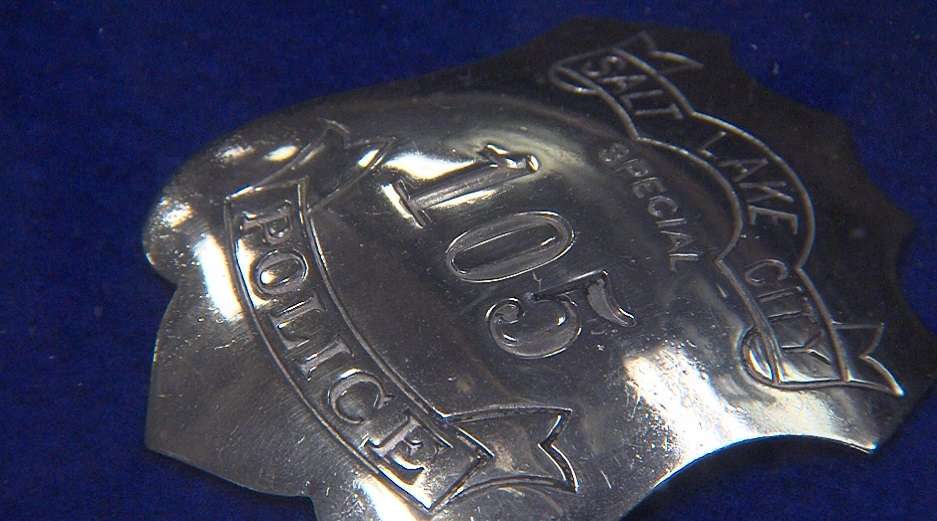
Why the gap in the official police record? It's because Burroughs was not really a Salt Lake City cop. He was a railroad cop for the Oregon Short Line Railroad Co.
"He was hired by them and paid by them," Dencker said. It was common a century ago for businesses and wealthy individuals to hire their own police officers.
"Well I think it was because it's kind of like, 'Where's a cop when you need one?'" Dencker explained.
But private cops of the day were often given official status — including a uniform and a badge — and they carried the title of "special police officer." A Deseret News clipping from 1904 reports that "E.R. Burroughs" was granted that status by the mayor and City Council.
His "special" police badge would have been meaningful to the average crook that he might have caught trespassing on railroad property. "He had the same authority that a regular police officer did," Dencker said. "He could arrest people for crimes committed in his presence."
A postcard Burroughs once sent from Utah indicates he lived in a house at the corner of North Temple and 500 West, which was later renamed 600 West. The house was torn down and replaced decades ago by a brick building that now stands vacant.
Burroughs evidently reported for duty at a small train depot in the same area where The Gateway and the Union Pacific Depot are today.
A 1904 document from the Oregon Short Line Railroad gives Burroughs a mild pat on the back: "Conduct, services and capabilities satisfactory," the document says. It shows his service was quite brief, from May 9 to Oct. 14, 1904.
Burroughs' career took off several years later when his imagination started spinning out tales of a British boy raised by apes and a Virginia man who wound up on Mars. Burroughs died in 1950 and was buried in Tarzana, California, a town named for his King of the Jungle.
All that literary and cinematic success would certainly have been hard for his fellow officers in Salt Lake City to predict.
"Maybe they'd be a little bit surprised," Dencker said. "Like, 'Oh, wow!'"