Estimated read time: 2-3 minutes
This archived news story is available only for your personal, non-commercial use. Information in the story may be outdated or superseded by additional information. Reading or replaying the story in its archived form does not constitute a republication of the story.
SALT LAKE CITY — Public transit riders will not have to pay more to ride farther on buses or trains.
The Utah Transit Authority board of trustees voted Wednesday against imposing distance-based fares after extensive public input and yearlong analysis on the matter.
Public feedback indicated that riders felt "fares should be simple, easy to understand and predictable" and "should not create barriers to riding," according to UTA spokesman Remi Barron.
"We talked to elected officials, community leaders and people on the trains and buses. … The consensus was that they didn't like it," Barron said of distance-based fares. "They thought it was cumbersome."
Jerry Benson, interim president and CEO, told the board that riders provided feedback indicating that "distance-based fares seemed complex, required 'too much thinking,' and created feelings of being 'nickeled and dimed.'"
In response to the feedback, the agency decided to forego any immediate changes, though other alternatives may be considered in the future, Barron said.
Benson also said that while the agency's goal for last year was to increase ridership by 3.3 percent over 2014, actual results showed that 2015 ridership was statistically unchanged from the previous year. In 2015, ridership was 46.6 million across the agency's entire bus and rail system.
The agency had set a ridership goal of 48.1 million for the year, but Barron attributed the flat ridership to low gasoline prices in 2015 that prompted more would-be transit riders to take their own vehicles rather than public buses or trains. Nationally, public transit ridership decreased 1.3 percent, he noted.
The level of ridership also resulted in decreased budgetary expenditures for the year of $228.5 million — down 5.1 percent from the previous year, Barron said.
RELATED: UTA reduces fines for violating rules
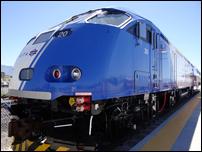
The UTA Board of Trustees Wednesday approved revisions to the agency's ordinances that manage conduct on transit property, including reducing fines.UTA also announced this week that Wi-Fi service on its commuter rail and express bus lines will be upgraded. FrontRunner’s free Wi-Fi service will be enhanced with new equipment scheduled for installation on all commuter rail trains by the end of the year.
Kyle Brimley, UTA's manager of Technology Deployment, said the complimentary service will provide riders with an internet connection that’s similar to what they experience in coffee shops or other public places. Though riders will have reliable access to websites and email, streaming media or downloading large files may not be possible, he said.
Testing of the new system will begin in June. If successful, every train will receive upgraded Wi-Fi equipment by December. The new Wi-Fi system will utilize off-the-shelf technology that can be upgraded and enhanced as usage grows and technology changes, Brimley said.
UTA currently offers Wi-Fi on FrontRunner and express buses. There are no plans, however, to expand the Wi-Fi system to TRAX or local buses at this time, he said.
The agency also reported that on-time reliability has improved for bus, light rail and paratransit from the previous year. Benson said on-time reliability was 92.4 percent for fixed route buses, 98 percent for paratransit buses, 94 percent on light rail and 86.6 percent on commuter rail.