Estimated read time: 3-4 minutes
This archived news story is available only for your personal, non-commercial use. Information in the story may be outdated or superseded by additional information. Reading or replaying the story in its archived form does not constitute a republication of the story.
SALT LAKE CITY — Thursdays are for throwbacks, so today we'll take a look at the history of our favorite city and town names in Utah.
Most city and town names in Utah originate from the following categories: geography (Salt Lake, Park City, West Valley, Sandy, Millcreek), founders (Daniel C. Davis, Christopher Layton), explorers (Étienne Provost, Peter Skene Ogden), Mormon names (Lehi, Nephi, Bountiful, Moroni), Native American names (Tooele, Oquirrh, Santaquin, Parowan), homage to other places (Syracuse, Saratoga Springs, Loa), and U.S. presidents (Washington, Roosevelt, Fillmore).
Occasionally these labels overlap, as in the case of Jordan-related place names (West Jordan, South Jordan). These are named after the Jordan River, which connects Utah Lake (fresh water) and the Great Salt Lake (salty, obviously). The similarities reminded early Mormon settlers of the more famous Jordan River connecting the Sea of Galilee and the Dead Sea in Israel, Palestine and Jordan.
Elmo
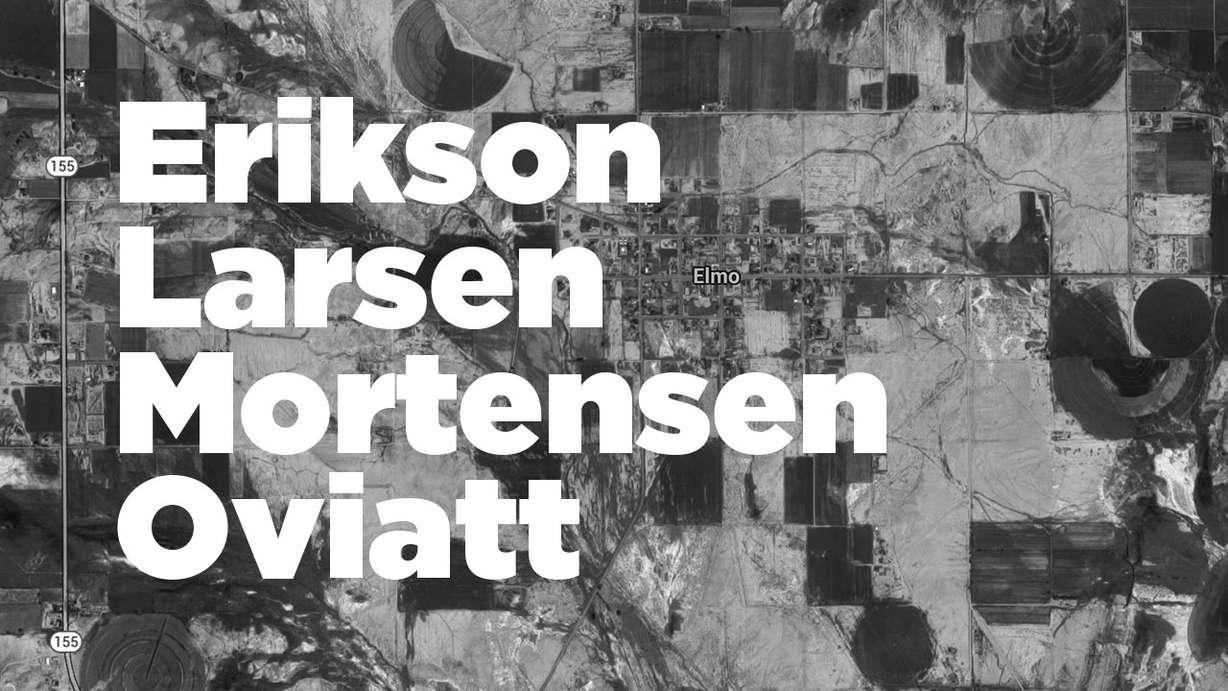
In a naming category all its own, the small town of Elmo in Emery County is named using the first letter of the last names of the four original families who settled the area: Erickson, Larsen, Mortensen and Oviatt.
Many place names in the state were assigned along with the Mormon pioneers who were called to settle the area. Levan in Juab County was named by Brigham Young and spells "navel" backwards, as the town is in the geographic center of the state.
Kamas
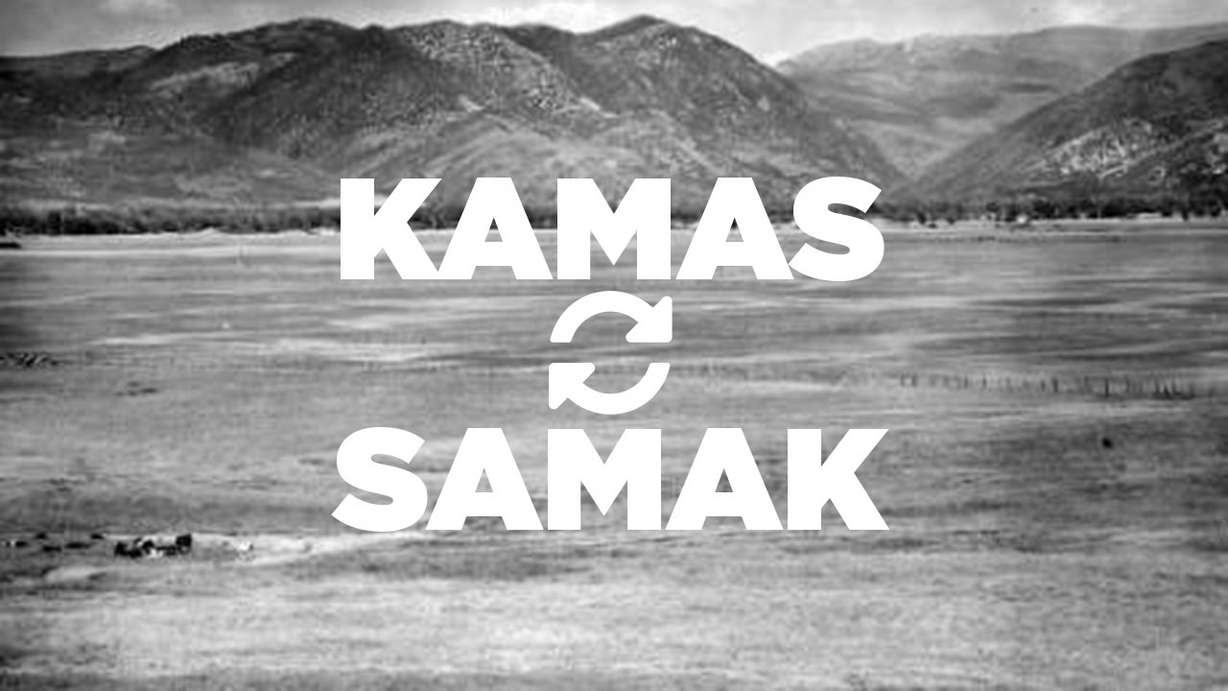
Speaking of spelling things backwards, the small canyon community of Samak in Summit County is a reverse of the nearby town of Kamas — which in turn is named after the Nez Perce Indian word for the edible camas plant.
Layton
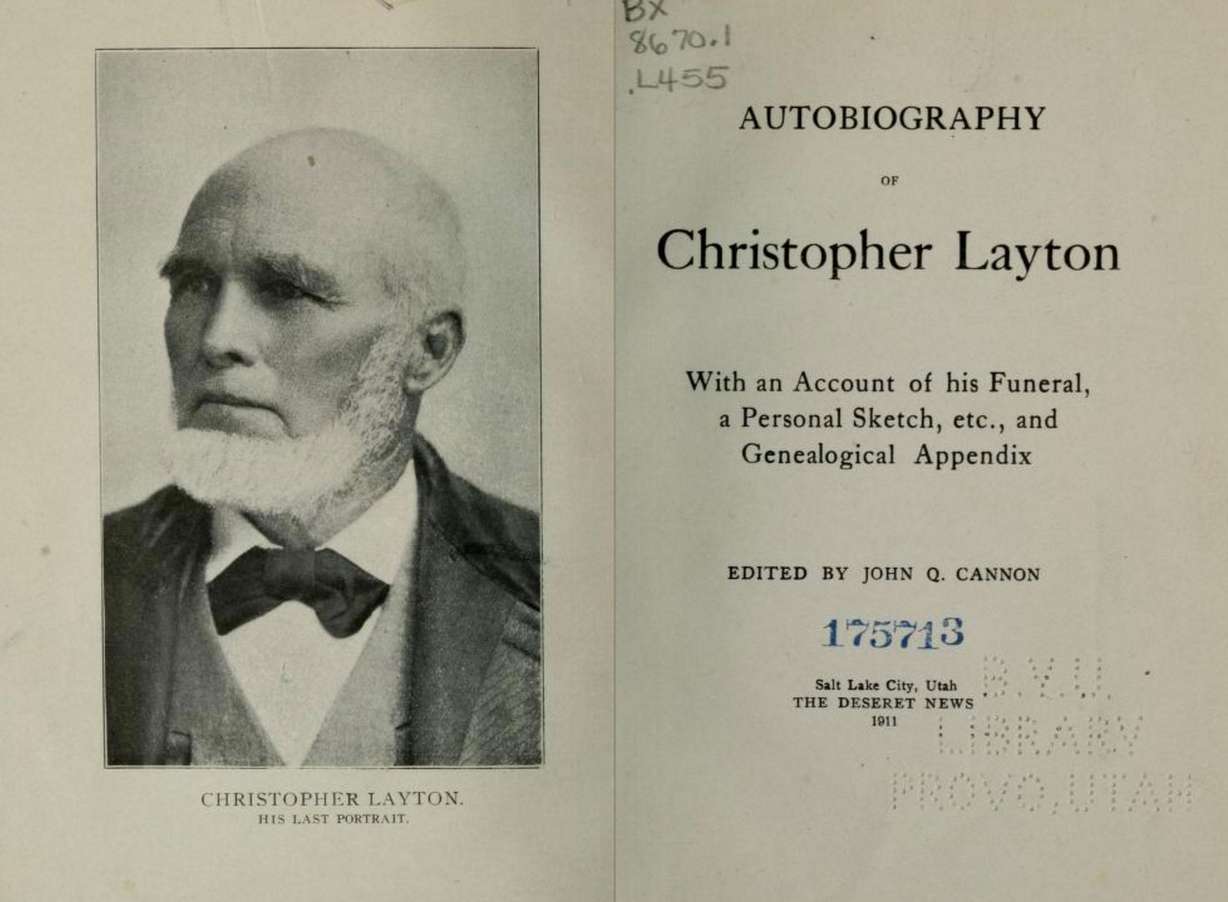
Both Layton and Kaysville (and Thatcher, Arizona) were founded by the dynamic Christopher Layton, a Mormon pioneer immigrant from England who was involved in the Mormon Battalion and later served in the Utah Territorial Legislature. Layton was a wealthy businessman who developed the first commercially successful dry-farming of wheat and helped introduce alfalfa to the region. He was also a prolific polygamist family man who had 65 children and 10 wives.
The city of Layton was originally part of Kaysville, but split away into its own community following the lead of rural Kaysville residents who were upset about paying municipal taxes even though their properties were too far removed from the city center to receive city services. In 1894 a local lawsuit reached the U.S. Supreme Court involving a farmer whose wagon was repossessed by a Kaysville tax collector. In 'Linford v. Ellison,' the Supreme Court ruled in favor of the rural property owner, which led to Layton eventually becoming an independent unincorporated area in 1902 and a proper city in 1920.
Loa
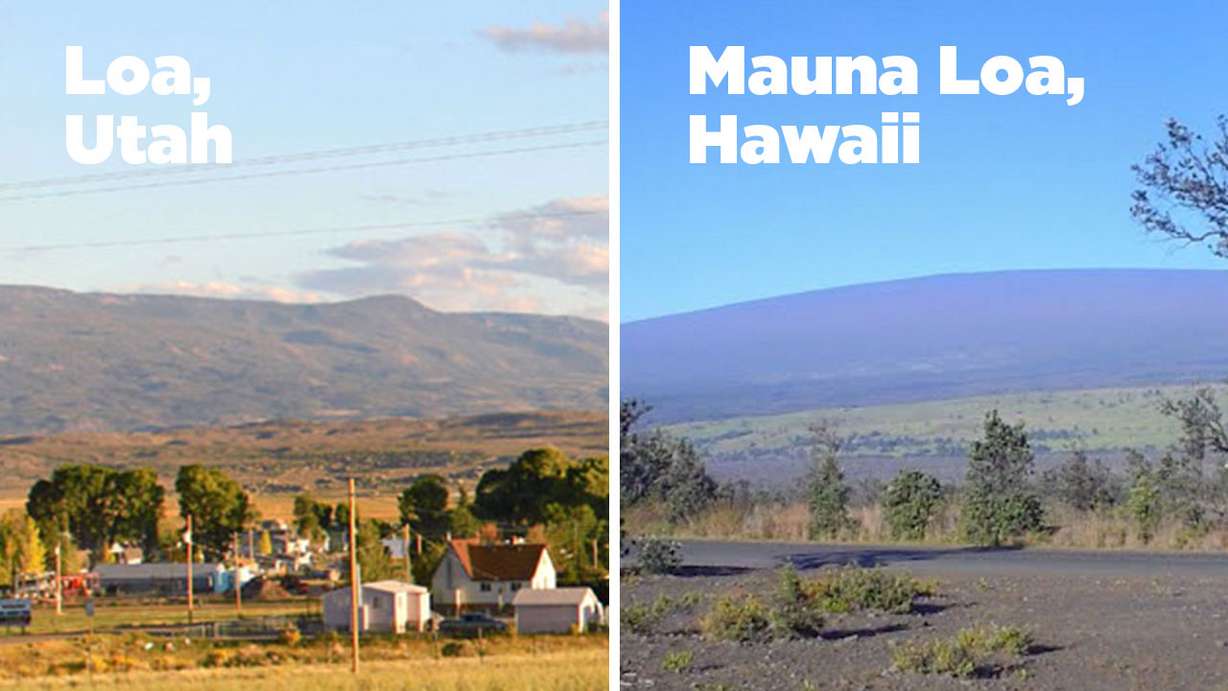
Loa in Wayne County is named after Mauna Loa, the gigantic volcanic mountain on the Big Island of Hawaii. One of the original settlers of the high mountain valley in 1878 was Franklin Young, who had served a Mormon mission to the Hawaiian islands.
Hurricane in Washington County drew its name from a windy day that blew the top off a buggy carrying pioneer leader Erastus Snow. Proper pronunciation is "hurr uh kin," of course. Adjoining the border of Hurricane is the town of La Verkin, a gargled phonetical spelling related to the Spanish name of the nearby Virgin River.
Presidents
Presidential areas include Cleveland in Emery County, Fillmore in Millard County (a double shoutout to the 13th president), Monroe in Sevier County, Monticello in San Juan County, Roosevelt in Duchesne County and Washington in Washington County.
Geography
Along with Salt Lake City, there are several names that were too obvious for town founders to resist, like Rockville, Sandy, Plain City, Delta, Farmington and Centerville.
On Thursdays in the coming weeks we'll explore the history of Utah places. Let us know some your favorites in the comments.