'%3e%3cpath%20d='M34.1406%205.85938C30.3906%202.10547%2025.3047%200%2020%200C14.6953%200%209.60938%202.10547%205.85938%205.85938C2.10938%209.61328%200%2014.6953%200%2020C0%2025.3047%202.10547%2030.3906%205.85938%2034.1406C9.61328%2037.8906%2014.6953%2040%2020%2040C25.3047%2040%2030.3906%2037.8945%2034.1406%2034.1406C37.8906%2030.3906%2040%2025.3047%2040%2020C40%2014.6953%2037.8945%209.60938%2034.1406%205.85938ZM37.0117%2023.543H31.1602V13.5391H27.6328V19.9414C28.1211%2020.6914%2028.3711%2021.582%2028.3711%2022.5625V22.625C28.3711%2023.668%2028.1172%2024.6055%2027.6328%2025.4297V26.6094H36.082C33.4883%2032.9375%2027.2891%2037.3789%2020.0039%2037.3789C10.3711%2037.3789%202.62109%2029.6289%202.62109%2020C2.62109%2010.3711%2010.3711%202.62109%2020%202.62109C29.6289%202.62109%2037.3789%2010.3711%2037.3789%2020C37.3789%2021.1484%2037.2617%2022.2656%2037.0508%2023.3477C37.0391%2023.4141%2037.0234%2023.4766%2037.0117%2023.543Z'%20fill='white'/%3e%3cpath%20d='M22.3086%2018.5352C20.4336%2018.125%2019.9531%2017.8398%2019.9766%2017.1836V17.1406C19.9766%2016.6992%2020.3477%2016.2148%2021.4023%2016.2148C22.582%2016.2148%2023.8867%2016.6797%2025.0781%2017.4766L26.8516%2015.0195C25.4453%2013.8906%2023.707%2013.3398%2021.5547%2013.3398C18.5195%2013.3398%2016.4375%2015%2016.4063%2017.4766V17.5352C16.3633%2020.2617%2018.5859%2020.9805%2021.293%2021.6016C23.0391%2021.9766%2023.5703%2022.3164%2023.5703%2022.9609L23.5469%2022.9766C23.5469%2023.3906%2023.2578%2023.7031%2022.7852%2023.8359C22.5742%2023.9062%2022.1289%2023.9727%2021.5156%2023.9727C20.7617%2023.9727%2019.7539%2023.8633%2018.6328%2023.4844C18.0898%2023.2891%2017.4727%2023.0039%2016.8047%2022.6133L20.1406%2026.625C20.2813%2026.6602%2021.0977%2026.8516%2021.7734%2026.8516C25.0039%2026.8516%2027.0859%2025.2461%2027.1094%2022.6328V22.5703C27.1602%2020.1133%2025.2148%2019.1719%2022.3086%2018.5352Z'%20fill='white'/%3e%3cpath%20d='M5.24219%2013.5664V26.6133H8.75391V23.7578L10.2969%2021.9531L14.2031%2026.6133H18.3867L12.3555%2019.5195L17.4023%2013.5664H13.4531L8.75391%2019.0586V13.5664H5.24219Z'%20fill='white'/%3e%3c/g%3e%3cdefs%3e%3cclipPath%20id='clip0_97_2430'%3e%3crect%20width='40'%20height='40'%20fill='white'/%3e%3c/clipPath%3e%3c/defs%3e%3c/svg%3e)


Estimated read time: 4-5 minutes
This archived news story is available only for your personal, non-commercial use. Information in the story may be outdated or superseded by additional information. Reading or replaying the story in its archived form does not constitute a republication of the story.
SALT LAKE CITY — Utah air quality regulators are firing back at the Sierra Club after an online blog by its national director said visibility at two of the state's national parks is akin to 1970 Los Angeles.
The Sierra Club's Michael Brune wrote in the Huffington Post last month that Utah's high desert national parks are "plagued by smog," because the state has not done its part to address regional haze.
Alan Matheson, director of the Utah Department of Environmental Quality, publicly criticized the Sierra Club at the state's first Air & Energy Symposium last week, and Bryce Bird, air quality division director, penned an op-ed to the Huffington Post in rebuttal.
"There is no basis for that assertion," Matheson said later. "And I think anybody who has been down to the national parks would laugh at the statement. We have a number of important and complex issues to address, and we get to the best answers for our state when we make those decisions based on good sound data and not on hyperbole."
The strong reaction by the agency is somewhat of a departure from its nonconfrontational posture when criticized by environmental organizations and clean air advocacy groups.
"According to the Western Regional Air Partnership — an organization that provides data and technical analysis to the EPA and local air agencies — the Colorado Plateau boasts the greatest visibility in the country, as well as the lowest human-caused contribution to regional haze," Bird wrote.
Brune was unavailable for comment, but other Sierra Club representatives said the statement was not meant to be an actual quantifiable comparison.
"Just as haze pollution diminished visibility on bad air days in Los Angeles, so too has smog pollution endangered clear skies in Utah's parks and communities," said Shane Levy, the group's deputy press secretary. "And so we are not making an equivalency between the two, but we are drawing a comparison that highlights the importance of strong protections to reduce dangerous pollution that contributes to poor air quality."
The Sierra Club, the National Parks Conservation Association and other groups want the U.S. Environmental Protection Agency to disapprove Utah's plan to combat regional haze because it fails to require the most stringent pollution control technology. That equipment, called "selective catalytic reduction," is a low nitrogen oxides burner technology the groups assert would achieve greater visibility benefit at even lower cost than other neighboring states like Wyoming and Arizona.
"While the regional haze program in general offers an extraordinary effort to clear the skies, implementation in Utah stands out for its unparalleled potential to reasonably achieve cost-effective emissions reductions that promise substantial visibility over some of our nation's most treasured landscapes," the groups wrote. "Utah's plan squanders that opportunity; EPA is obligated under the Clean Air Act to seize it."
The groups want EPA to toss Utah's plan and put its own federal requirements in place.
Matheson said a decade's worth of data shows a $600 million investment in new technology at the Hunter and Huntington power plants will not achieve nitrogen oxide emission reductions that will improve visibility at the parks.
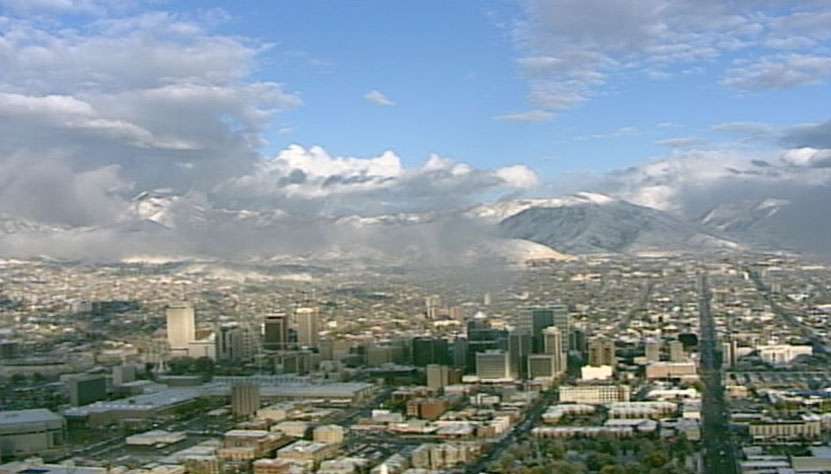
"We have looked at this in great detail over 10 years and it is not modeling — it is actual results — that show reductions in (nitrogen oxides) do not make a perceptible difference in terms of visibility."
Bird, in his Sierra Club rebuttal, said regulators believe it is because low levels of ammonia are not sufficient to react with the nitrogen oxides to form ammonium nitrate — a component of regional haze.
"If there is not enough ammonia to drive a chemical reaction, then further reductions in nitrogen oxides will not lead to a corresponding reduction in ammonium nitrates."
Matheson said there may come a time when that changes.
"We're not saying that (selective reduction controls) may never make a difference, it is not justified today," he said, adding the controls are several hundreds of millions of dollars. "This is not just money paid by a big corporation, this is money paid by the hardworking ratepayers of Utah. We could not justify having the ratepayers put that kind of money into something without a demonstrable benefit."
The Sierra Club and other groups insist Utah is wrong and the plan is flawed.
Late last month, they held a press conference to announce they had collected 30,000 signatures for delivery to the EPA urging it be rejected. The signatures included representation from outdoor recreation businesses and athletes.
The groups say the power plants are responsible for 40 percent of all nitrogen oxide emissions from the state's electric sector.
The air quality division say since 2002, sulfur dioxide emissions from the region's power plants have decreased by nearly 28,000 tons a year and emissions from nitrogen oxides are down 15,258 tons per year.
EPA officials could make a decision on Utah's regional haze plan by mid-month.