'%3e%3cpath%20d='M34.1406%205.85938C30.3906%202.10547%2025.3047%200%2020%200C14.6953%200%209.60938%202.10547%205.85938%205.85938C2.10938%209.61328%200%2014.6953%200%2020C0%2025.3047%202.10547%2030.3906%205.85938%2034.1406C9.61328%2037.8906%2014.6953%2040%2020%2040C25.3047%2040%2030.3906%2037.8945%2034.1406%2034.1406C37.8906%2030.3906%2040%2025.3047%2040%2020C40%2014.6953%2037.8945%209.60938%2034.1406%205.85938ZM37.0117%2023.543H31.1602V13.5391H27.6328V19.9414C28.1211%2020.6914%2028.3711%2021.582%2028.3711%2022.5625V22.625C28.3711%2023.668%2028.1172%2024.6055%2027.6328%2025.4297V26.6094H36.082C33.4883%2032.9375%2027.2891%2037.3789%2020.0039%2037.3789C10.3711%2037.3789%202.62109%2029.6289%202.62109%2020C2.62109%2010.3711%2010.3711%202.62109%2020%202.62109C29.6289%202.62109%2037.3789%2010.3711%2037.3789%2020C37.3789%2021.1484%2037.2617%2022.2656%2037.0508%2023.3477C37.0391%2023.4141%2037.0234%2023.4766%2037.0117%2023.543Z'%20fill='white'/%3e%3cpath%20d='M22.3086%2018.5352C20.4336%2018.125%2019.9531%2017.8398%2019.9766%2017.1836V17.1406C19.9766%2016.6992%2020.3477%2016.2148%2021.4023%2016.2148C22.582%2016.2148%2023.8867%2016.6797%2025.0781%2017.4766L26.8516%2015.0195C25.4453%2013.8906%2023.707%2013.3398%2021.5547%2013.3398C18.5195%2013.3398%2016.4375%2015%2016.4063%2017.4766V17.5352C16.3633%2020.2617%2018.5859%2020.9805%2021.293%2021.6016C23.0391%2021.9766%2023.5703%2022.3164%2023.5703%2022.9609L23.5469%2022.9766C23.5469%2023.3906%2023.2578%2023.7031%2022.7852%2023.8359C22.5742%2023.9062%2022.1289%2023.9727%2021.5156%2023.9727C20.7617%2023.9727%2019.7539%2023.8633%2018.6328%2023.4844C18.0898%2023.2891%2017.4727%2023.0039%2016.8047%2022.6133L20.1406%2026.625C20.2813%2026.6602%2021.0977%2026.8516%2021.7734%2026.8516C25.0039%2026.8516%2027.0859%2025.2461%2027.1094%2022.6328V22.5703C27.1602%2020.1133%2025.2148%2019.1719%2022.3086%2018.5352Z'%20fill='white'/%3e%3cpath%20d='M5.24219%2013.5664V26.6133H8.75391V23.7578L10.2969%2021.9531L14.2031%2026.6133H18.3867L12.3555%2019.5195L17.4023%2013.5664H13.4531L8.75391%2019.0586V13.5664H5.24219Z'%20fill='white'/%3e%3c/g%3e%3cdefs%3e%3cclipPath%20id='clip0_97_2430'%3e%3crect%20width='40'%20height='40'%20fill='white'/%3e%3c/clipPath%3e%3c/defs%3e%3c/svg%3e)


Estimated read time: 3-4 minutes
This archived news story is available only for your personal, non-commercial use. Information in the story may be outdated or superseded by additional information. Reading or replaying the story in its archived form does not constitute a republication of the story.
Tonya Papanikolas reporting We've heard a lot about the country of Myanmar recently after a young refugee girl was murdered here in Salt Lake, and then a cyclone hit the country.
The people there, also known as Burmese, suffered a lot in their own country, then lived in refugee camps. Now thousands are being resettled in the United States, many right here in Utah.
Right now the Burmese are the largest group of refugees coming into the state. It's likely Utah will resettle up to 500 refugees from Myanmar this year. We followed one family as they began their new journey.
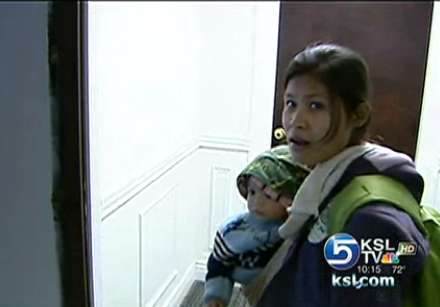
April 3, two refugee families from Myanmar arrive at the Salt Lake airport. A case manager with Catholic Community Services (CCS) picks up a family of four that has had a long journey from a refugee camp in Thailand, where they've lived for 13 years.
An interpreter for Mue Klair said, "She said that she feels really happy that she arrived here safely."
"She's never seen things like this before, and she feels glad that somebody came here to see her," she added.
Almost everything around the family is new, even the experience of riding to their apartment.
James Kuay, a case manager for Catholic Community Services explained, "They had never been in the car. Even when I just come right now with them, the mother would throw up in the car."
But that doesn't stop the family members' eagerness to see their new home. CCS has stocked their apartment with food, kitchen utensils and basic furniture. Tonight is just about getting settled.
An interpreter for Pah T Kee said, "We are so tired right now, and we cannot talk so much."
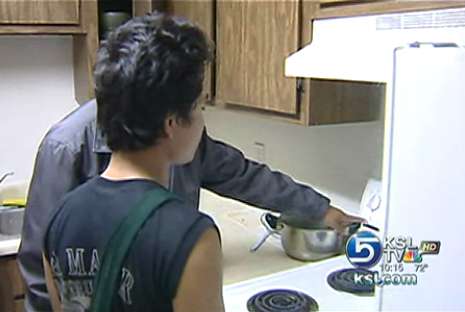
In the next few days, the family's case managers show them how to use the stove, turn on the sink and the bath. It sounds simple, but these are things they don't learn in camps.
Rosemarie Hunter, the director of University Neighborhood Partners, said, "It's dirt roads. There's no running water."
Earlier this year, Hunter visited the Mae La camp in Thailand, which houses at least 40,000 people who fled their homes in Myanmar. "There's a military dictatorship," she said. "They have forced people out of their villages; they have burned villages; they kidnap people; they rape women."
The camp offers rudimentary health care and schooling, and refugees get food, but not a lot. They appreciate coming to America.
Once they are here, the family members receive immediate medical treatment. With federal money, Catholic Community Services pays the first month's rent. An interpreter tells us that Pah T Kee feels, "We never thought we would have the very nice apartment."

CCS Housing Coordinator Hafsa Abdikadir said, "We try to make them as self-sufficient as soon as possible, and most of them do succeed."
Families receive bus cards and food stamps. But the refugees are encouraged to work. If the refugees attend a job orientation, CCS pays their rent for an additional three months. The agency also places them in their first job.
Aden Batar, with CCS, explained, "We work with the Deseret Industries stores. We work with the humanitarian center. We work with the airport, hotels."
Pah T Kee says through an interpreter, "I hope they will help my family get a job very soon."
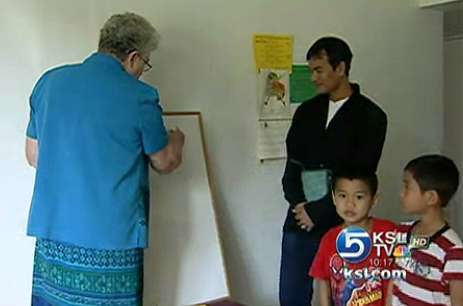
To learn English, most of the refugees enroll in an ESL class. Volunteers also help them with the language and American culture.
Batar said, "Without the community, there is no way we could have a successful resettlement program."
Volunteers and resettlement agencies want to give Utah's refugees the best possible new start. After all, their children will be the next generation of Utahns.
Pah T Kee said, "We can build a great family in [the] United States."
Utah's two resettlement agencies help refugees for the first six months. Then they refer them to other organizations that will help them in the long-term. These agencies are always looking for volunteers to mentor the families. If you're interested, see the links on this page.
E-mail: tpapanikolas@ksl.com