Estimated read time: 2-3 minutes
This archived news story is available only for your personal, non-commercial use. Information in the story may be outdated or superseded by additional information. Reading or replaying the story in its archived form does not constitute a republication of the story.
Dr. Kim Mulvihill and Courtney Orton reporting A former Utah man is in critical condition in a Las Vegas hospital where he is being treated for ricin poisoning. Roger Von Bergendorff used to live with his cousin in Riverton, and investigators were worried ricin may have contaminated that home.
The FBI and hazardous materials crews went through the residence this weekend, and the family was allowed to return today. Bergendorff, who is 57, has been in the hospital for two weeks.
Ricin, itself, is so toxic that an amount the size of a pinpoint can kill a person. Once it enters the body, it prevents cells from making vital proteins.
Experts say ricin is extremely hard to detect in people, especially if it's been several days since exposure. "It's testing for a breakdown compound as the body metabolizes ricin, or does what it does, then there is a certain chemical that is present in the body, in the urine," explained Jana Coombs, biological emergency preparedness and response coordinator for the Utah Department of Public Health.
Experts say that chemical is typically only in the body for two days after exposure to ricin. But because they have very little information on the poisonous toxin, they say the chemical could stay in the body for longer.
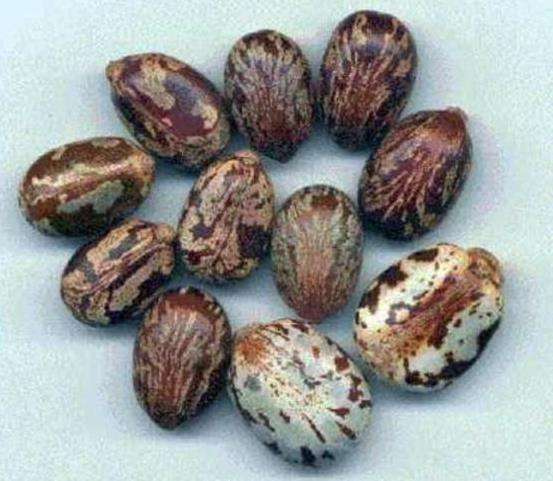
Ricin is made from the waste left over from processing castor beans. "Castor oil is present in the castor beans that can be extracted, and ricin comes from the left-over products after processing," Coombs said.
Ricin can be in the form of a powder, a mist or a pellet, or it can be dissolved in water or weak acid.
There is no known antidote for ricin poisoning. Doctors can only treat the symptoms. But not everyone who is exposed to ricin dies. Experts say if a person survives more than five days the odds of survival are good.
Ricin can legally be used only for cancer research. It is still experimental, but even so it's surprising and well worth talking about.
Ricin can be targeted to specific cells, like cancer cells, attaching a subunit of ricin to antibodies, or growth factors, that will then go on to bind to the unwanted cells. This works by using the immune system, creating what's called an "immuno-toxin."
This has worked very well in the lab, and the hope is it will eventually work in people.
One of the first conditions that has been studied with ricin treatment has to do with bone marrow transplants. One of the biggest problems there is the recipient might go on to reject the cells he or she just received from the donor. The idea is that ricin could be used to, in a sense, wipe out some of the cells from the donor so the recipient wouldn't reject the transplant.
Ricin is also being looked at as a possible treatment for lymphomas and other types of cancers, even AIDS.