'%3e%3cpath%20d='M34.1406%205.85938C30.3906%202.10547%2025.3047%200%2020%200C14.6953%200%209.60938%202.10547%205.85938%205.85938C2.10938%209.61328%200%2014.6953%200%2020C0%2025.3047%202.10547%2030.3906%205.85938%2034.1406C9.61328%2037.8906%2014.6953%2040%2020%2040C25.3047%2040%2030.3906%2037.8945%2034.1406%2034.1406C37.8906%2030.3906%2040%2025.3047%2040%2020C40%2014.6953%2037.8945%209.60938%2034.1406%205.85938ZM37.0117%2023.543H31.1602V13.5391H27.6328V19.9414C28.1211%2020.6914%2028.3711%2021.582%2028.3711%2022.5625V22.625C28.3711%2023.668%2028.1172%2024.6055%2027.6328%2025.4297V26.6094H36.082C33.4883%2032.9375%2027.2891%2037.3789%2020.0039%2037.3789C10.3711%2037.3789%202.62109%2029.6289%202.62109%2020C2.62109%2010.3711%2010.3711%202.62109%2020%202.62109C29.6289%202.62109%2037.3789%2010.3711%2037.3789%2020C37.3789%2021.1484%2037.2617%2022.2656%2037.0508%2023.3477C37.0391%2023.4141%2037.0234%2023.4766%2037.0117%2023.543Z'%20fill='white'/%3e%3cpath%20d='M22.3086%2018.5352C20.4336%2018.125%2019.9531%2017.8398%2019.9766%2017.1836V17.1406C19.9766%2016.6992%2020.3477%2016.2148%2021.4023%2016.2148C22.582%2016.2148%2023.8867%2016.6797%2025.0781%2017.4766L26.8516%2015.0195C25.4453%2013.8906%2023.707%2013.3398%2021.5547%2013.3398C18.5195%2013.3398%2016.4375%2015%2016.4063%2017.4766V17.5352C16.3633%2020.2617%2018.5859%2020.9805%2021.293%2021.6016C23.0391%2021.9766%2023.5703%2022.3164%2023.5703%2022.9609L23.5469%2022.9766C23.5469%2023.3906%2023.2578%2023.7031%2022.7852%2023.8359C22.5742%2023.9062%2022.1289%2023.9727%2021.5156%2023.9727C20.7617%2023.9727%2019.7539%2023.8633%2018.6328%2023.4844C18.0898%2023.2891%2017.4727%2023.0039%2016.8047%2022.6133L20.1406%2026.625C20.2813%2026.6602%2021.0977%2026.8516%2021.7734%2026.8516C25.0039%2026.8516%2027.0859%2025.2461%2027.1094%2022.6328V22.5703C27.1602%2020.1133%2025.2148%2019.1719%2022.3086%2018.5352Z'%20fill='white'/%3e%3cpath%20d='M5.24219%2013.5664V26.6133H8.75391V23.7578L10.2969%2021.9531L14.2031%2026.6133H18.3867L12.3555%2019.5195L17.4023%2013.5664H13.4531L8.75391%2019.0586V13.5664H5.24219Z'%20fill='white'/%3e%3c/g%3e%3cdefs%3e%3cclipPath%20id='clip0_97_2430'%3e%3crect%20width='40'%20height='40'%20fill='white'/%3e%3c/clipPath%3e%3c/defs%3e%3c/svg%3e)


Estimated read time: 3-4 minutes
This archived news story is available only for your personal, non-commercial use. Information in the story may be outdated or superseded by additional information. Reading or replaying the story in its archived form does not constitute a republication of the story.
SALT LAKE CITY — Conservationists at the Arizona State University International Institute for Species Exploration have compiled, with the help of a lot of user nominations, a list of 10 amazing species discovered in 2011.
New kinds of plants and animals are discovered constantly, dispite our already vast knowledge of the biodiversity around us. But millions upon millions of species remain to be described, not onlyliving but also extinctt.
"The top 10 is intended to bring attention to the biodiversity crisis and the unsung species explorers and museums who continue a 250-year tradition of discovering and describing the millions of kinds of plants, animals and microbes with whom we share this planet," said Quentin Wheeler, an entomologist and director of the IISE in a news release. This is the fifth year the list has been put together.
Without further ado, here's the latest list:
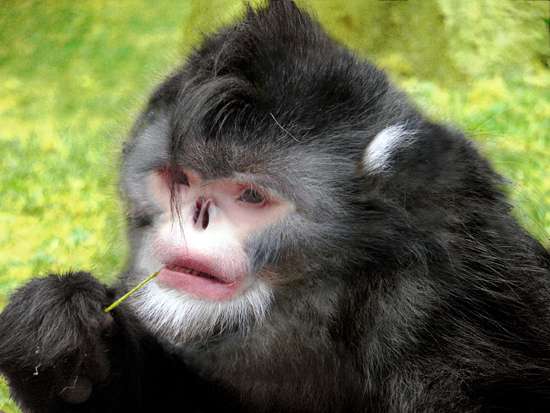
Rhinopithecus strykeri, or the sneezing monkey: Not only is this monkey cute as a button in its own right, but the snub-nosed primate actually sneezes when it rains because its nose cant keep the water out. It reportedly will put its head between its knees until it stops raining. Everyone who sees this reportedly says "Awwwwww!" Tamoya ohboya, or the "Oh boy" jellyfish: Sightings of this colorful, and awfully venomous, jellyfish have been frequent recently off the coast of Bonaire. A school teacher named it ohboya, thinking that "oh boy!" must be what anyone exclaims when they first see it.
Halicephalobus mephisto, or the hell-worm: This diminutive nematode, coming in at half a millimeter in length, lives further under the earth's crust than any other known multicellular creature - about a mile under the surface. Only insane bacteria make it down deeper. And possibly mole people.
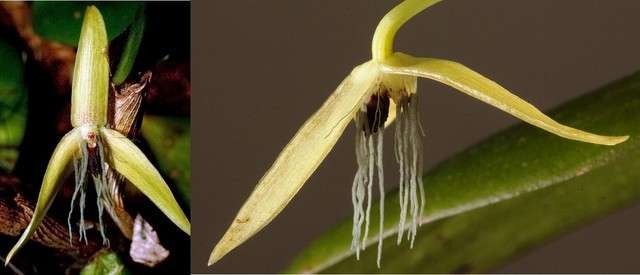
Bulbophyllum nocturnum, or the night-blooming orchid: This orchid, like most college freshmen, wakes up around 10 p.m. and goes to sleep early in the morning. It is the first night blooming orchid ever found and grows precariously in Paupa New Guinea. Kollasmosoma sentum, or the dive-bombing ant parasite wasp: This tiny wasp rides along the ground at high speed looking for an ant to attack, and once it finds a target, dive-bombs to implant a parasitic egg. All this takes less than a twentieth of a second.
Spongiforma squarepantsii, or the SpongegeBob mushroom (seriously): Actually named after SpongeBob SquarePants, this fruity-smelling Malaysian mushroom can be squeezed like a sponge and bounce right back.
Meconopsis autumnalis, or the Nepalese mountain poppy: This yellow poppy can only be found on the slopes of mountains between 10,000 and 14,000 feet up in Nepal. And it's a favorite of Ra's al Ghul and Batman.
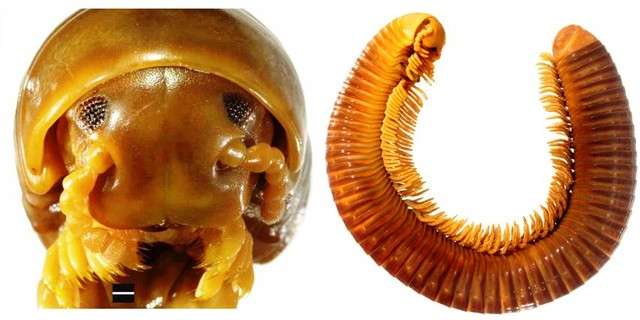
Crurifarcimen vagans, or the wandering leg sausage: A gigantic millipede named after the fact that it looks like a sausage with legs. Whether it tastes like one has not yet been determined. Diania cactiformis, or the ancient walking cactus:This extinct 520 million year old species of lobopod walked around on many spiny legs that may have been used to help catch prey. It may also have been an ancestor of modern insects and spiders.
Pterinopelma sazimai, or the blue tarantula: While not the first blue tarantula to be discovered, it is nevertheless still blue, and therefore awesome. It was discovered in Brazil and is currently a threatened species.






