Estimated read time: 3-4 minutes
This archived news story is available only for your personal, non-commercial use. Information in the story may be outdated or superseded by additional information. Reading or replaying the story in its archived form does not constitute a republication of the story.
SALT LAKE CITY — It's a common situation to deal with in any major city: road construction and ubiquitous orange barrels. If you've ever been running late for an appointment, and suddenly find yourself in a traffic jam, you know how frustrating it can be.
Chances are you may hear about delays on the freeway from your friends on Facebook or Twitter before you head out the door, and people in the transportation industry are starting to utilize social media networks as well.
Here in the Beehive State, the Utah Department of Transporation employs a number of Twitter accounts to communicate everything from construction projects to the location of a car accident, all in real time. So, before getting behind the wheel, drivers have easily-accessible travel information on their smartphones or computers, and are also able to communicate directly with those on the frontlines of the Utah traffic world.
"Using Twitter has been a quick and easy way to notify my radio listeners about a variety of traffic concerns," says Rikki Meece, traffic reporter for KSL Newsradio.
With information about travel conditions coming in from a number of sources, Meece says the use of social media helps her do her job more effectively. "Retweeting posts from UDOT sources, such as I-15 Core and the Traffic Operations Center, is a great way to get traffic information out easily, with minimal effort on my part as a traffic reporter."
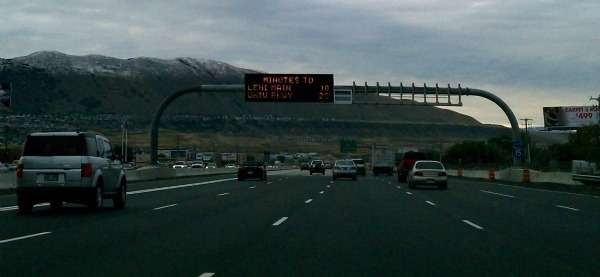
Overhead message boards at certain points on the freeways are also a resource for drivers to use. Travel times are posted and updated at regular intervals, and tell travelers the estimated time it will take to drive from point A to point B. The signs also are used by UDOT to relay messages about air quality, encouraging drivers to limit their driving on poor air days.
Messages on these signs are controlled by people at the Traffic Operations Center in Salt Lake City.
In Utah County, a major renovation of the I-15 corridor between Lehi and Spanish Fork is taking place, and UDOT is relying heavily on social media and other Utah news sources to keep drivers aware of progress. Even though the project is halfway finished, there's still a lot of work to be done, including shifting traffic onto the new concrete lanes. The I-15 CORE project has a Facebook page and Twitter feed, and regularly posts updates about that important section of freeway.
Social media networks are a new frontier, and many businesses and individuals are still learning the best ways to use them. While not every social campaign is flawless, people appreciate an honest and genuine approach, and the ability to have a conversation.
Social networks are also an experiment in the humanities, and since people tend to congregate with others who are like-minded, there's no better force which unites us quite like a traffic jam.
Andrew Johnson is a writer and marketing specialist. Read more at www.andrewjohnson1.com