'%3e%3cpath%20d='M34.1406%205.85938C30.3906%202.10547%2025.3047%200%2020%200C14.6953%200%209.60938%202.10547%205.85938%205.85938C2.10938%209.61328%200%2014.6953%200%2020C0%2025.3047%202.10547%2030.3906%205.85938%2034.1406C9.61328%2037.8906%2014.6953%2040%2020%2040C25.3047%2040%2030.3906%2037.8945%2034.1406%2034.1406C37.8906%2030.3906%2040%2025.3047%2040%2020C40%2014.6953%2037.8945%209.60938%2034.1406%205.85938ZM37.0117%2023.543H31.1602V13.5391H27.6328V19.9414C28.1211%2020.6914%2028.3711%2021.582%2028.3711%2022.5625V22.625C28.3711%2023.668%2028.1172%2024.6055%2027.6328%2025.4297V26.6094H36.082C33.4883%2032.9375%2027.2891%2037.3789%2020.0039%2037.3789C10.3711%2037.3789%202.62109%2029.6289%202.62109%2020C2.62109%2010.3711%2010.3711%202.62109%2020%202.62109C29.6289%202.62109%2037.3789%2010.3711%2037.3789%2020C37.3789%2021.1484%2037.2617%2022.2656%2037.0508%2023.3477C37.0391%2023.4141%2037.0234%2023.4766%2037.0117%2023.543Z'%20fill='white'/%3e%3cpath%20d='M22.3086%2018.5352C20.4336%2018.125%2019.9531%2017.8398%2019.9766%2017.1836V17.1406C19.9766%2016.6992%2020.3477%2016.2148%2021.4023%2016.2148C22.582%2016.2148%2023.8867%2016.6797%2025.0781%2017.4766L26.8516%2015.0195C25.4453%2013.8906%2023.707%2013.3398%2021.5547%2013.3398C18.5195%2013.3398%2016.4375%2015%2016.4063%2017.4766V17.5352C16.3633%2020.2617%2018.5859%2020.9805%2021.293%2021.6016C23.0391%2021.9766%2023.5703%2022.3164%2023.5703%2022.9609L23.5469%2022.9766C23.5469%2023.3906%2023.2578%2023.7031%2022.7852%2023.8359C22.5742%2023.9062%2022.1289%2023.9727%2021.5156%2023.9727C20.7617%2023.9727%2019.7539%2023.8633%2018.6328%2023.4844C18.0898%2023.2891%2017.4727%2023.0039%2016.8047%2022.6133L20.1406%2026.625C20.2813%2026.6602%2021.0977%2026.8516%2021.7734%2026.8516C25.0039%2026.8516%2027.0859%2025.2461%2027.1094%2022.6328V22.5703C27.1602%2020.1133%2025.2148%2019.1719%2022.3086%2018.5352Z'%20fill='white'/%3e%3cpath%20d='M5.24219%2013.5664V26.6133H8.75391V23.7578L10.2969%2021.9531L14.2031%2026.6133H18.3867L12.3555%2019.5195L17.4023%2013.5664H13.4531L8.75391%2019.0586V13.5664H5.24219Z'%20fill='white'/%3e%3c/g%3e%3cdefs%3e%3cclipPath%20id='clip0_97_2430'%3e%3crect%20width='40'%20height='40'%20fill='white'/%3e%3c/clipPath%3e%3c/defs%3e%3c/svg%3e)



Estimated read time: 2-3 minutes
This archived news story is available only for your personal, non-commercial use. Information in the story may be outdated or superseded by additional information. Reading or replaying the story in its archived form does not constitute a republication of the story.
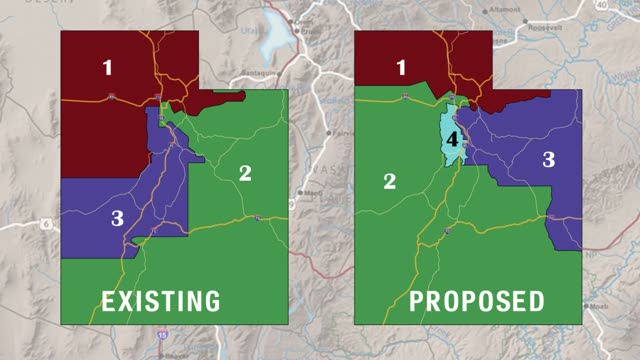
SALT LAKE CITY — More than 100 Utahns rallied in the Capitol rotunda at noon Monday to protest dividing the state's urban core into four largely rural congressional districts.
While the crowd waved signs and listened to Salt Lake County Mayor Peter Corroon and others slam the proposal, the GOP majority at the Legislature was meeting in closed caucuses.
So far, little action has been taken during the special legislative session to approve new congressional, legislative and State School Board districts based on the results of the 2010 Census.
Concerning other items on the agenda, the Senate did give initial approval to a bill allowing presidential candidates to appear on the June 2012 primary election ballot. Some Utahns have pushed for an earlier presidential primary, but that would carry a $3 million price tag.
Several other mainly technical changes as well as some resolutions are also on the agenda for the session, expected to continue for several days.
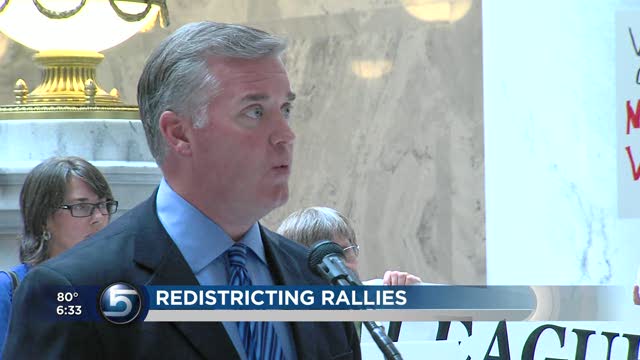
Corroon, a Democrat who lost his bid for governor last year, told the protestors the congressional map approved by the Legislature's Redistricting Committee last week "is simply un-American."
This map is a lawsuit waiting to happen.
–Peter Corroon
Corroon said the map, the work of House Speaker Becky Lockhart, R-Provo, has been described by Republicans as "bulletproof" to political and legal challenges.
"This map is a lawsuit waiting to happen," Corroon said, telling the crowd that they "can kiss the first Tuesday in November goodbye" if the map is adopted because their votes will no longer matter.
State Democratic Party Chairman Jim Dabakis has already threatened to sue over the map. A memo to Democratic Party officials from their attorneys suggests that there could be a strong case.
Senate Minority Leader Ross Romero, D-Salt Lake, told the crowd he planned on voting against the congressional and legislative maps.
"Your voice has been heard," Romero said.
The crowd carried signs as well as a box of doughnut holes and a pizza, representing the two approaches to drawing the congressional boundaries.
Republicans favor the so-called "pizza slice" approach that splits the state into districts that are a mix of urban and rural areas. Democrats want a "doughnut hole" map that keeps their Salt Lake area-stronghold intact and puts rural Utahns in a surrounding district.
----
Written by Dennis Romboy with contributions from Lisa Riley Roche.