'%3e%3cpath%20d='M34.1406%205.85938C30.3906%202.10547%2025.3047%200%2020%200C14.6953%200%209.60938%202.10547%205.85938%205.85938C2.10938%209.61328%200%2014.6953%200%2020C0%2025.3047%202.10547%2030.3906%205.85938%2034.1406C9.61328%2037.8906%2014.6953%2040%2020%2040C25.3047%2040%2030.3906%2037.8945%2034.1406%2034.1406C37.8906%2030.3906%2040%2025.3047%2040%2020C40%2014.6953%2037.8945%209.60938%2034.1406%205.85938ZM37.0117%2023.543H31.1602V13.5391H27.6328V19.9414C28.1211%2020.6914%2028.3711%2021.582%2028.3711%2022.5625V22.625C28.3711%2023.668%2028.1172%2024.6055%2027.6328%2025.4297V26.6094H36.082C33.4883%2032.9375%2027.2891%2037.3789%2020.0039%2037.3789C10.3711%2037.3789%202.62109%2029.6289%202.62109%2020C2.62109%2010.3711%2010.3711%202.62109%2020%202.62109C29.6289%202.62109%2037.3789%2010.3711%2037.3789%2020C37.3789%2021.1484%2037.2617%2022.2656%2037.0508%2023.3477C37.0391%2023.4141%2037.0234%2023.4766%2037.0117%2023.543Z'%20fill='white'/%3e%3cpath%20d='M22.3086%2018.5352C20.4336%2018.125%2019.9531%2017.8398%2019.9766%2017.1836V17.1406C19.9766%2016.6992%2020.3477%2016.2148%2021.4023%2016.2148C22.582%2016.2148%2023.8867%2016.6797%2025.0781%2017.4766L26.8516%2015.0195C25.4453%2013.8906%2023.707%2013.3398%2021.5547%2013.3398C18.5195%2013.3398%2016.4375%2015%2016.4063%2017.4766V17.5352C16.3633%2020.2617%2018.5859%2020.9805%2021.293%2021.6016C23.0391%2021.9766%2023.5703%2022.3164%2023.5703%2022.9609L23.5469%2022.9766C23.5469%2023.3906%2023.2578%2023.7031%2022.7852%2023.8359C22.5742%2023.9062%2022.1289%2023.9727%2021.5156%2023.9727C20.7617%2023.9727%2019.7539%2023.8633%2018.6328%2023.4844C18.0898%2023.2891%2017.4727%2023.0039%2016.8047%2022.6133L20.1406%2026.625C20.2813%2026.6602%2021.0977%2026.8516%2021.7734%2026.8516C25.0039%2026.8516%2027.0859%2025.2461%2027.1094%2022.6328V22.5703C27.1602%2020.1133%2025.2148%2019.1719%2022.3086%2018.5352Z'%20fill='white'/%3e%3cpath%20d='M5.24219%2013.5664V26.6133H8.75391V23.7578L10.2969%2021.9531L14.2031%2026.6133H18.3867L12.3555%2019.5195L17.4023%2013.5664H13.4531L8.75391%2019.0586V13.5664H5.24219Z'%20fill='white'/%3e%3c/g%3e%3cdefs%3e%3cclipPath%20id='clip0_97_2430'%3e%3crect%20width='40'%20height='40'%20fill='white'/%3e%3c/clipPath%3e%3c/defs%3e%3c/svg%3e)



Estimated read time: 2-3 minutes
This archived news story is available only for your personal, non-commercial use. Information in the story may be outdated or superseded by additional information. Reading or replaying the story in its archived form does not constitute a republication of the story.
SALT LAKE CITY -- A University Hospital program, aimed at improving the care of senior citizens, just marked its first year anniversary.
When you're in the hospital, especially if you're an elderly patient, doctors are concerned with more than the condition that brought you in. Doctors are there to keep patients healthy and to prevent other problems or illnesses from appearing.
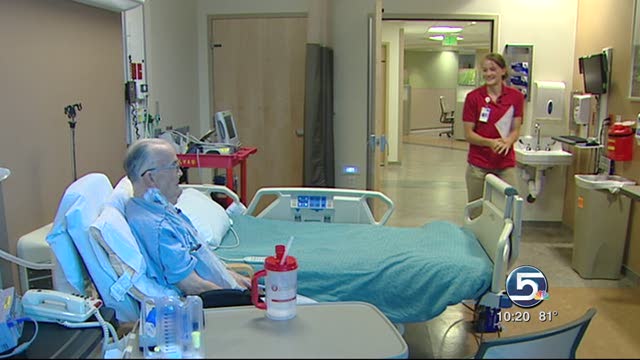
And volunteers for the Hospital Elder Life Program are playing a more vital role in helping doctors treat illnesses. Pills and medical procedures are key ingredients in hospitals, but there is no discounting the human factor.
"It's really rewarding to meet all these types of people," said HELP volunteer Angela Kaplar.
If we can prevent them from getting confused, their length of stay in the hospital is less. The persistence of the problem and their care needs when they leave the hospital are much fewer.
–Dr. Mark Supiano
As a volunteer with HELP, it is Angela's job to engage elderly patients in conversation and exercises, which helps to ease an uncomfortable and stressful time in the lives of elderly patients.
"There are patients that are resistant to people coming in to volunteer, and those ended up being the patients I visit longest with," Kaplar said.
HELP is the result of a study that showed volunteer visits helped reduce rates of delirium. When the hospital first launched HELP, the rate of delirium in their patients 70 years and older was 1 in 3. But six months into the program, that same number had improved to one in 10.
"If we can prevent them from getting confused, their length of stay in the hospital is less," said Director of Geriatric Medicine Dr. Mark Supiano. "The persistence of the problem and their care needs when they leave the hospital are much fewer."
Patients have also experienced fewer falls and the hospital has reduced some costs. And for Angela Kaplar, volunteering with HELP has shaped her future.
"I actually want to go into geriatrics in some shape or form through nursing," she said.
Although it has been a positive experience for Kaplar, it has been a better experience for elderly patients.
If you're interested in volunteering for HELP, visit healthcare.utah.edu.
Email: sdallof@ksl.com