Estimated read time: 2-3 minutes
This archived news story is available only for your personal, non-commercial use. Information in the story may be outdated or superseded by additional information. Reading or replaying the story in its archived form does not constitute a republication of the story.
SALT LAKE CITY -- It appears our 2.3-million-year-old relative -- known for decades as the "Nutcracker Man" -- is in need of a name change.
It was not competing for food with most other primates, who ate fruits, leaves and nuts; but with grazers -- zebras' ancestors, suids [ancestors of pigs and warthogs] and hippos.
–Kevin Uno
Discovered by archaeologist-paleontologist couple Mary and Louis Leakey in Tanzania back in 1959, the fossilized skull of the ancient pre-human (officially classified as Paranthropus boisei) earned the nickname "Nutcracker Man" because of his flat molar teeth and powerful jaw -- perfect for cracking nuts.
But researchers with the University of Utah revealed findings -- published Tuesday in the Proceedings of the National Academy of Sciences journal -- that prove our toothy friend didn't chomp down on tough nuts after all, but chewed grasses instead.
"It was not competing for food with most other primates, who ate fruits, leaves and nuts; but with grazers -- zebras' ancestors, suids [ancestors of pigs and warthogs] and hippos," said study co-author and University of Utah geology Ph.D. student Kevin Uno in a press release.
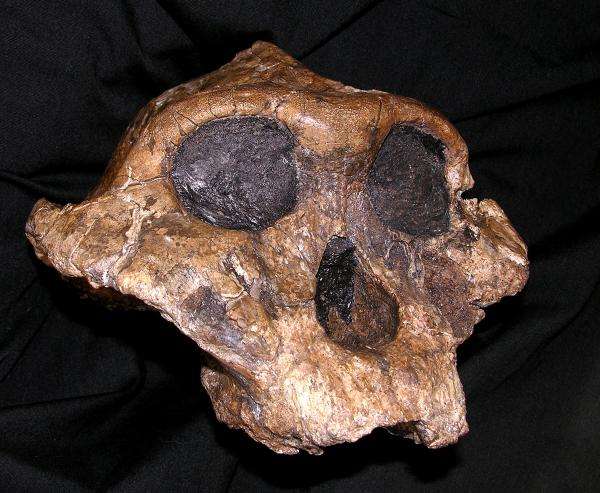
Geochemist Thure Cerling led a team of scientists and anthropologists in the study -- using 24 teeth from 22 individuals who lived in East Africa between 1.4 million and 1.9 million years ago. The team drilled a portion of the enamel from each sample into powder, then measured the carbon content.
But why does carbon matter? Here's why: it can actually reveal a lot about diet -- one kind is produced from tree leaves, nuts and fruit, while the other kind comes from grasses and sedges.
The only other human ancestor that ate more grass than the Nutcracker Man was an extinct species of baboon.
Wouldn't you know, the carbon found in the teeth of those pre-humans was the same kind produced from grasses. Thus, the researchers concluded the Nutcracker Man was most definitely not a nut eater, but actually consumed more grasses and sedges than any other known human ancestor to date.
In fact, according to the findings, the only other species that dined on more grass was an extinct baboon.
So basically, everything we thought we new about the early man's diet is now moot. That means the potential for big change.
"Much of the previous work has been on the size and shape of the teeth, along with microwear analysis," Cerling said. "It stands to reason that other conclusions about other species also will require revision. P. boisei greatly extends the range of potential diets for early human lineages."
It also calls for a new nickname. Grass Masher, perhaps?
Email:jrogers@ksl.com