
Estimated read time: 3-4 minutes
This archived news story is available only for your personal, non-commercial use. Information in the story may be outdated or superseded by additional information. Reading or replaying the story in its archived form does not constitute a republication of the story.
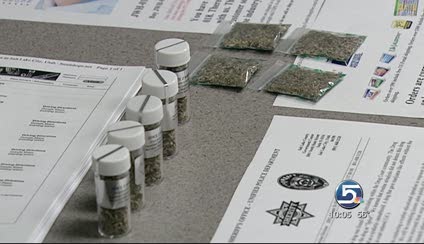
SALT LAKE CITY -- Springville Friday joined the growing list of cities to ban Spice. It's the latest effort in a mounting battle against a war on designer drugs. Spice is undetectable in standard drug tests -- new lab tests will catch it. But those tests could become outdated almost as soon as they're developed.
An Arizona-based lab created a test that can detect four commonly-used forms of fake marijuana or spice. While it's a start, law enforcement and pharmacological experts say staying ahead of the manufacturers of these substances remains a cat-and-mouse game
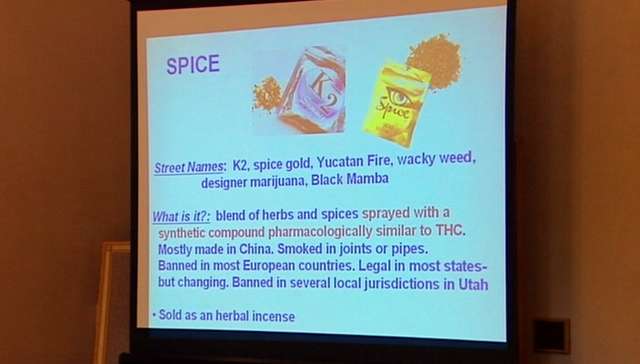
"Obviously, people can invent all sorts of chemicals faster than we can put them into law," Paul Boyden, executive director of the Statewide Association of Prosecutors, said Friday during a brown bag panel discussion on Spice at the Salt Lake City-County Building. Spice is an herb laced with a synthetic form of tetrahydrocannabinol or THC, the psychoactive component of marijuana. It is sold under many names such as Black Mamba or Spice Gold.
Glen Hanson, director of the Utah Addiction Center, said, "The designer implication is that you've taken a substance controlled or abuse potential and changed the chemistry a bit."
Hanson -- who is also a professor of pharmacology and toxicology at the University of Utah -- says changing just one molecule is enough to skirt around the law.
The substance is then legal while still giving the user a high similar to the real thing. But, the big allure of spice, Hanson says, is that it's undetectable in standard drug tests.
"If you don't know what you're looking for then you can't put your standard in there," says Hansen, "and even though you get all the spikes and indications there is stuff there, you don't know what to pay attention to."
But an Arizona-based company is working to change that. Norchem Drug Testing provides services for law enforcement, drug courts and probation and parole agencies.
The company developed a lab-based urine test which can detect four common types of synthetic marijuana called JWH compounds.
Bill Gibbs, CEO of Norchem Drug Testing, says, "Those are the specific drugs we can detect with our technique, and as these things become known, I believe, you'll see a decline in their use."
While it's a star there are still hurdles. The test only detects four kinds of Spice -- there are about 20 different types of the substance out there.
"There will be substitutes that will come in replace them," Gibbs acknowledged. "That's something all chemists are keeping an eye out for, different species of synthetic marijuana's."
State lawmakers understand that -- they've endorsed a bill that would regulate Spice and allow flexibility in the future.
"With the designer strategy you can always add new stuff, but now the bill enables us to say when you add new stuff, we'll add new stuff and make the products illegal and get them off the shelves," Hanson said.
The bill does not mention Spice specifically because it goes by so many names. It does, however, list the four compounds we told you about plus several others.
------
Story compiled with contributions from Anne Forester and Marjorie Cortez.