Estimated read time: 2-3 minutes
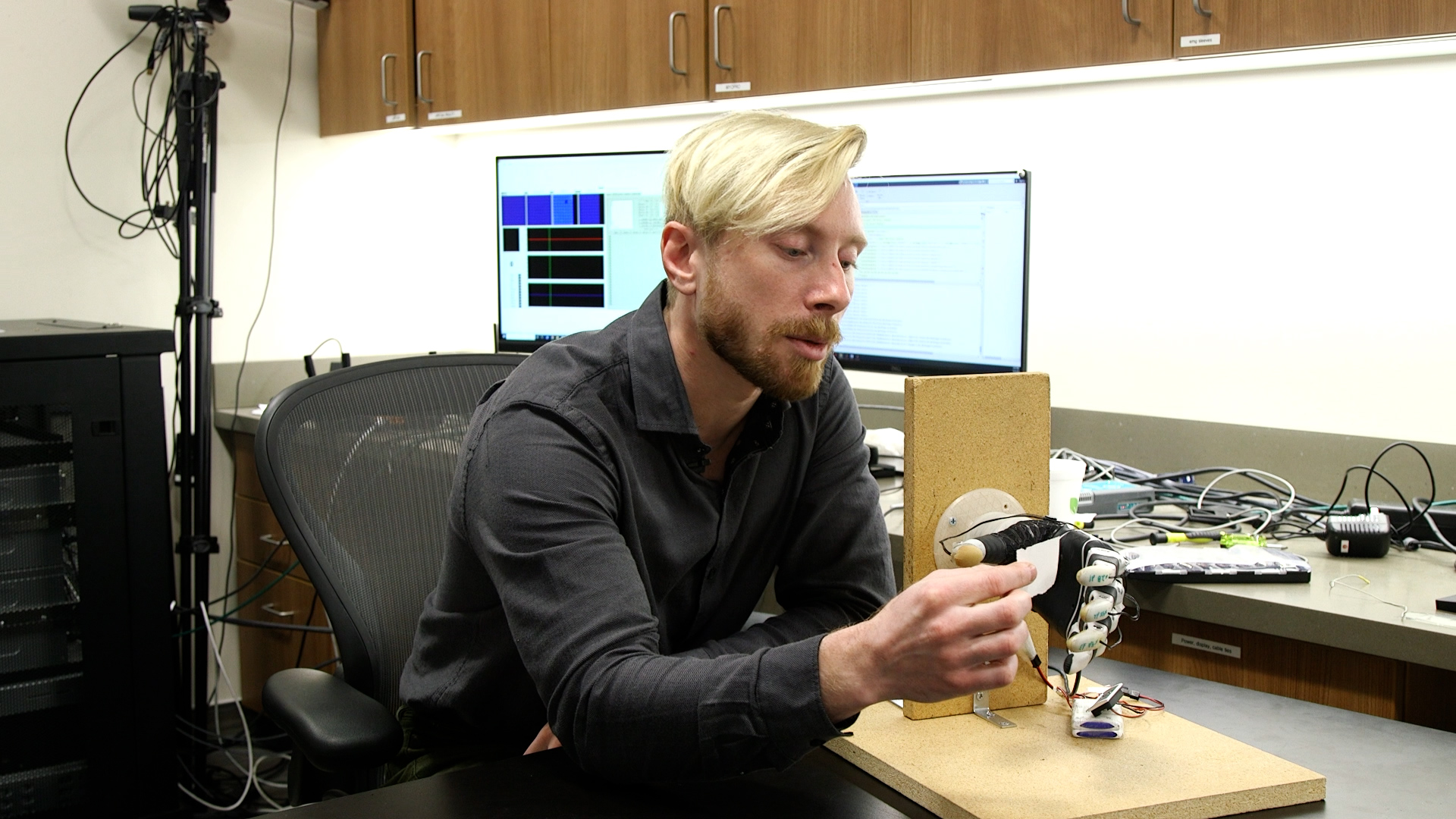
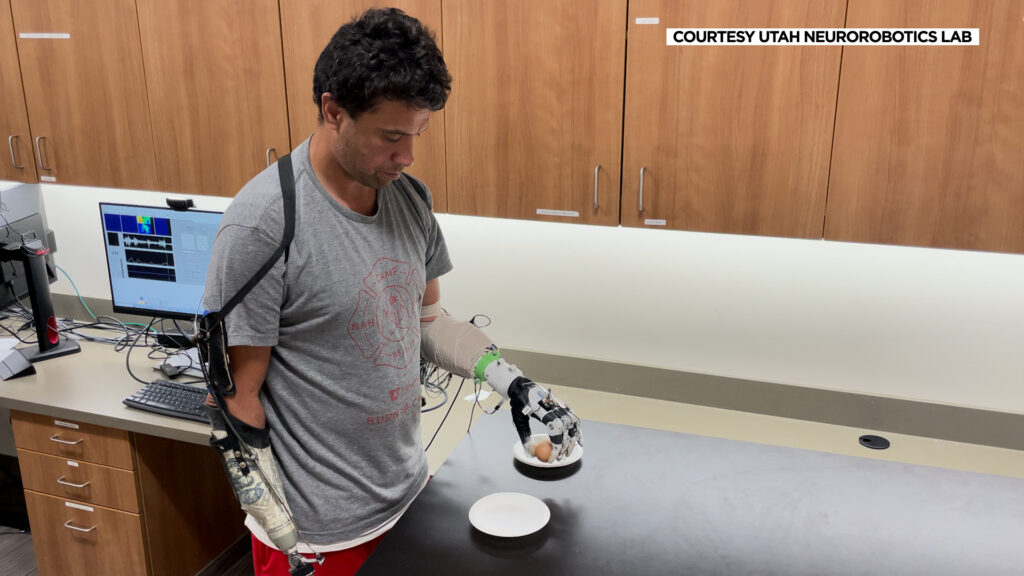
SALT LAKE CITY — University of Utah engineers have given a bionic hand a mind of its own. Post-doctoral researcher Marshall Trout said a large percentage of amputees who get bionic hands — maybe 20 to 50% — stop using them because, in part, they take too much thought. “We have robotic arms that are out there that are capable of recreating all of the different motions of the human hand,” said Professor Jacob George, director of the Utah Neurorobotics Lab. “But our ability to intuitively control those in a dexterous way is really difficult.” So Trout, with the guidance of George, retrofitted a commercially available hand with optical and touch sensors and artificial intelligence. As the hand comes close to an object, the fingers move towards the object just to the point of making contact. The person wearing the hand — using electrical signals from their muscles — then controls the strength of the grasp.The idea is the amputee gets a cognitive assist from AI. “It's just helping shape of the hand. And then the user can just think about, you know, how much force they want to apply without having to get into the nuances of like 'Where do I want the hand position,'” George said. “It's the human who's doing all the intention and the AI is operating behind the scenes to make them a little bit more seamless with their technology.” Trout said using the system, patients were able to manipulate objects with more dexterity and less distraction. One of the amputees who tried out the system was Sam Matagi who lost both hands in a power line accident while working as a lineman.“It feels like like you have an assistant. Like I have my phone and it's an assistant for my schedule, for my this, for my that,” Matagi said. “It's like you have a crane operator inside your arm.” George said he thinks the system could end up on the market in the next five years and said he expects sensors and AI will become commonplace in prosthetics in the next five to ten years. The work was part of a study published in the journal Nature Communications.