- Tyler Robinson is facing charges accusing him of killing Charlie Kirk on Sept. 10, 2025.
- Prosecutors debated whether Robinson's alleged motives were political, religious or both in court on Tuesday.
- Defense argues victim-targeting penalty enhancement applies only to political, not religious, views.
PROVO — Tyler Robinson's charges contend that he shot and killed Charlie Kirk because, in part, of the conservative activist's political beliefs.
That's why the state is adding a victim-targeting penalty enhancement to some of Robinson's charges, including aggravated murder, if he is convicted.
But can prosecutors add that penalty enhancement if they believe Robinson was motivated by Kirk's religious views?
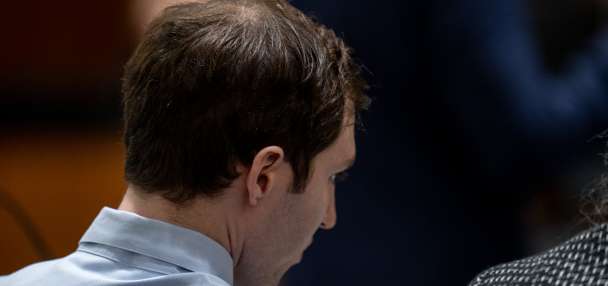
The intersection of politics and religion was discussed at length during the morning session of the second day of Robinson's preliminary hearing in 4th District Court on Tuesday.
Robinson faces 10 charges, the most serious being aggravated murder, in the death of Kirk, who was shot and killed on the campus of Utah Valley University on Sept. 10, 2025. During a preliminary hearing, a judge will decide whether there is sufficient probable cause to go to trial on the charges levied against a defendant. The bar prosecutors must meet to show probable cause, however, is very low at a preliminary hearing. A judge will not determine guilt or innocence during a preliminary hearing.
The Utah County Attorney's Office on Tuesday introduced a written statement from David Engelhardt, a Turning Point U.S.A. board member, pastor in New York and attorney, as evidence. Robinson's defense attorneys immediately objected, however, arguing that much of Engelhardt's statement is not relevant in this case.
According to defense attorney Richard Novack, the statement contains Engelhardt's opinions about branches of Christianity, Kirk's own religious beliefs and even quotes the Bible. But a victim-targeting penalty enhancement under state law applies only to political expression, Novack argued, not religious expression.
Tyrese Boone, KSL"This is not a case about religion," he told the court. "This exhibit does not say anything about Mr. Robinson's state of mind and that's what motive is.
"I didn't bring the Bible to this courtroom, the state did," Novack later argued to 4th District Judge Graf.
But Ryan McBride of the Utah County Attorney's Office countered that at Kirk's Turning Point U.S.A. rallies, he presented both religious and political views during his debates. And the statement by Engelhardt speaks to Robinson's motive for allegedly shooting Kirk. The statement addresses the Christian and political views of issues such as gender identity, families and marriage, McBride said, and Robinson "was on the other side of these views."
Ultimately, Graf admitted the statement into evidence but will not show it to the general public in the courtroom.
The second day of the preliminary hearing began Tuesday, where it left off Monday afternoon, recalling David Hull, who was the lead investigator in the Robinson case for the State Bureau of Investigation, to the witness stand.
Tuesday's hearing is livestreamed here:
Several surveillance videos collected by Hull and his team were introduced as evidence on Monday in court, each to the objection of Robinson's defense team, which opposes hearsay evidence being admitted.
Without the people who actually gave the statements or shot and collected the videos, lead defense attorney Kathy Nester argued that a foundation to determine the credibility of each piece of evidence cannot be established, and attorneys are unable to cross-examine.
An unedited version of the video was played in court on Tuesday.
The video compilation shows the person the state identifies as Robinson on UVU surveillance video arriving at the campus at 8:30 a.m. on Sept. 10. He is seen walking out of the parking garage wearing a red T-shirt and shorts. He visits the amphitheater where Kirk is scheduled to speak later that day and returns to the parking garage by about 9:25 a.m.
Just after 10 a.m., Robinson returns to UVU and is seen in surveillance video walking across Campus Drive to a wooded area, but this time with a backpack, Hull testified. By 11 a.m., he returns to the campus, this time wearing a long-sleeved black shirt and long pants. Surveillance video shows a man that Hull says he believes was Robinson walking with a limp or gait, with his right leg not bending, across campus.
At about 12:15 p.m., investigators believe Robinson got onto the roof of the Losee building. By 12:22 p.m., he is crawling to the edge of the rooftop. Kirk was killed at 12:23 p.m. Hull says video shows Robinson then getting up and running to the edge of the roof, dropping down and running back to the wooded area.
A police officer actually had contact with Robinson as he was driving away from campus about 12:30 a.m. on Sept. 11, Hull testified. Robinson was driving past a checkpoint on Campus Drive and was stopped. The officer who talked to Robinson had a suspicious feeling about the driver and wrote down a partial plate number, which Hull says was later determined to match Robinson's vehicle.
Although the court acknowledged at the start of the day Robinson's standing objection to all hearsay evidence, his defense team specifically objected to the video's admission as evidence, saying they believe it "will play a big role in the trial."
This story will be updated. To be notified about updates, please click Follow This Story below on the KSL app.