- Tyler Robinson's preliminary hearing in Provo adjourned, set to resume Sept. 1.
- The week-long hearing involved witness testimonies and an enhanced UVU surveillance video review.
- Contention arose over evidence visibility, with the Kirk family unable to view all exhibits.
PROVO — The preliminary hearing for Tyler Robinson wrapped up Friday in Provo — for now.
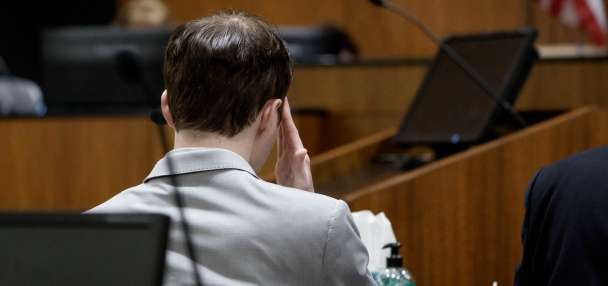
Both the prosecution and defense attorneys have called witnesses to testify and presented evidence over the past week for 4th District Judge Tony Graf to consider.
Friday's hearing ended with Graf allowing Erika Kirk and Charlie Kirk's parents, Robert and Kathryn Kirk, to view an enhanced UVU surveillance video allegedly showing Robinson's movements on campus on the morning of Sept. 10, 2025, when he drove into a parking garage on campus, until about 12:30 a.m. on Sept. 11, when his vehicle is seen driving away on Campus Drive near 800 South. The video includes moments in which film editors zoom in on the alleged gunman and place a red circle around him to make him easier to see. The video was originally submitted as evidence but was shown only to Graf and the attorneys.
In the edited video, a man that prosecutors say is Robinson is seen getting onto the gravel roof of the Losee Center, running to the edge overseeing the amphitheater where Charlie Kirk was speaking, dropping down onto the roof and crawling for the final couple of feet toward the edge, laying in what the state has described as a "sniper's perch" for about 30 seconds, then getting up and running to the other end of the roof, dropping down into the grass and running back to the wooded area.
Although the video contained no sound and did not show Kirk being shot, Erika Kirk buried her head in Kathryn Kirk's arms at the moment Robinson is seen getting up from his perch and running. The two women shared a long embrace and cried silently before Erika Kirk bowed her head and wiped away her tears with a tissue.
"The conclusion of the preliminary hearing marks an important step forward in the pursuit of justice for Charlie. Our family is grateful for the prayers, support and kindness that has been extended to us, especially through these unimaginably painful and emotionally demanding proceedings.
"As difficult as these last few days have been, it brings our family comfort to know that the world has witnessed the overwhelming evidence of what occurred to Charlie that day. Nothing will ever undo the loss of our beloved Charlie. As this case moves into its next phase, we pray that truth will continue to be heard through a process that is fair, transparent, and grounded in the facts," the Kirk family said in a prepared statement following Friday's hearing.
Robinson, 23, is charged with 10 crimes, the most serious being aggravated murder, in the death of conservative political activist Charlie Kirk, who was shot and killed on the campus of Utah Valley University on Sept. 10, 2025. A preliminary hearing is held to determine whether there is sufficient probable cause to go to trial on the charges levied against a defendant.
The bar the state must reach to show probable cause is very low at a preliminary hearing and all evidence must be viewed by the judge in a light favoring the prosecution.
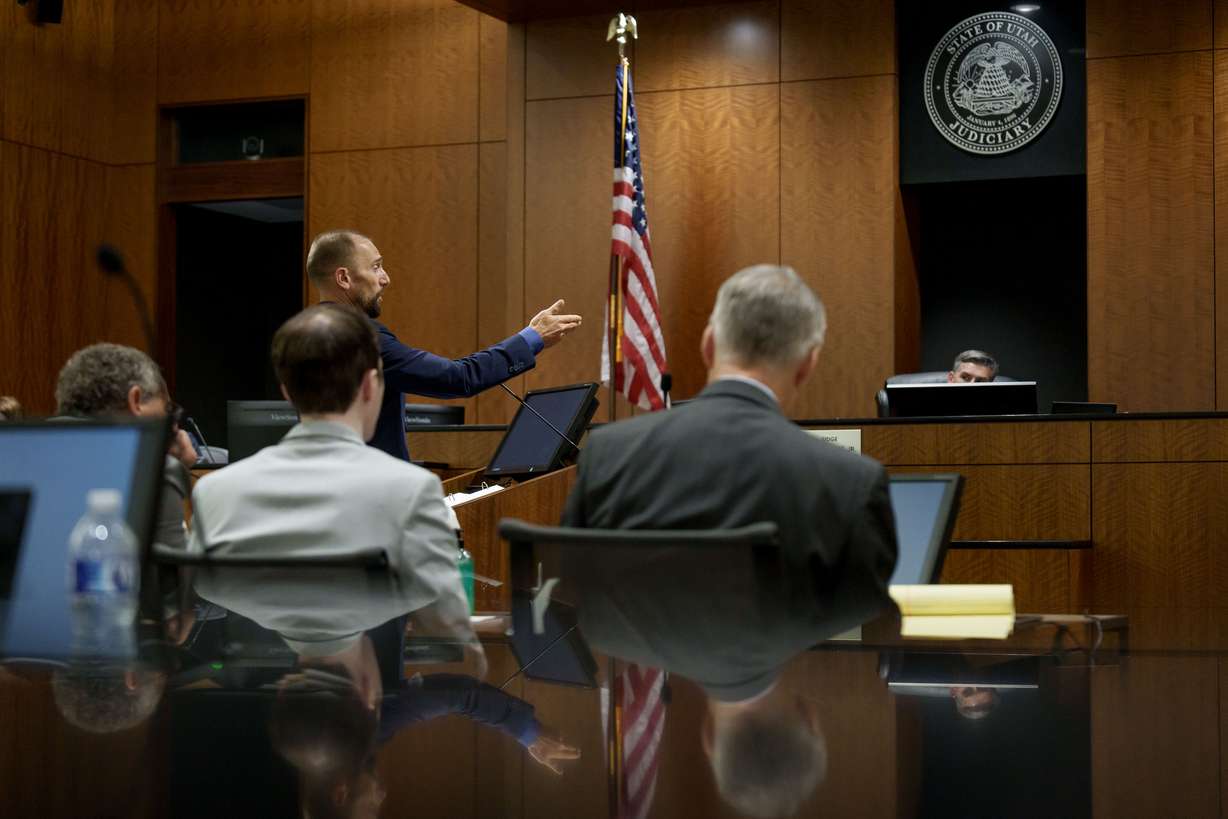
The Utah County Attorney's Office finished calling their witnesses to testify on Thursday. And according to Chad Grunander, the chief deputy in the Utah County Attorney's Office, "The evidence is overwhelming. It's devastating," he told Graf.
Robinson's defense team finished calling the third of their three expert witnesses on Friday. But a decision on whether Robinson will be bound over to stand trial is still weeks away.
At the end of a preliminary hearing, both sides typically give closing arguments and the judge decides if there is enough evidence for a defendant to proceed to trial. On Thursday, Graf granted a defense motion for each side to first submit briefs summarizing their arguments. The state will submit its brief by July 28, followed by the defense's reply on Aug. 11 and the state's rebuttal on Aug. 18. After that, another hearing will be held on Sept. 1 for both sides to summarize their cases in court. Graf has set aside a total of four hours for both sides to present their arguments on that day.
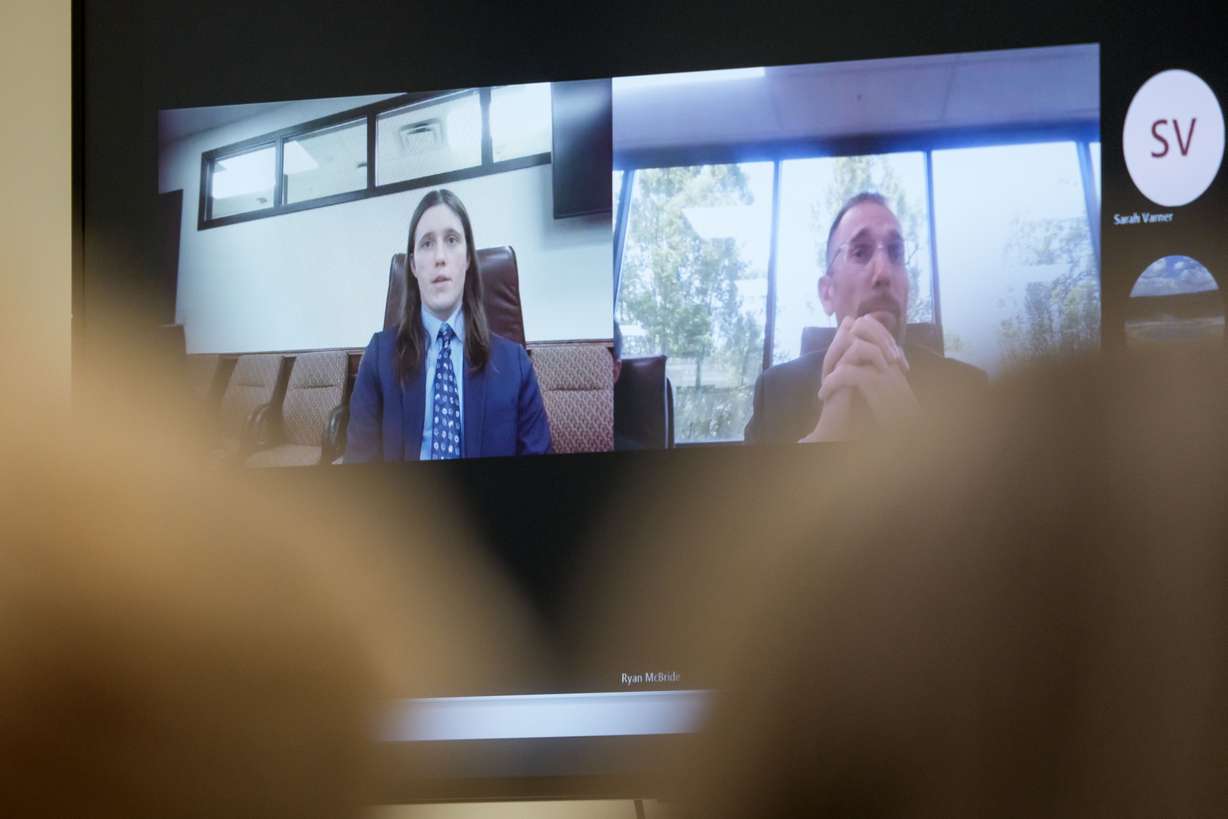
Robinson's defense team this week called three forensic experts from the FBI and ATF to testify in an attempt to cast doubt on the reliability of DNA testing, arguing that test results are subjective. Defense attorneys also noted several times for Graf that Robinson wasn't on the investigators' radar until he surrendered to authorities.
Before Friday's hearing concluded, the defense told Graf that, based on their recommendation, Robinson would not be testifying at the preliminary hearing.
The hearing began with a concern about a piece of evidence being shown on the livestream broadcast of the proceedings.
For each piece of evidence introduced during the hearing, Graf had to decide:
- Whether to admit that evidence into the record;
- Whether that evidence should be shown to everyone in the courtroom;
- Whether that evidence can be filmed by the livestream camera broadcasting the hearing.
Robinson's defense team remains adamant that broadcasting evidence to people outside the courtroom will jeopardize their client's right to a fair trial by prejudicing a future jury pool, even if that evidence has already been made public. On Thursday, as prosecutors were calling for pictures of evidence to be displayed on the large courtroom monitor, a picture of the note Robinson allegedly left for his roommate and boyfriend, Lance Twiggs, was inadvertently shown on the livestream camera for 3 1/2 seconds. The camera operator quickly panned away after the image was posted on the courtroom monitor, before any attorneys or the judge noticed the problem.
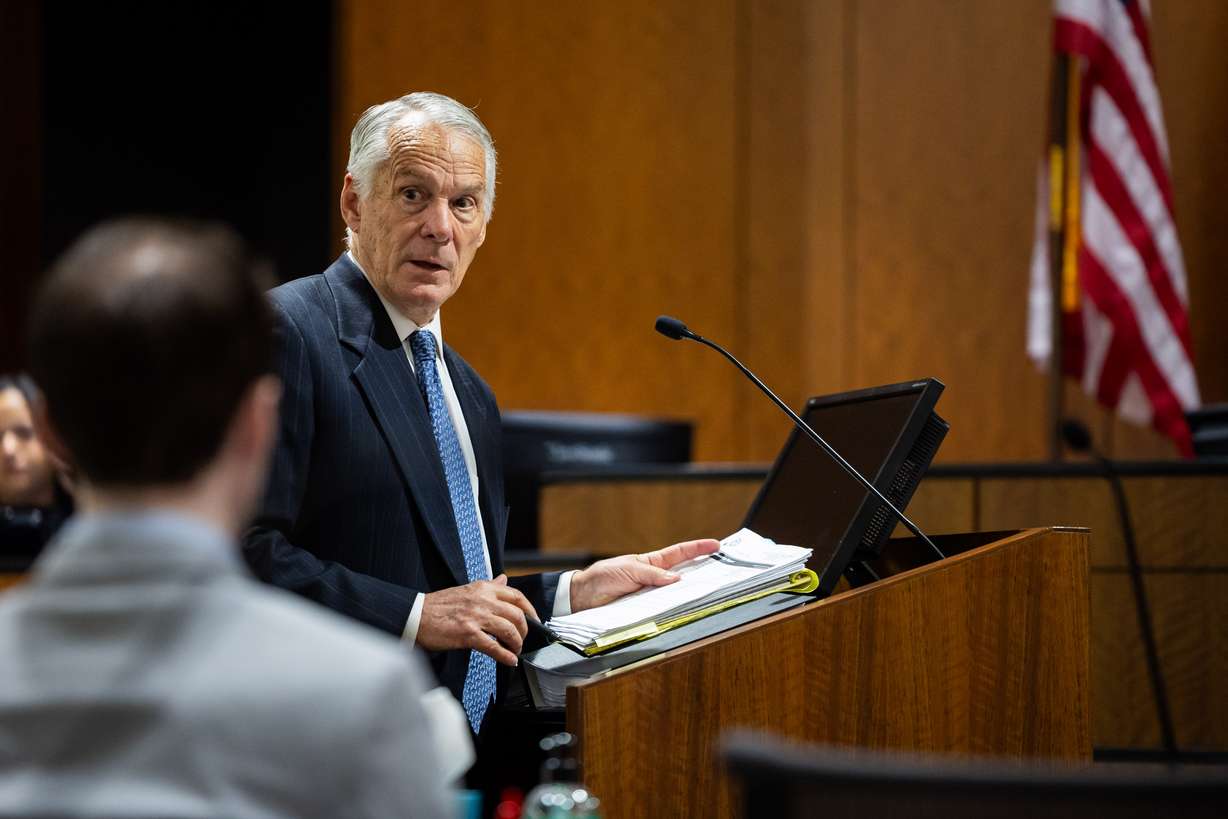
But defense attorney Richard Novack argued that the damage had already been done. It was the second time a TV camera inadvertently violated the judge's decorum order outlining what the media can and cannot film.
"I don't think the court needs to wait for the third strike," Novack said.
Even though the letter's contents have already been revealed in other court documents, Robinson's defense team asked Graf to reconsider his ruling that allows electronic media in the courtroom. After watching a recording of the error and taking the arguments into consideration, Graf ruled that for the remainder of the hearing on Friday, no pieces of evidence — with the exception of the UVU video he ruled on the day before — be shown to the courtroom gallery. Graf says he will rule later whether the same order will apply at the Sept. 1 hearing.
The move also prevented the Kirk family from seeing any additional pieces of evidence on Friday. Jeff Neiman, the attorney for Erika Kirk and the Kirk family, voiced his disapproval to Graf, saying it's "not meaningful" for the victim's family to make the effort to be in the courtroom but be unable to view the evidence being presented.
Extended debates over what evidence could be shown to the public and what could only be viewed by attorneys and the judge became a central theme of the week-long hearing and prompted Neiman to file a brief with the court on Wednesday night, calling for all evidence to be public.
"For 10 months, the victim's family has waited for this preliminary hearing. Erika Kirk, the widow of Charlie Kirk, and his grieving parents traveled to this courtroom for one reason: to be present at these proceedings and to bear witness to the evidence concerning the death of their husband and son. At certain points throughout the preliminary hearing, the Kirk family sat in the room while evidence was admitted but not presented for their viewing. They were present in body, yet denied the very thing their presence was meant to secure: their ability to meaningfully observe the preliminary hearing," Neiman said. "The victim's family's position is simple. At a minimum, every exhibit entered into evidence during the preliminary hearing must be visible to every person lawfully present in the courtroom."
After the court concluded on Friday, Kirk's family filed again and urged Graf to make his bindover decision quickly.
"A prompt determination is imperative in the interest of justice. The Court is approaching the one-year anniversary of Charlie Kirk's death. Ten months have passed since the defendant was arrested, and the preliminary hearing has now concluded. The defendant is entitled to a fair trial, and he must receive one. He is not, however, entitled to cause undue delay in the criminal justice process," the motion states.