
Estimated read time: 3-4 minutes
This archived news story is available only for your personal, non-commercial use. Information in the story may be outdated or superseded by additional information. Reading or replaying the story in its archived form does not constitute a republication of the story.
SALT LAKE CITY — An old parking meter, a vinyl copy of "Leonard Nimoy's Space Odyssey," a purse made from the remnants of an armadillo: all items suited for a landfill or a place of honor on the mantel, depending on your point of view.
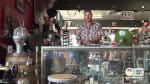
You'll find these "treasures" and a whole lot more inside the American Rust Company store at 825 E 2100 South in Sugar House. You'll also find Matt Binyon, the man who's constantly behind the counter or out searching for new objects for his shelves.
"I was like 13 years old and I'd go to yard sales by myself," Binyon said. "I don't know what got me into it, maybe being born in an old house in the Chicago suburbs. Read in the newspapers where the yard sales were, I bought whatever I could get in my backpack that I thought was cool."
Collecting the tattered shreds of lives is an obsession that's run throughout Binyon's life. As an adult, his home turned into a time capsule.
"The front room, the backyard, the basement, the garage," Binyon said. "I'd rented a warehouse to put stuff in. It was just all over the place."
Then he met a man who'd been on an episode of the A&E TV show "Hoarders."
"I watched that, I was like, 'Man, that guy's got a problem!' My wife says, 'You're gonna be just like him one day!' I said 'Nah.'"
But she gave him an ultimatum, and he responded in a way only he could.
"So I said, 'Ok, I'm gonna open a store,'" Binyon said. "And she said 'What?'"
An electrician by trade, Binyon admits he had absolutely no background in opening a retail store. But that's exactly what he did last December.
"I was scared to death to do it," he said. "But if you haven't tried, you've already failed."
Retail experience or not, the market for push mowers and pachinko machines is uncertain at best, leaving Binyon skeptical about whether anyone would visit his little shop — but there's one thing he didn't anticipate.
"One man's junk's another man's treasure," he said.
Everything means something to someone, which turned Binyon into a merchant of memories.
"I get people who come in here every day and say 'Oh, my grandpa had that,' or 'My dad had that,'" Binyon said. "People I don't even know will come in here and sit in this stool right here and talk my ear off about what I have, or what they had, or stuff their grandparents had that they wish they had."
He's even helped brush away cobwebs in the human mind.
"Bringing back someone's childhood is a really good way to put that," Binyon said. "They forgot about it until now. And so they see it and they're like, 'Oh, I remember that!'"
Binyon said his wife has become more accepting of his store as she's witnessed its success. He's pleased to be a peddler in pieces of the past and continues his pilgrimage to collect life's leftovers.
He regularly travels as far as a day's drive to replenish his shelves with forgotten "junk" from estate sales, always on the lookout for something he thinks is "cool" in an attempt to help it find a home.
"When someone has a good memory and it's because of something I've had in the store, yeah, that's pretty cool," Binyon said.
While he sits behind his counter pricing items or using his electrical experience to cobble together lamps out of different "antiques" he's discovered, Binyon still claims he's not a hoarder.
"My wife called me a hoarder," he said. "I'm not a hoarder. I said, 'Hoarders don't sell anything.'"
Even though the man who deals in nostalgia can't quite bring himself to get rid of everything.
"No, no, no — I still got stuff in the basement and the garage," Binyon said.