'%3e%3cpath%20d='M34.1406%205.85938C30.3906%202.10547%2025.3047%200%2020%200C14.6953%200%209.60938%202.10547%205.85938%205.85938C2.10938%209.61328%200%2014.6953%200%2020C0%2025.3047%202.10547%2030.3906%205.85938%2034.1406C9.61328%2037.8906%2014.6953%2040%2020%2040C25.3047%2040%2030.3906%2037.8945%2034.1406%2034.1406C37.8906%2030.3906%2040%2025.3047%2040%2020C40%2014.6953%2037.8945%209.60938%2034.1406%205.85938ZM37.0117%2023.543H31.1602V13.5391H27.6328V19.9414C28.1211%2020.6914%2028.3711%2021.582%2028.3711%2022.5625V22.625C28.3711%2023.668%2028.1172%2024.6055%2027.6328%2025.4297V26.6094H36.082C33.4883%2032.9375%2027.2891%2037.3789%2020.0039%2037.3789C10.3711%2037.3789%202.62109%2029.6289%202.62109%2020C2.62109%2010.3711%2010.3711%202.62109%2020%202.62109C29.6289%202.62109%2037.3789%2010.3711%2037.3789%2020C37.3789%2021.1484%2037.2617%2022.2656%2037.0508%2023.3477C37.0391%2023.4141%2037.0234%2023.4766%2037.0117%2023.543Z'%20fill='white'/%3e%3cpath%20d='M22.3086%2018.5352C20.4336%2018.125%2019.9531%2017.8398%2019.9766%2017.1836V17.1406C19.9766%2016.6992%2020.3477%2016.2148%2021.4023%2016.2148C22.582%2016.2148%2023.8867%2016.6797%2025.0781%2017.4766L26.8516%2015.0195C25.4453%2013.8906%2023.707%2013.3398%2021.5547%2013.3398C18.5195%2013.3398%2016.4375%2015%2016.4063%2017.4766V17.5352C16.3633%2020.2617%2018.5859%2020.9805%2021.293%2021.6016C23.0391%2021.9766%2023.5703%2022.3164%2023.5703%2022.9609L23.5469%2022.9766C23.5469%2023.3906%2023.2578%2023.7031%2022.7852%2023.8359C22.5742%2023.9062%2022.1289%2023.9727%2021.5156%2023.9727C20.7617%2023.9727%2019.7539%2023.8633%2018.6328%2023.4844C18.0898%2023.2891%2017.4727%2023.0039%2016.8047%2022.6133L20.1406%2026.625C20.2813%2026.6602%2021.0977%2026.8516%2021.7734%2026.8516C25.0039%2026.8516%2027.0859%2025.2461%2027.1094%2022.6328V22.5703C27.1602%2020.1133%2025.2148%2019.1719%2022.3086%2018.5352Z'%20fill='white'/%3e%3cpath%20d='M5.24219%2013.5664V26.6133H8.75391V23.7578L10.2969%2021.9531L14.2031%2026.6133H18.3867L12.3555%2019.5195L17.4023%2013.5664H13.4531L8.75391%2019.0586V13.5664H5.24219Z'%20fill='white'/%3e%3c/g%3e%3cdefs%3e%3cclipPath%20id='clip0_97_2430'%3e%3crect%20width='40'%20height='40'%20fill='white'/%3e%3c/clipPath%3e%3c/defs%3e%3c/svg%3e)


- Utah has invested millions to improve teen mental healthcare access.
- In 2022, average wait times for therapy had reduced from four to six months to one to two months.
- Still, providers and parents agree it's not fast enough, and the wait is still much longer in rural areas.
SALT LAKE CITY — One in three Utah teenagers reports experiencing serious emotional distress requiring mental healthcare, according to the Utah Department of Health and Human Services.
In response, the state has poured millions of dollars and thousands of professionals into improving access to care.
In 2022, the average wait time for a teenager to see a therapist in the Salt Lake metro area was between four and six months. Today, wait times have improved, with many families now reporting wait times between one and two months.
Still, providers and parents agree that it is often not fast enough, and the wait is still much longer in rural areas.
"The gap remains. I do want to be candid about that," said Jess Holzbauer, therapist and manager of the Teen Scope Day Treatment at Huntsman Mental Health Institute. "We still need more mental health resources for children and adolescents. So first and foremost, we need more resources."
Several new programs are dedicated to getting young people in front of therapists sooner and more easily.
School-based care making a difference
For some teens, expanded access within schools is changing lives.
"I finally have school hacked for myself," Sadie Parker, 26, said. "I have friends, I'm very active. I can manage a job and school at the same time. So it's like a new world for me."
Sadie Parker and her sister Lotte, 19, live in Salt Lake County and once struggled with overwhelming anxiety and academic challenges. In high school, they attended Waterford School and met with their licensed school psychologist, Sari Soutor Farhart.
Soutor Farhart helped identify their underlying challenges, including ADHD, dyslexia, and anxiety, and connected them to therapy, executive function coaching, and appropriate medications.
"I didn't really know that it was OK to not be OK," Lotte Parker said. "Therapy is amazing. It's changed my life. If as long as you find the right healthcare provider and you are on the right medications. It's changed my life."
With consistent support and accessible care on campus, both say their lives have changed.
"I was on academic probation. I was like, 'I'm going to get kicked out of this college. I don't know what I'm going to do,'" said Sadie Parker. "And as soon as I got my executive functions coach, I got my accommodations in line, I was on the dean's list and I was like, 'Are you kidding? That's possible?' I literally cried about it for two days because I was so grateful."

Programs like this are expanding across Utah. In 2024, West High School opened a clinic staffed by Huntsman Mental Health Institute professionals, allowing students to receive care without leaving campus.
"They have been a fantastic partner with us," said Holzbauer. "Being able to receive mental health services at school removes the barrier of trying to leave and go to an appointment or even find a place to go to an appointment."
Integrating mental health into other clinics
In addition to schools, therapists are beginning to work inside various medical clinics across the state.
Huntsman Mental Health Institute's Behavioral Health Integration Program has placed 35 behavioral health specialists in 15 clinics spanning six counties. That means if a patient admits to stress, anxiety, or depression during their visit, the pediatrician or specialist can immediately bring in a mental health specialist for a 30-minute conversation.
For clinics without an embedded mental health professional, providers can also use Call Up, a consult program staffed by psychiatrists at Huntsman.
"If a pediatrician is meeting with a patient who's a little bit more complex than maybe just an ADHD-presenting patient, they're able to call our Call Up number and actually speak one-on-one with one of our board-certified child and adolescent psychiatrists to be able to staff the case," said Holzbauer. "And the phone rings often."
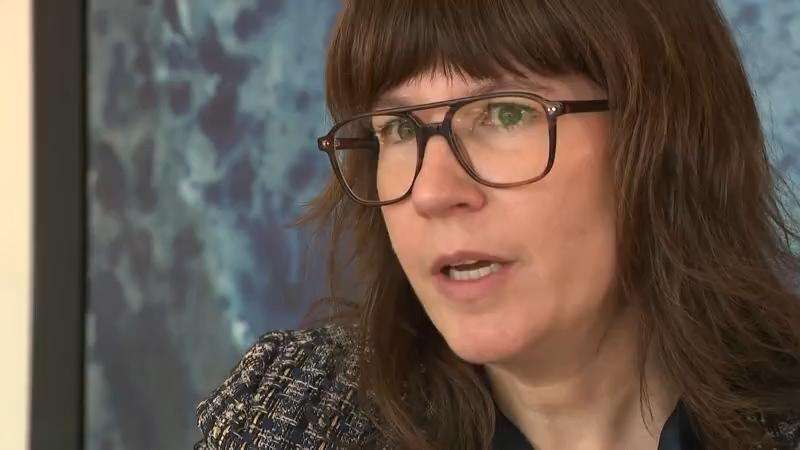
Pediatrician preparedness is one gap highlighted by Michael Staley, the suicide prevention research coordinator at the Office of the Medical Examiner.
"We need to make sure every pediatrician is talking about mental health," said Staley. "And tell me about: 'What's going on at school?' 'Do you feel like you belong?'"
Suicide rates show slight improvement
In 2025, 33 Utah teenagers died by suicide according to state data, a slight decrease from 40 teens five years earlier.
"When we provide the skills to cope and deal with difficult periods, and when make it safe to ask for help, we see those numbers of youth suicide go down," Staley said.
Staley says more mental health awareness is reducing the stigma around getting help.
"From my conversations with parents and teachers and therapists, I think we're a lot less likely now to chalk up a youth who's thinking about any of their life, to teenage angst or maybe attention-seeking behavior," he said. "We're more likely to take them seriously and recognize it requires professional attention."
Teenagers statewide have access to crisis resources, including the 988 Suicide and Crisis Lifeline and the SafeUT app, which allows young people to connect with counselors via text or chat.
"We know youth are more likely to reach out online or through text," Staley said. "SafeUT makes that a normal part of their phone."
Ongoing gaps and growing needs
Despite gains, providers point to persistent gaps in the system.
Access remains limited in rural communities, and wait times are still an issue for families seeking outpatient care. Younger children have limited therapy options, and teens struggling with substance abuse often face additional hurdles.
"Expansion into rural communities is essential," Holzbauer said. "We're working to increase access through virtual options, but there's still more to do."
Staley says in addition to medical resources, more community support could decrease Utah's high suicide rate.
"I would hope to see these numbers continue to go down as more people learn about how to get help, and recognizing a friend who is having thoughts of suicide, but also people understanding that suicide is a health problem, it's not a moral problem," he said. "And when we think about it like a health problem, like cancer or asthma, seeking help is what you do."
Intermediate services aimed at more critical patients
New intermediate-level programs are also helping reduce pressure on traditional therapy systems.
Huntsman recently launched an Adolescent Intensive Outpatient Program that meets after school three days a week during the school year, and in the mornings during the summer. Holzbauer reports the program has high enrollment and fills a gap for patients who need more than weekly outpatient therapy, but aren't critical enough to warrant an inpatient program.
Enrollment is also rising in its Teen Scope Day treatment program, which offers structured support for teens 40 hours a week. Patients keep up with their schoolwork at the hospital's certified private school as part of the program and have access to full-time mental health services simultaneously.
Finally, the state's new Youth Crisis Care Center, located at 501 Chipeta Way in Salt Lake City, is designed to triage walk-in patients and connect them to the appropriate level of care. Families bring children ages 5 through 18 to the center, where staff triage, stabilize, and assess them, then make arrangements for the next best level of care. If the child is admitted as an inpatient, their length of stay can range from one hour to 23 hours.
Officials say these layers of support are critical to shortening wait times and ensuring teens receive help when they need it most.
"They don't need a referral. They can walk through the door and be seen by a licensed clinician immediately," said Holzbauer.
For more information on suicide prevention resources, see the links below.
Suicide prevention resources
If you or someone you know is struggling with thoughts of suicide, call 988 to connect with the 988 Suicide and Crisis Lifeline.
Crisis hotlines
- Huntsman Mental Health Institute Crisis Line: 801-587-3000
- SafeUT Crisis Line: 833-372-3388
- 988 Suicide and Crisis LifeLine at 988
- Trevor Project Hotline for LGBTQ teens: 1-866-488-7386
Online resources
- NAMI Utah: namiut.org
- SafeUT: safeut.org
- Suicide and Crisis Lifeline: 988lifeline.org
- American Foundation for Suicide Prevention, Utah chapter: afsp.org/chapter/utah